

How Restaurant Menus Quietly Push You to Spend More

A restaurant menu looks harmless enough… just food and prices, right? Not quite. Long before it ever lands on your table, that menu has been carefully designed using restaurant menu psychology to influence what you order and how much you spend. From price formatting to nostalgic wording, menus are packed with quiet persuasion. Once you know what to look for, you can enjoy the meal without feeling nudged, coaxed, or upsold into oblivion.

Ever notice how you walk into a restaurant planning to spend $15… and somehow walk out $30 lighter? It’s not hunger. It’s design. Menus are intentionally built to guide your eyes, stir your emotions, and quietly influence what feels like a “reasonable” choice in the moment.
The good news? Once you understand how those tricks work, they lose most of their power. Awareness puts you back in the driver’s seat. This cheat sheet breaks down the most common menu mind games so you can order what actually sounds good to you… not what’s been positioned to feel irresistible.
How Restaurant Menu Psychology Influences What You Order
A restaurant menu may look like nothing more than a list of food and prices, but it’s really a sales tool in disguise. Long before it ever hits your table, it’s been studied, tested, tweaked, and refined with one goal in mind: increasing what the average customer spends.
That’s why restaurants bring in menu engineers and consultants, people whose entire job is figuring out how fonts, pricing styles, descriptions, and layout affect human behavior. The result is a menu that feels friendly and helpful, while quietly doing some persuasive heavy lifting behind the scenes.
Want to spot those tactics and stop falling for the ones that don’t serve you? Here’s your cheat sheet to the sneakiest tricks hiding in plain sight.
1. Why Dollar Signs Disappear From Menus
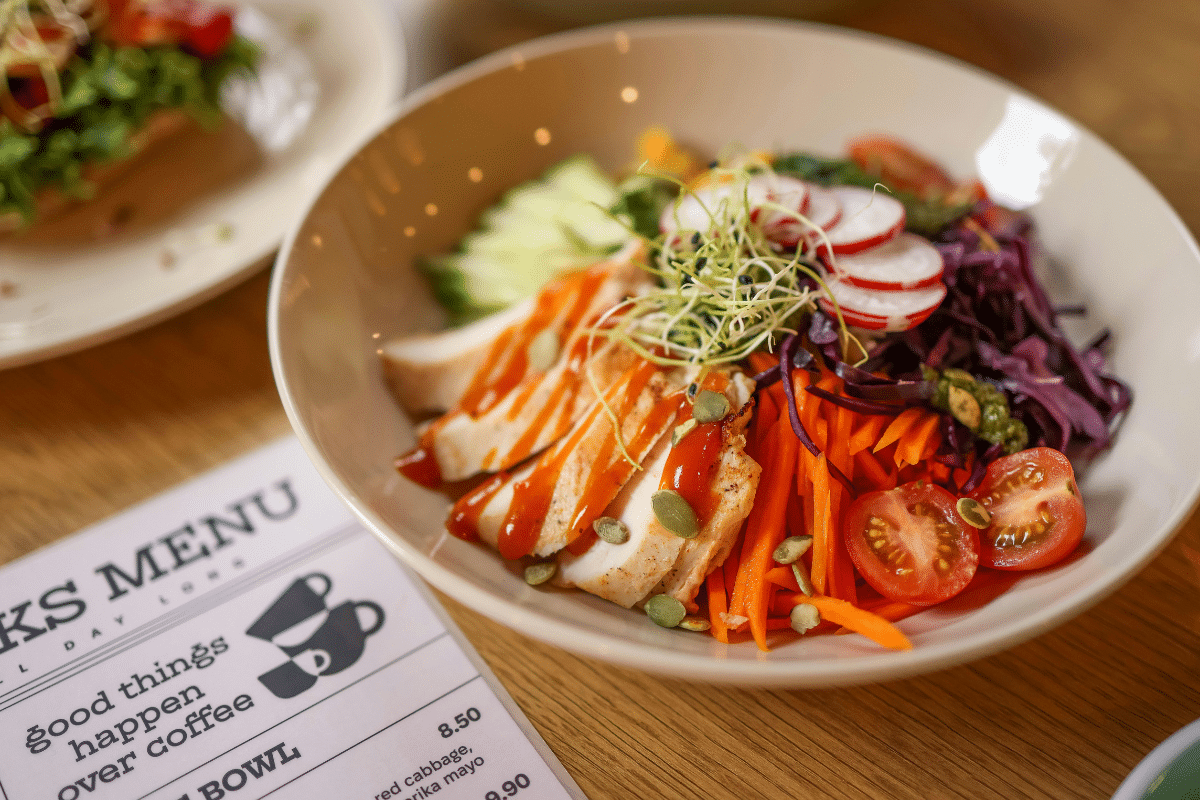
There’s a reason so many menus quietly drop the dollar sign and it’s not about looking chic. Research shows that a “$,” or even the word dollar spelled out, activates the part of your brain that feels the pain of paying. It’s a tiny symbol, but it carries emotional weight. When it disappears, prices feel less like money and more like… suggestions.
That’s why you’ll see 18 instead of $18. Same price. Less resistance. Without that visual reminder, it’s easier to focus on the food, not the hit to your wallet, and easier to order without pausing to do the math.
Smart diner move: mentally add the dollar sign back in.
2. The Sneaky Power of “Friendly” Prices
Menu pricing isn’t random. It follows rules. One of the biggest revolves around the number 9. Over time, we’ve been trained to see prices ending in .99 as a “deal.” They signal value, but not necessarily quality. That’s fine for a toaster. Less so for dinner.
Here’s where it gets interesting. Prices ending in .95 often outperform .99. Why? Because .95 feels more deliberate and less bargain-bin, even though the difference is four cents. Subconsciously, it reads as a fair, reasonable price… friendly, even. And friendly prices get ordered more often.
Smart diner move: when you see .95 or .99, pause and ask yourself one simple question: Would I order this if it were a round number? If the answer’s yes, enjoy it. If not, you just dodged a quiet nudge.
3. How Flowery Descriptions Boost Sales
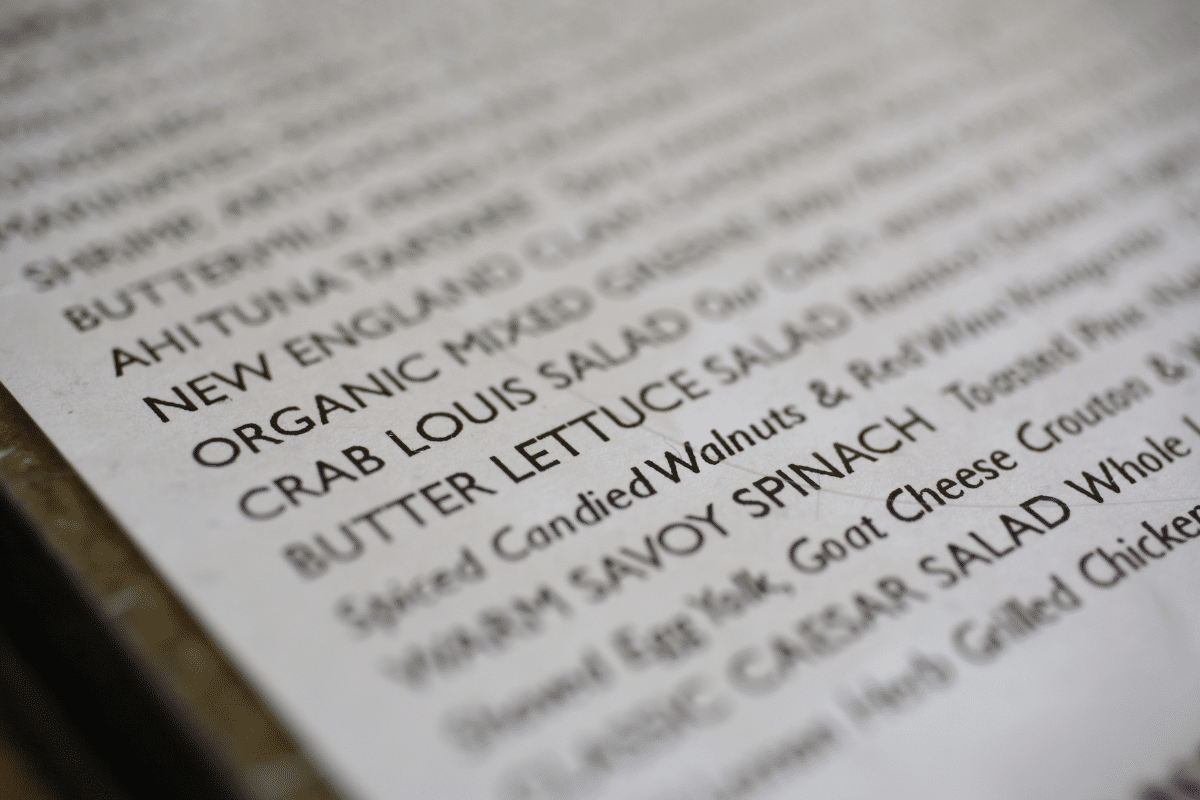
Plain food names don’t sell nearly as well as poetic ones. Research shows that when menu items come with vivid, sensory-rich descriptions, sales jump by as much as 27 percent in one well-known study. Same food. Different words. Big difference in what people order.
Menu engineer Greg Rapp shared a perfect example on the Today show. Instead of listing a simple “Crab Cakes,” the menu becomes Maryland-style crab cakes, handmade with sweet jumbo crab meat, a touch of mayonnaise, our secret blend of seasonings, and golden cracker crumbs for a rich, tender bite. At that point, you’re not reading… you’re tasting.
That kind of language creates anticipation and a sense of satisfaction before the food ever arrives. When you’re hungry, resistance is low and enthusiasm is high. Cost fades into the background. I need those crab cakes becomes a perfectly reasonable thought.
And if a menu slips in a familiar brand name (i.e., Jack Daniel’s sauce, Duke’s mayonnaise) expect the price tolerance to rise even more. Recognizable brands signal quality and comfort, and that reassurance makes it easier to say yes without overthinking the bill.
Smart diner move: enjoy the description, but order after you’ve checked the price, not before. Let your appetite vote, but don’t give it veto power.
4. Nostalgia: When Menus Borrow Family Memories
Oh, this one is especially sneaky. Research shows that sales jump when menus tap into warm family associations… boom. That’s why you’ll see items like Grandma’s Famous Meatloaf or Aunt Millie’s Apple Cobbler. Those names aren’t about recipes; they’re about trust.
Family references signal comfort, care, and “this will be good, I promise.” They shortcut our decision-making and wrap the dish in emotional reassurance. You’re no longer choosing dinner. You’re choosing a memory. And when nostalgia kicks in, budgets have a way of loosening up.
If you’re not paying attention, that cozy feeling can quietly justify spending more than you planned, all in the name of comfort and familiarity.
Smart diner move: enjoy the sentiment, but remember, Grandma isn’t in the kitchen, and Aunt Millie doesn’t see the bill. Order with your head and your heart, but let your head ring the bell.
Just for Fun!
Waiting for food doesn’t have to mean restless kids, phones on the table, or you apologizing to the server. These no-prep games use what you already have… eyes, ears, imagination and they work just as well with a booth full of kids as they do with teens or adults who need something to do besides scrolling.
- I Spy: Classic for a reason. One person says, “I spy with my little eye something that is…” and gives a clue (color works best). Great for younger kids and sneaky good at keeping them seated and observant.
- 20 Questions: One person thinks of a person, place, or thing. Everyone else gets 20 yes-or-no questions to figure it out. This one stretches patience and logic, which makes the wait feel shorter.
- Would You Rather?: Take turns with silly or thoughtful choices: fly or be invisible, pizza forever or tacos forever. Easy laughs, zero setup, and it gets everyone talking.
- The Alphabet Game: Pick a category (foods, animals, cities) and go A to Z. Simple, competitive, and surprisingly absorbing, especially when someone gets stuck on Q.
- Guess the Animal: Someone thinks of an animal and acts it out or makes the sound. Everyone else guesses. Expect noise, laughter, and possibly a few odd looks from nearby tables.
- Two Truths and a Lie: Each person shares two true things and one false one. The rest guess the lie. Works especially well with older kids and teens who think they already know everything about you.
- Story Chain: One sentence to start, then everyone adds one sentence. It almost always goes off the rails in the best way and makes the time fly.
- Memory Game (“I’m going on a picnic…”): Each person repeats the list and adds a new item in alphabetical order. It’s harder than it sounds and keeps brains busy while hands stay off the table.
- Find the Word: Pick a word or letter and race to find it on the menu or signage. Low effort, high engagement, and perfect when energy is running high.
- Name That Tune: Hum or whistle a familiar song and let everyone guess. Bonus points if you stick to tunes everyone knows.
These little games cost nothing, work anywhere, and turn waiting time into together time. Sometimes the best restaurant “hack” is just having a few ideas ready before the bread basket arrives.
5. Authenticity Sells (Especially When It Sounds Specific)
This one is subtle and very effective.
You’ll see it often in ethnic restaurants. Instead of offering something simple like lasagna, the menu gets a little more detailed: Authentic Lasagna from Northern Italy. Same basic dish, but now it comes with a backstory and, conveniently, a higher price.
Our brains are wired to trust specificity. A place, a region, a heritage… it all signals care, tradition, and quality, even when there’s no real proof behind it. The food might be excellent… or it might be exactly what it was before the adjective showed up.
Smart diner move: The trick isn’t to avoid these dishes altogether. It’s to notice the nudge. When you recognize that “authentic” and regional name-dropping are doing some of the selling for you, it’s easier to pause and decide: Do I want this because it sounds meaningful, or because I actually want this dish?
6. When Design Does the Talking for Your Dinner
When an item is bolded, boxed, printed in a different color, dressed up with a photo, or shown off in a fancy font, it instantly feels more important than the plain-Jane items stuck in a simple list. Our eyes go there first. Our brains assume it must be the house favorite.
So when the All-Star Perfect All-Beef Burger gets its own little spotlight, complete with a box and special print, it suddenly feels like a smart choice at $12.95. Surely it’s better than the rest, right?
Maybe. Or maybe it’s just the dish they most want you to order.
Once you notice how design nudges your decision, its power drops fast. A box doesn’t make a burger better. It just makes it louder.
Smart diner move: Slow down, scan the whole menu, and pick what actually sounds good to you, not what’s been dressed up to look important.
7. When Two Sizes Aren’t Really Two Choices
When a menu offers two sizes with two prices, say, a Medium or a Large salad, it feels like a friendly invitation to save money. You pick the smaller one and walk away feeling sensible, even smug. Well played.
Except that was the plan all along.
In many cases, the restaurant fully expects you to order the smaller portion. It’s priced to look reasonable next to the much larger, much pricier option. The big size exists mainly to act as a comparison point, making the smaller one feel like the smart, restrained choice, even if it’s still generously priced for what you’re getting.
Smart diner move: The trick isn’t to always order the large. It’s to recognize that “medium” doesn’t automatically mean “deal.” Once you notice how the comparison is set up, you can pause and ask a better question: Am I choosing this because I want this amount of food, or because the menu nudged me here?
8. Why Your Eyes Are Led Before You Ever Decide
They’re called scanpaths… the predictable way our eyes move across a page. And menu designers know them inside and out.
When you open a menu, there’s a very good chance you’ll order the first item that catches your eye. You might read the whole thing, compare prices, even debate for a minute, but that first visual impression carries more weight than we realize.
That’s why high-profit items tend to live in the upper-right corner of the menu. It’s prime real estate for the eyes. Designers also know we remember the first items in a list better than the rest, so whatever appears at the top gets an unfair advantage.
And what do you think they put in those spots?
Exactly.
None of this means the food is bad. It just means the menu is working quietly in the background.
Smart diner move: Once you know where your eyes are being guided, you can slow down, scan intentionally, and choose based on appetite, not placement.
9. Fewer Choices, Less Stress (and More Control for Them)
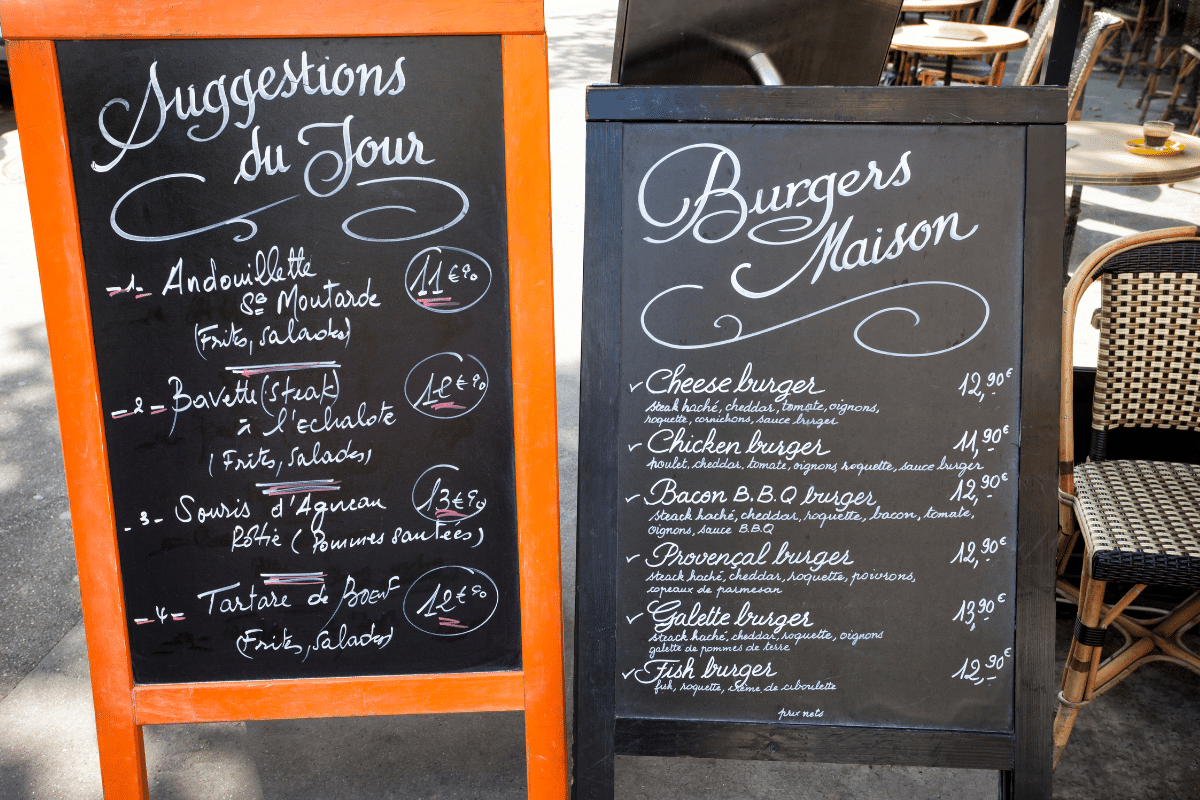
Restaurants have learned something that applies far beyond menus: too many choices feel like work. When we’re hungry, tired, or just trying to enjoy ourselves, decision-making becomes a burden.
That’s why menus are getting shorter. The sweet spot is about six items per category in fast-food places and seven to ten in sit-down restaurants. Fewer options make ordering feel easier and faster which is exactly the point.
You’ll also see more “no-decision” options: samplers, tapas boards, tasting menus, or fixed-price meals where the chef decides. They’re positioned as carefree and fun, but they also quietly move control out of your hands and into the kitchen’s.
None of this is bad by default. Sometimes letting someone else decide is a relief. Just know that limited choices aren’t about simplicity alone. They’re about guiding you toward higher-margin dishes while making you feel pleasantly unburdened.
Smart diner move: If you want to stay in charge, pause before defaulting to the sampler. A quick scan and a clear choice (I know what I want) can be surprisingly satisfying (and often cheaper).
10. Ambiance: The Invisible Line Item on Your Bill
The wall colors. The lighting. The chairs. The playlist humming just loud enough to notice. None of it is accidental. Every detail is there for one reason: to make spending more feel comfortable… even justified.
Studies show that classical music nudges people to accept higher prices without much resistance. Swap it for something more casual or familiar, and spending tends to drop. Same food. Same prices. Different mood.
That’s the quiet power of ambiance. When a place feels upscale, calm, or curated, we loosen our grip on the checkbook because it feels like part of the experience we’re buying… not just dinner.
Smart diner move: The takeaway isn’t to ignore atmosphere (that ship sailed when they dimmed the lights). It’s simply to notice it. When you catch yourself thinking, Well, this place just feels worth it, you’ve found the invisible line item and you get to decide whether it belongs on your bill.
Eat With Your Eyes Open

There you have it… your restaurant menu cheat sheet with all the tricks you need to know to beat restaurants at their own game. None of these tricks are evil, but they are effective, and once you know what to look for, they lose a lot of their power.
The next time a menu starts nudging you through language, layout, lighting, or nostalgia, pause for just a second. Notice what’s happening. Then make the call you’d make if no one were whispering in your ear or dressing up a patty melt in fancy fonts and family memories.
Enjoy the meal. Enjoy the experience. Just don’t let a few well-placed words decide what’s worth your money. That choice still belongs to you, even if the Maryland Style Crab Cakes are trying very hard to convince you otherwise.
Question: What’s the sneakiest thing you’ve ever noticed on a restaurant menu once you knew what to look for? Share your story in the comments below.

More from Everyday Cheapskate
 https://www.everydaycheapskate.com/wp-content/uploads/20260827-how-to-fly-cheaper-airplane-in-the-bright-blue-sky-above-the-clouds.png
800
1200
Mary Hunt
https://www.everydaycheapskate.com/wp-content/uploads/EC-Logo-by-Mary-Hunt-Tagline-Trimmed.png
Mary Hunt2026-08-27 11:35:132026-08-27 11:35:13How to Fly Cheaper: 8 Booking Tricks Airlines Won’t Teach You
https://www.everydaycheapskate.com/wp-content/uploads/20260827-how-to-fly-cheaper-airplane-in-the-bright-blue-sky-above-the-clouds.png
800
1200
Mary Hunt
https://www.everydaycheapskate.com/wp-content/uploads/EC-Logo-by-Mary-Hunt-Tagline-Trimmed.png
Mary Hunt2026-08-27 11:35:132026-08-27 11:35:13How to Fly Cheaper: 8 Booking Tricks Airlines Won’t Teach You https://www.everydaycheapskate.com/wp-content/uploads/20260824-house-rules-for-adult-children.png
800
1200
Mary Hunt
https://www.everydaycheapskate.com/wp-content/uploads/EC-Logo-by-Mary-Hunt-Tagline-Trimmed.png
Mary Hunt2026-08-24 12:21:382026-08-24 12:23:50House Rules for Adult Children Living at Home (Without Losing Your Mind or Your Garage)
https://www.everydaycheapskate.com/wp-content/uploads/20260824-house-rules-for-adult-children.png
800
1200
Mary Hunt
https://www.everydaycheapskate.com/wp-content/uploads/EC-Logo-by-Mary-Hunt-Tagline-Trimmed.png
Mary Hunt2026-08-24 12:21:382026-08-24 12:23:50House Rules for Adult Children Living at Home (Without Losing Your Mind or Your Garage) https://www.everydaycheapskate.com/wp-content/uploads/20260823-affluence-more-money-isnt-the-answer-man-holding-dollar-bills.png
800
1200
Mary Hunt
https://www.everydaycheapskate.com/wp-content/uploads/EC-Logo-by-Mary-Hunt-Tagline-Trimmed.png
Mary Hunt2026-08-23 18:23:072026-08-23 18:23:09More Money Isn’t the Answer. I Know Because I Tried It.
https://www.everydaycheapskate.com/wp-content/uploads/20260823-affluence-more-money-isnt-the-answer-man-holding-dollar-bills.png
800
1200
Mary Hunt
https://www.everydaycheapskate.com/wp-content/uploads/EC-Logo-by-Mary-Hunt-Tagline-Trimmed.png
Mary Hunt2026-08-23 18:23:072026-08-23 18:23:09More Money Isn’t the Answer. I Know Because I Tried It. https://www.everydaycheapskate.com/wp-content/uploads/20260822-central-AC-maintenance-air-condenser-outdoors.png
800
1200
Mary Hunt
https://www.everydaycheapskate.com/wp-content/uploads/EC-Logo-by-Mary-Hunt-Tagline-Trimmed.png
Mary Hunt2026-08-22 14:19:562026-08-22 14:19:59How to Extend the Life of Your Central AC (5 Late-Summer Tune-Up Tips)
https://www.everydaycheapskate.com/wp-content/uploads/20260822-central-AC-maintenance-air-condenser-outdoors.png
800
1200
Mary Hunt
https://www.everydaycheapskate.com/wp-content/uploads/EC-Logo-by-Mary-Hunt-Tagline-Trimmed.png
Mary Hunt2026-08-22 14:19:562026-08-22 14:19:59How to Extend the Life of Your Central AC (5 Late-Summer Tune-Up Tips) https://www.everydaycheapskate.com/wp-content/uploads/20260817-thrift-store-sign-with-blue-cloudy-sky-in-background.png
800
1200
Mary Hunt
https://www.everydaycheapskate.com/wp-content/uploads/EC-Logo-by-Mary-Hunt-Tagline-Trimmed.png
Mary Hunt2026-08-17 09:17:472026-08-17 09:17:47The Donation Box Mistakes Thrift Stores Wish We’d Skip
https://www.everydaycheapskate.com/wp-content/uploads/20260817-thrift-store-sign-with-blue-cloudy-sky-in-background.png
800
1200
Mary Hunt
https://www.everydaycheapskate.com/wp-content/uploads/EC-Logo-by-Mary-Hunt-Tagline-Trimmed.png
Mary Hunt2026-08-17 09:17:472026-08-17 09:17:47The Donation Box Mistakes Thrift Stores Wish We’d Skip https://www.everydaycheapskate.com/wp-content/uploads/20260815-how-to-water-your-lawn-without-wasting-money.png
800
1200
Mary Hunt
https://www.everydaycheapskate.com/wp-content/uploads/EC-Logo-by-Mary-Hunt-Tagline-Trimmed.png
Mary Hunt2026-08-15 12:45:022026-08-15 12:45:02How to Water Your Lawn Without Wasting Money This Summer
https://www.everydaycheapskate.com/wp-content/uploads/20260815-how-to-water-your-lawn-without-wasting-money.png
800
1200
Mary Hunt
https://www.everydaycheapskate.com/wp-content/uploads/EC-Logo-by-Mary-Hunt-Tagline-Trimmed.png
Mary Hunt2026-08-15 12:45:022026-08-15 12:45:02How to Water Your Lawn Without Wasting Money This Summer https://www.everydaycheapskate.com/wp-content/uploads/20260813-real-hourly-wage-for-a-second-income.png
800
1200
Mary Hunt
https://www.everydaycheapskate.com/wp-content/uploads/EC-Logo-by-Mary-Hunt-Tagline-Trimmed.png
Mary Hunt2026-08-13 21:16:562026-08-13 21:18:10What’s the Real Hourly Wage of Your Second Income Job?
https://www.everydaycheapskate.com/wp-content/uploads/20260813-real-hourly-wage-for-a-second-income.png
800
1200
Mary Hunt
https://www.everydaycheapskate.com/wp-content/uploads/EC-Logo-by-Mary-Hunt-Tagline-Trimmed.png
Mary Hunt2026-08-13 21:16:562026-08-13 21:18:10What’s the Real Hourly Wage of Your Second Income Job? https://www.everydaycheapskate.com/wp-content/uploads/20260810-woman-holding-a-fan-of-money-dollar-bills-smiling-moneymaxxing.png
800
1200
Mary Hunt
https://www.everydaycheapskate.com/wp-content/uploads/EC-Logo-by-Mary-Hunt-Tagline-Trimmed.png
Mary Hunt2026-08-09 15:29:412026-08-09 15:29:41Moneymaxxing? Honey, I’ve Been Doing That Since Before It Had a Name
https://www.everydaycheapskate.com/wp-content/uploads/20260810-woman-holding-a-fan-of-money-dollar-bills-smiling-moneymaxxing.png
800
1200
Mary Hunt
https://www.everydaycheapskate.com/wp-content/uploads/EC-Logo-by-Mary-Hunt-Tagline-Trimmed.png
Mary Hunt2026-08-09 15:29:412026-08-09 15:29:41Moneymaxxing? Honey, I’ve Been Doing That Since Before It Had a Name https://www.everydaycheapskate.com/wp-content/uploads/20260808-emergency-flashlight-multi-day-power-outage-prep.png
800
1200
Mary Hunt
https://www.everydaycheapskate.com/wp-content/uploads/EC-Logo-by-Mary-Hunt-Tagline-Trimmed.png
Mary Hunt2026-08-08 12:30:072026-08-08 12:30:08How to Prep Your Home for a Multi-Day Power Outage
https://www.everydaycheapskate.com/wp-content/uploads/20260808-emergency-flashlight-multi-day-power-outage-prep.png
800
1200
Mary Hunt
https://www.everydaycheapskate.com/wp-content/uploads/EC-Logo-by-Mary-Hunt-Tagline-Trimmed.png
Mary Hunt2026-08-08 12:30:072026-08-08 12:30:08How to Prep Your Home for a Multi-Day Power Outage

I found that certain places won’t list the price of drinks-coffee or soda. I may be willing to spend on a meal, but I don’t want to pay for coffee at $4-5! One time we both got coffee and it was almost as much as half a meal.
Something not mentioned are the servers who come to the table and start spouting off the menu items without quoting the prices. The BEST one is the recommendation that the ” fresh catch” or the special seared Filet is the server’s “favorite”. That item is usually the most expensive meal on the menu. Anyhow, who cares what the waiter/server’s favorite dish is? That really bugs me!!!!!
Hi Mary,
Love, love, love your column. Can I ask your take on tipping on take and bake pizza? Not sure if it’s mandatory since I am the one to pick up and bake it once home.
My opinion? No tip. To me that’s like a grocery store or bakery.
Since the quarantine ended, Covid shots available,, restaurants open it was out to dinner for us again. It’s not been a good thing. The quality of food is down, prices up, my favorites (I’m the picky one), I’m back to cooking at home. We’ve had hair in our food, grossly overcooked steaks, dried out ribs and weird tasting food that made us ill. That was the finish for me. Ugh
Hi Mary,
So, when the restaurant offers the medium and large priced salad…sounds like they get you both ways. What’s the best choice as a rule?
Thank you! This post was fabulous.
Gina
I don’t think there’s an answer for that … the point is to be aware so you can make a good decision. Does the larger size have more of what you really want and will finish? Is it that much different than the medium?
Thanks for the tips. I usually order “large” salad for my entire meal. Recently, the only difference, other than the grilled chicken, my salad actually had less ingredients than the side salad my friend received; just more lettuce.
It makes me so furious that no restaurants put the price of soda, tea or coffee in the menu anymore. And when I dare ask the waitress the price she always looks rather shocked and says she doesn’t really know.
This made me think about creating a home ‘menu’ not with all the bells and whistles but just sort of a list to remind me of dishes I can make but may not think of making or buying the ingredients for. Anyone do that?
Hi Marilyn,
I do keep a list of EASY to fix meals when i don’t want to cook that remind me of my choices. I also make up family sized meals (and there’s just two of us) and freeze meal-sized portions that i can microwave easily…no work!! I love to cook…but not every night. LOL.
BEST FOODS REAL MAYONNAISE brand is also Hellmans Mayo. Is family restaurant & fine dining, 6 times the cost of prepping same food at home. Plus beverage markups
Personally I like the full descriptions because they make it easier to estimate the amount of carb in a meal, and therefore how much insulin I need. And in the final paragraph, I think you meant to say we should go rogue, not rouge.
And yes I did! Thanks for being such a good mind reader. i do iike rosy cheeks, however ☺️.
“Hellman’s mayonnaise—sales are set to increase like magic.” Ew. No. Duke’s Mayo might catch my attention but Hellman’s mayo would be an immediate turn off.”
Good catch! I live in the West where we have … neither!! (I feel an edit coming on … )
Ohhh, but I LOVE Hellman’s! 🙂
Aldi’s Burman brand mayo is just as good as Hellman’s and half the price! Try it, you’ll like it. We used Hellman’s for years until we discovered Burman’s.
Oh Cathy!! I grew up in the suburbs of Philadelphia and that is all we ued right up to 2 years ago! I bought a small jar of Duke’s at Walmart just to see what it tastes like and much cheaper than Hellman’s I found that it tastes great and helps me with the cost! I really do love Hellman’s but since I retired, I have to watch my spending.
I grew up in the Philadelphia suburbs and then the Jersey Shore (Long Beach Island) and always used Hellman’s, but about 4 years ago I decided to try Duke’s. I bought the little jar in case I did not like it, but I really liked it and it was half the price of Hellman’s. Who knew? I am retired and have to watch my $$ and thanks to Mary I have learned so much from her since 1998!!
The older I get, the more annoyed I become with restaurants that think they are being fancy if they hand you a menu the size of Texas with miniscule fancy fonts.
Or how about when they hand you a menu that is so fresh and new you can nearly smell the fresh ink? Always a tip off of price increases.
Great info as usual !! I would never have imagined that so much work goes into a menu! Thanks for opening our eyes!
Thank you, Gretchen for your kind words! You’ll never look at the menu the same way again!
I must admit to really not wanting to eat at restaurants at all simply because they make it so uncomfortable to eat at their tables.I am 5’4″ , not at all tall, and I have not yet found a restaurant where the table is not almost chest high when I am seated. Chair or bench makes no difference. I would rather just take the meal “to go” and eat at home in comfort.