

Is It Worth It? Induction Cooking Pros and Cons to Know

It’s been four years since I first shared my thoughts on induction cooking—and believe it or not, I love it even more today. If you’re curious, confused, or wondering whether it’s worth the switch from gas or electric, you’re in good company. I’ve cooked on all three, and I’ll walk you through the induction cooking pros and cons—the ups, the downs, and how to give it a no-commitment test run.

Cathy’s message showed up in my inbox a while back, but I still think about it—and smile. Induction? Yep, I’ve learned a lot more since then. But it was her kind words at the top that truly warmed my heart and reminded me why I love doing what I do.
Dear Mary: First of all, I want to thank you, thank you, thank you for your years of advice and guidance! I have purchased your books, READ your books, and given them as gifts many times. I hardly EVER buy anything or try a new product without checking with you first. I know that if you have endorsed it, I can trust it. Thank you for promoting quality and value in all the products and ideas you share. Your work is amazing.
That being said, my husband and I just purchased a home. The gas stove and microwave oven are 28 years old. Although they both still work, (I know, they don’t make them like this anymore) they look their age and I question the safety of the microwave. I was all ready to purchase a mid-level free-standing gas range.
However, on a recent shopping trip we were introduced to electric induction ranges. Wow, was I impressed! The convenience and control of a gas stove top with the an easy-to-clean smooth top. This has totally confused my decision. Induction cooktops are still quite a bit more expensive, so it’s a big choice. The salesperson was unable to identify any drawbacks to these ranges at this time—other than the fact that we may have to purchase new cookware, which he said can be purchased for around $300 for an adequate set.
The other factor is that my husband and I purchased this home with the plan to sell within 10 years—we got it for a good price and believe we will be able to resell at a profit as long as we do some good, cost effective updating. I would love, love, love and appreciate your advice! Cathy
Dear Cathy: You sure know how to make my day. I could have trimmed your kind words to get straight to the question, but how could I? Thank you for the trust, the support—and for the reminder that what we do here matters.
Now, about that induction cooktop. It’s still one of my favorite topics, and for good reason.
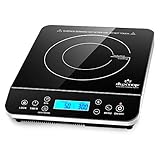
During the 18 months we lived in a small apartment while preparing for our move to Colorado, I didn’t have a traditional stove at all. Instead, I cooked everything—from soups to Sunday dinners—using my Breville Smart Oven and a Duxtop Portable Induction Cooktop. It was a trial by fire (er, magnetism?), and it taught me just how powerful, precise, and practical induction can be—even in the tightest of spaces.
How Does Induction Cooking Work?
Induction is definitely a different method of cooking—with a slightly challenging learning curve. But oh my, once you get the hang of it? Chances are you’ll never look back at traditional electric or gas. It’s fast, precise, and honestly feels a bit like cooking with science fiction. Since the cooktop itself doesn’t create heat, it uses very little energy and keeps your kitchen cooler, too. The magic? The pan itself becomes the heat source, which is just plain… cool.
Induction cooking uses electromagnetism to heat the pan directly. A coil under the glass cooktop creates a magnetic field, which only heats cookware that contains ferrous (iron-containing) metals like cast iron or certain stainless steel. That means no open flames, no glowing burners, and nearly zero wasted heat. Plus, when you adjust the temperature, the change is instant—like flipping a light switch. It’s incredibly efficient and way safer for curious little hands or distracted cooks.
And while I won’t pretend to know the physics in full detail, I can vouch for the results: lightning-fast boil times, precise control, and a glass surface that wipes clean in seconds because it never gets hot enough to burn spills. Once you experience that combo of speed, safety, and sleek design? You’ll wonder why you didn’t make the switch sooner.
Induction vs. Electric—What’s the Real Difference?
If you’ve ever cooked on a smooth-top electric stove, induction might look similar—but it’s a whole different ballgame. Traditional electric cooktops use radiant heat to warm up a burner, which then heats your pan (and usually your kitchen, too). That means slower heat-up and cool-down times—and yes, more baked-on messes.
Induction skips the middleman. Instead of heating the cooktop, it heats the pan directly using magnetic energy. Translation? Faster cooking, super precise control, and a surface that stays cool to the touch. It’s like upgrading from a flip phone to a smartphone—once you know the difference, there’s no going back.
What to Expect With Clean-Up and Maintenance
And clean-up of the induction cooktop itself? Quick and easy—every time. I made our full-blown Thanksgiving and Christmas feasts in that tiny kitchen with just two appliances, and cleanup was a breeze. The eating was even better. We did not suffer, trust me.
Now and then, I’ll need to pull out the Cerama Bryte and a blue non-scratch scrubby sponge—but only because I let something boil over or sizzle too hot and it crept between the pot and the cooktop. Totally manageable, and still far easier than scrubbing burnt-on food from a traditional stove.
How to Test Your Cookware for Induction Compatibility
As for cookware—yes, it must be induction compatible, or as some manufacturers describe it, “induction ready.” But here’s something the salesperson probably didn’t mention: all cast iron cookware works beautifully on induction. So do most modern sets of stainless steel. Honestly, I wouldn’t be surprised if what you already own is good to go. Here’s how to find out:
Grab a magnet. If it sticks firmly to the bottom of the pan—no wiggling, no sliding—that piece is induction ready. If it doesn’t stick at all, chances are you’re dealing with aluminum, which doesn’t play nice with induction. If it kind of sticks but you can slide it around easily, it’s probably lower-quality stainless steel or aluminum with a thin stainless coating. What you want is a solid, magnetic connection.
One exception: if your pan has a round or curved bottom (like a traditional wok), it won’t work on a standard induction burner no matter what it’s made of. And no, adding a ring to your cooktop won’t solve it. For induction cooking, you’ll either need a flat-bottomed wok or a special induction wok hob—which may be an added expense.
Does Induction Cooking Add Resale Value to Your Home?
When it comes to home upgrades, the kitchen is always center stage. And while granite countertops and fancy backsplashes get a lot of attention, it might be your stove that turns heads—especially if it’s an induction model.
As induction cooking becomes more mainstream (and more loved), a beautiful induction range or cooktop can absolutely increase your home’s value and desirability. It’s sleek, modern, and signals to buyers that this is a forward-thinking kitchen. Remember what real estate pros always say: Kitchens and bathrooms sell homes.
In fact, the National Kitchen & Bath Association noted in its 2021 Design Trends Report that induction cooktops are rising in popularity and closing the gap with gas. And there’s good reason for it:
- Energy Efficiency: Induction transfers 90% of energy directly to your cookware—compare that with just 40–55% for gas or electric.
- Speed: Boiling water in record time? Yes, please.
- Safety: The cooktop itself stays cool to the touch.
- Easy Cleanup: Since the surface doesn’t get scorching hot, spills don’t bake on.
- Modern Appeal: With clean lines and a glass surface, induction fits beautifully into transitional and contemporary kitchen styles.
There’s also an environmental angle to consider. With California and other states moving toward phasing out residential gas, induction is emerging as the sustainable choice. Many Gen Z and Millennial buyers—who tend to value style, smart tech, and eco-friendliness—are gravitating toward homes with all-electric kitchens. Some new induction models even offer smartphone connectivity and alerts if the cooktop is left on.
Induction ranges can cost more upfront, but in terms of long-term efficiency, safety, and potential resale value, induction is a solid investment.
Portable Induction Cooktops: A Smart Trial Run

Duxtop Portable Induction Cooktop Burner
Here’s my advice: If your current appliances are still chugging along just fine, take a test drive before committing to a full kitchen upgrade. A good portable induction cooktop burner is a smart, low-risk way to dip your toe into the world of induction cooking.
Use it every chance you get—boil water, sauté veggies, reheat leftovers. Read the manual (maybe more than once—I still refer to mine). With a small investment, you’ll get a real feel for how induction works before spending thousands on new appliances.
This also gives you a chance to test your existing cookware for compatibility. You might be pleasantly surprised to discover it works just fine on induction—no new pots and pans required.
Why I’m Sold on Induction
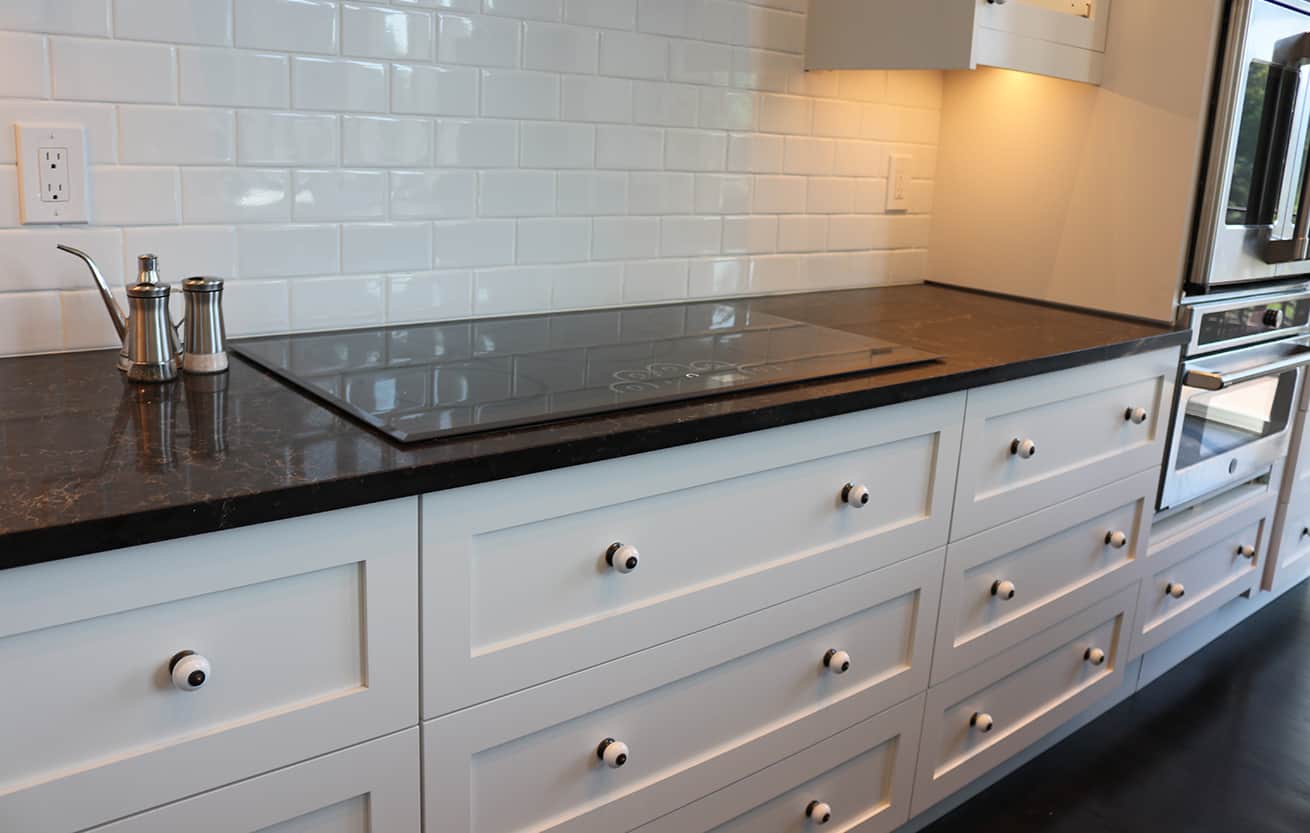
With our most recent 2018 kitchen remodel, I upgraded from a single portable induction burner to the Café 5-Burner Induction Cooktop—and let me tell you, it’s a whole new level of kitchen joy. I genuinely believe we’ll never go back to gas or smooth-top electric.
My induction cooktop cleans up like a dream (yes, I’ve said that before—but it’s that important). No more crusty burners or scrubbing baked-on messes. Just a quick wipe, and we’re good to go.
It’s also incredibly powerful. I can set a large pot of water to boil and—no exaggeration—it’s rolling in about 90 seconds.
And the control? Impressive. I can sauté a skillet full of veggies or meat on High, and when it’s ready, a single tap to Low instantly brings the temperature down. That responsive precision rivals gas, with none of the fumes or tricky cleanup. If you’re looking for cooking that feels both professional and practical, induction really checks every box.
Question: Thinking about switching to induction cooking? What’s holding you back—price, cookware, or just not sure if it’s your kind of heat? Join the conversation in the comments below.
EverydayCheapskate™ is reader-supported. We participate in the Amazon Services LLC Associates Program and other affiliate advertising programs, designed to provide a means for us to earn from qualifying purchases, at no cost to you.

More from Everyday Cheapskate
 https://www.everydaycheapskate.com/wp-content/uploads/20260822-central-AC-maintenance-air-condenser-outdoors.png
800
1200
Mary Hunt
https://www.everydaycheapskate.com/wp-content/uploads/EC-Logo-by-Mary-Hunt-Tagline-Trimmed.png
Mary Hunt2026-08-22 14:19:562026-08-22 14:19:59How to Extend the Life of Your Central AC (5 Late-Summer Tune-Up Tips)
https://www.everydaycheapskate.com/wp-content/uploads/20260822-central-AC-maintenance-air-condenser-outdoors.png
800
1200
Mary Hunt
https://www.everydaycheapskate.com/wp-content/uploads/EC-Logo-by-Mary-Hunt-Tagline-Trimmed.png
Mary Hunt2026-08-22 14:19:562026-08-22 14:19:59How to Extend the Life of Your Central AC (5 Late-Summer Tune-Up Tips) https://www.everydaycheapskate.com/wp-content/uploads/20260817-thrift-store-sign-with-blue-cloudy-sky-in-background.png
800
1200
Mary Hunt
https://www.everydaycheapskate.com/wp-content/uploads/EC-Logo-by-Mary-Hunt-Tagline-Trimmed.png
Mary Hunt2026-08-17 09:17:472026-08-17 09:17:47The Donation Box Mistakes Thrift Stores Wish We’d Skip
https://www.everydaycheapskate.com/wp-content/uploads/20260817-thrift-store-sign-with-blue-cloudy-sky-in-background.png
800
1200
Mary Hunt
https://www.everydaycheapskate.com/wp-content/uploads/EC-Logo-by-Mary-Hunt-Tagline-Trimmed.png
Mary Hunt2026-08-17 09:17:472026-08-17 09:17:47The Donation Box Mistakes Thrift Stores Wish We’d Skip https://www.everydaycheapskate.com/wp-content/uploads/20260815-how-to-water-your-lawn-without-wasting-money.png
800
1200
Mary Hunt
https://www.everydaycheapskate.com/wp-content/uploads/EC-Logo-by-Mary-Hunt-Tagline-Trimmed.png
Mary Hunt2026-08-15 12:45:022026-08-15 12:45:02How to Water Your Lawn Without Wasting Money This Summer
https://www.everydaycheapskate.com/wp-content/uploads/20260815-how-to-water-your-lawn-without-wasting-money.png
800
1200
Mary Hunt
https://www.everydaycheapskate.com/wp-content/uploads/EC-Logo-by-Mary-Hunt-Tagline-Trimmed.png
Mary Hunt2026-08-15 12:45:022026-08-15 12:45:02How to Water Your Lawn Without Wasting Money This Summer https://www.everydaycheapskate.com/wp-content/uploads/20260813-real-hourly-wage-for-a-second-income.png
800
1200
Mary Hunt
https://www.everydaycheapskate.com/wp-content/uploads/EC-Logo-by-Mary-Hunt-Tagline-Trimmed.png
Mary Hunt2026-08-13 21:16:562026-08-13 21:18:10What’s the Real Hourly Wage of Your Second Income Job?
https://www.everydaycheapskate.com/wp-content/uploads/20260813-real-hourly-wage-for-a-second-income.png
800
1200
Mary Hunt
https://www.everydaycheapskate.com/wp-content/uploads/EC-Logo-by-Mary-Hunt-Tagline-Trimmed.png
Mary Hunt2026-08-13 21:16:562026-08-13 21:18:10What’s the Real Hourly Wage of Your Second Income Job? https://www.everydaycheapskate.com/wp-content/uploads/20260808-emergency-flashlight-multi-day-power-outage-prep.png
800
1200
Mary Hunt
https://www.everydaycheapskate.com/wp-content/uploads/EC-Logo-by-Mary-Hunt-Tagline-Trimmed.png
Mary Hunt2026-08-08 12:30:072026-08-08 12:30:08How to Prep Your Home for a Multi-Day Power Outage
https://www.everydaycheapskate.com/wp-content/uploads/20260808-emergency-flashlight-multi-day-power-outage-prep.png
800
1200
Mary Hunt
https://www.everydaycheapskate.com/wp-content/uploads/EC-Logo-by-Mary-Hunt-Tagline-Trimmed.png
Mary Hunt2026-08-08 12:30:072026-08-08 12:30:08How to Prep Your Home for a Multi-Day Power Outage https://www.everydaycheapskate.com/wp-content/uploads/20260807-Sunday-school-prep-routine-get-the-family-ready-for-the-week.png
800
1200
Mary Hunt
https://www.everydaycheapskate.com/wp-content/uploads/EC-Logo-by-Mary-Hunt-Tagline-Trimmed.png
Mary Hunt2026-08-07 11:22:222026-08-07 11:22:22The 15-Minute Sunday Prep That Runs Your Whole School Week
https://www.everydaycheapskate.com/wp-content/uploads/20260807-Sunday-school-prep-routine-get-the-family-ready-for-the-week.png
800
1200
Mary Hunt
https://www.everydaycheapskate.com/wp-content/uploads/EC-Logo-by-Mary-Hunt-Tagline-Trimmed.png
Mary Hunt2026-08-07 11:22:222026-08-07 11:22:22The 15-Minute Sunday Prep That Runs Your Whole School Week https://www.everydaycheapskate.com/wp-content/uploads/20260723-budget-homework-station-young-boy-studying-at-kitchen-dining-table.png
800
1200
Mary Hunt
https://www.everydaycheapskate.com/wp-content/uploads/EC-Logo-by-Mary-Hunt-Tagline-Trimmed.png
Mary Hunt2026-07-23 10:53:402026-07-23 10:53:41How to Set Up a Homework Station Your Kids Will Actually Use
https://www.everydaycheapskate.com/wp-content/uploads/20260723-budget-homework-station-young-boy-studying-at-kitchen-dining-table.png
800
1200
Mary Hunt
https://www.everydaycheapskate.com/wp-content/uploads/EC-Logo-by-Mary-Hunt-Tagline-Trimmed.png
Mary Hunt2026-07-23 10:53:402026-07-23 10:53:41How to Set Up a Homework Station Your Kids Will Actually Use https://www.everydaycheapskate.com/wp-content/uploads/20260705-Best-Coolers-for-Camping-Road-Trips-and-Beach-Days.png
800
1200
Mary Hunt
https://www.everydaycheapskate.com/wp-content/uploads/EC-Logo-by-Mary-Hunt-Tagline-Trimmed.png
Mary Hunt2026-07-05 13:26:172026-07-05 13:26:17Best Coolers for Camping, Road Trips, and Beach Days
https://www.everydaycheapskate.com/wp-content/uploads/20260705-Best-Coolers-for-Camping-Road-Trips-and-Beach-Days.png
800
1200
Mary Hunt
https://www.everydaycheapskate.com/wp-content/uploads/EC-Logo-by-Mary-Hunt-Tagline-Trimmed.png
Mary Hunt2026-07-05 13:26:172026-07-05 13:26:17Best Coolers for Camping, Road Trips, and Beach Days https://www.everydaycheapskate.com/wp-content/uploads/20260703-home-decor.png
800
1200
Mary Hunt
https://www.everydaycheapskate.com/wp-content/uploads/EC-Logo-by-Mary-Hunt-Tagline-Trimmed.png
Mary Hunt2026-07-03 20:46:552026-07-03 20:46:5510 Everyday Items You Never Think to Wash (But Should)
https://www.everydaycheapskate.com/wp-content/uploads/20260703-home-decor.png
800
1200
Mary Hunt
https://www.everydaycheapskate.com/wp-content/uploads/EC-Logo-by-Mary-Hunt-Tagline-Trimmed.png
Mary Hunt2026-07-03 20:46:552026-07-03 20:46:5510 Everyday Items You Never Think to Wash (But Should)Please keep your comments positive, encouraging, helpful, brief,
and on-topic in keeping with EC Commenting Guidelines
Last update on 2026-08-30 / Affiliate links / Images from Amazon Product Advertising API


I have one portable single burner induction appliance. I also bought the thin pad that goes under the pot/pan. It works great. I am also blessed with many vintage cast iron pans, but I have to educate myself on their usage. My only issue is one I’ve caused myself, and that is where to place the burner. My kitchen is compact and counter space limited. Plugging in the induction burner, plus cooking on the regular stove, plus other counter appliances make issues. One thing I have promised myself is when my regular stove dies, I am going to all portable induction. I’m not sure how I will handle the stove. Any suggestions? Another plus is if you are driving to a dated AIRBNB, or any “electric” vacation home, the portable induction burner can be taken with to augment your cooking situation.
This is an excellent guide to the induction cooktops! I just began using one, and initially it was not really easy to clean it. A tip that I found to be incredibly helpful is to clean up spills as soon as they happen with a soft microfiber cloth—it will help avoid the appearance of burnt residual spills. For stains that are more difficult to remove, a small amount of baking soda mixed with water is a miracle that does not scratch the surface. I also prefer the use of a scraper that is used on glass cooktops, but I make sure that it is done on a low angle. The other thought is to provide the cooktop with a quick wipe using some white vinegar so as to keep it shiny. Thanks, such tips are helpful; I will surely be sharing this with friends who are considering switching to induction!
I love my induction. You have to be careful the top can get very hot. Here is a cheap tip – use baking soda to clean the top. Works like a dream and saves money
We were looking at an induction cook top, but decided against it. I talked with my cardiology department and asked them about induction cook tops and my pacemaker. They said I “could” use one, but needed to keep my pacer site 24″ away from the cook top. Just leaning over to get a heavy pot from the back puts me close to that distance. We opted for a nice double oven range with convection instead. I need to keep my pacer from shorting out!
I have TWO sets of very EXPENSIVE Stainless Steel cookware that I have had for over 40 years that still look brand new ,,,BUT they do have a “small circle slightly indented ” on the bottom and my new flat stove top takes 3 times as long to heat even water and I have to stand there the CONSTANTLY whole time and move the cookware all around the burner just to keep it cooking for everything. It works fine on conpletely flat cookware. but only have one large pot that is flat and doesn’t go with the 2 sets I have.
I didn’t know that when I replaced the stove top that my cookware wasn’t compatible with the stove. No one told me it had to be a completely FLAT cookware to work properly Not happy but they ONLY make the stove tops like that now.
You could use that pot on a gas stovetop.
If your pots are what tou would like to keep. You could have them skimmed like you would brake discs.
I occasionally can meat and produce. Can induction stoves support the weight of and the heat generated by a full stainless steel pressure canner?
You’d need to check your owner manual on that. Specifications can vary from one brand and model to another.
Hi Mary, et al,
I am confused. I have had a glass-top electric range for years, and I was told by the store, and in the manual, that certain types of pans, like cast iron, would scratch the surface, and were a no-no.
How is the glass top on an induction stove different?
Glass top electric: Uses electric heating elements underneath the glass surface. These elements get red-hot and transfer heat through the glass to the cookware. Easy to scratch if you slide pans (especially heavy cast iron). The heat can also weaken the glass over time. Hot glass = baked mess, too.
Induction glass top: The glass does not heat the cooking vessel or the food it in. Some heat does transfer back to the glass from the pan, but nothing close to electric glass cooktop. Still prone to scratching if you slide pans, especially raw cast iron. Because the surface stays cooler, it’s generally more forgiving.
I have been cooking on induction since the mid 1980s. No regrets! Use my mother’s and mother-in-laws cast iron skillets and never have a problem. When I remodeled my kitchen about 12 years ago, I stayed with induction. Just have plain ole GE, no fancy brands and it still looks almost new.
I have an induction cooktop. It is Dacor. It was top-of-the-line when we bought it about three years ago. I have struggled to ensure the pans are just right, or it won’t work. I have the Our Place cookware. Doesn’t work great! Do you have cookware you can recommend? Thank you!
I have several Cuisinart stainless steel pans and they work really well on my induction. Just keep the magnet trick in mind. If you enjoy thrifting, you’ll find great cookware, as thrift stores are harbors for vintage cookware that magnets are so fond of!
My mother had this in Germany. I hated it. I love having a gas stove. I usually had an electric stove in most of my apartments as a young adult. Wasn’t happy with it but it was better than an induction in my opinion. Mostly induction stoves were in remodeled houses or newer construction not in the older houses we rented.
Interesting info. I like that it stays cool. Great if you have cats that might get up there when you turn your back while cleaning up. Regular stove tops of gas and electric stay hot enough to burn little paws. Also good if you have someone in the home with mental decline. Kids, too. I never thought about them not being good around pacemakers. Thanks to everyone that posted…and you too, Mary!
I just spent a weekend at an AirBnB that had an induction stove top. Maybe she has the wrong pans, but the top of the stove got very hot and took forever to heat. It was also very scratched up. I brought my own cast iron pans (which I cook with 90% of the time) but did not use them because I was afraid of damaging the cooktop more. How do you use car iron on the glass without scratching it up?
Easy. Always LIFT, never slide or shake. Straight up, straight down. Cast iron is the best for induction cooking. I have a feeling that cooktop may not have been induction. Sounds like electric glass top, but that’s just my opinion.
The cost of the stove and replacing all my ceramic Corningware “pots” along with how infrequently I use my stove and being 76 (how much longer will I be cooking) have me on the fence. The pacemaker restriction is very concerning for resale value, too. An awful lot of people in SW FL have them.
‘What’s holding you back’
my stove is original to my house, built in 2000, but come to think of it, i think it’s even older than that. it’s a small propane stove with pilot lights, even in the oven. i am much envied because even in a power failure, i have the full use of my stove and oven. we’ve had power failures for as long as eight days on several occasions during the 15 years i’ve lived here. while i love my cast iron pans, i also love my visions pots. since glass won’t work, i’d have to replace them. not happening.
I still prefer gas stoves/ovens. If the electricity goes out, you can still cook with a gas stove. I once experienced winter without electricity for 4 days. I had the only gas stove on the street and was boiling water for all the other households.
This is what is holding me back too. I had a smoothtop electric years ago when the power cables were underground in my neighborhood and never had issues with that. In recent years, we live where the power has gone out a few times and the gas cooktop is really nice. It’s there for cooking and additional heat. I also worry about scratching top and had no idea about pacemaker issue.
Hi Mary.
I really enjoy reading your daily emails! Thanks for the many good tips you share.
Regarding the induction stove method of cooking, I was interested and bought a one burner just to test it out. I really enjoyed having water boil in 30 seconds–until, I read that you must start warming the cooking utensils at a low heat instead of top speed because cooking utensils (except cast iron which I also use) can separate at the bottom from super hot heat. The the other day, I read that one of the sauce pans I bought for induction cooking can only withstand up to 800 degrees. The one burner I have only works with either temperature or time.
The various cooking selections (boil water, stew, heat milk, stir fry, deep fry) work well since I experimented with some of the settings for what I wanted to do. But I nearly wrecked a pot of ghee because the temp switched up from the 200 degrees to 1000 degrees. I also found that there is pausing in cooking anything. The unit simply doesn’t heat for several minutes (but it doesn’t turn off) which is really annoying. The chosen heat does come back, but I really want a constant temp.
Perhaps this is problematic only to the one burner, but it sure is discouraging me from thinking of a whole induction stove. Surely there are downsides to them as well, but no one speaks of them. Help!
I can’t really comment intelligently here without knowing the appliance you were using. However, I have been cooking with induction for many years and have never experienced the problems or cautions you mention here. I will say that there is no reason to ever cook at 800ºF or 1000ºF in an indoor setting.
I have a new GE cafe induction cooktop. It seems to take forever for water to boil. Am I doing something wrong??
I’m going to guess that your pot is very weak, magnetically speaking. I have the same cooktop. And I have a couple of saucepans I keep because I love them, but I don’t use them for induction. A magnet will stick to them, but I can tell by testing that, they are not nearly as “induction compatible” as say my cast iron and other stainless steel cookware. Do you have a cast iron pan you can use to test? If you do, fill both that cast iron piece and the pot that takes forever to boil water, with exactly the same amount of water. Set them on separate burners and start both at the same level. Watch what happens. I’m guess the cast iron will boil within seconds, while the other pot as you say, takes forever.
“And it is powerful! I can set a large pot of water to boil and it will be rolling in about 90 seconds—and that’s at 5,280 ft. altitude.”
Of course water boils faster as that altitude compared to sea level. The temperature at which water boils goes down with in creasing altitude. This is because ambient air pressure decreases with altitude.
Duly noted, Jack!
10 years ago we remodeled our kitchen with an induction cooktop. I love it, especially the instant heat and lowering of temperature. Two cautions: 1. It’s a glass top and can easily be broken. My son dropped a glass bottle of oil on it and we now have two huge cracks running across the top, but it still works. 2. Not all cookware that says it’s induction ready is truly induction ready. I have returned several pans because they don’t work, even though they are sold as induction ready.
One other thing to remember is that different makes of pans will cook at different temperatures, as they are all made with different amounts of stainless steel and different construction techniques. One pan will cook a grilled cheese sandwich beautifully at 7, while another brand cooks just as hot at 5. You have to get to know your pans.
We are looking to replace an electric stove top with a downdraft in the middle. (No hood vent). We were going to replace with gas, but this induction article has me intrigued. Thoughts on venting?
Both Kitchenaid and GE have induction cooktops with downdraft venting (others may as well). This 30′ GE Induction Cooktop is just one example—I’m sure there are more. Over the years I’ve had gas and electric stoves/cooktops. I cannot imagine ever going back to gas. Or electric.
Downdraft vents do not work very well.
Interesting question… Is it okay to use an induction method of cooking if you have a pacemaker?
Please check with your Dr. or another healthcare provider on that!
It isn’t. But no-one is talking about that.
We chose an induction cooktop 16 years ago when we remodeled, and I wouldn’t have anything else. It is beyond wonderful!
Ten years ago when we remodeled our kitchen I knew I wanted an induction cooktop. Went with a GE 30”. So happy I did! The surface does not get hot and a quick squirt with cleaner and a swipe with a paper towel and I am finished and off for fun! No more years of work cleaning gas grates or burned on messes. Has as fine of regulating and response as gas. Pans easy to find everywhere. Even places like TJ Maxx. I often get mine from HSN…. the Chef Curtis Stone collection. Plus use my cast iron.
If you have a pacemaker you have to stay 2 feet away from an induction stovetop. It can interfere with a pacemaker.
People with pacemakers should also keep 6 inches distance from appliances that contain magnets namely hand-held hair dryers, shavers with an electrical cord, large stereo speakers, electric toothbrushes, and base chargers of ultrasonic toothbrushes. Those with pacemakers have surely been advised of this by their doctors.
Will the induction cooktop work with propane?
No. Induction cooktops are powered with electricity.
I chose an induction cook top when we built our home 37 years ago. I’ve never regretted that choice. When I did a kitchen makeover about 10 years ago, it’s the only cooktop I considered. Love, love, love them! I mostly use my cast iron to cook with now. As you stated, the clean up is easy peasy. Years ago when I thought humming bird food needed to be boiled, I went off and left a pot on the stove and it caught fire. All the black gunk cleaned off easy with the razor blade scraper that came in a cleaning kit and the cook top looked great and worked like a new one after my big boo-boo!