
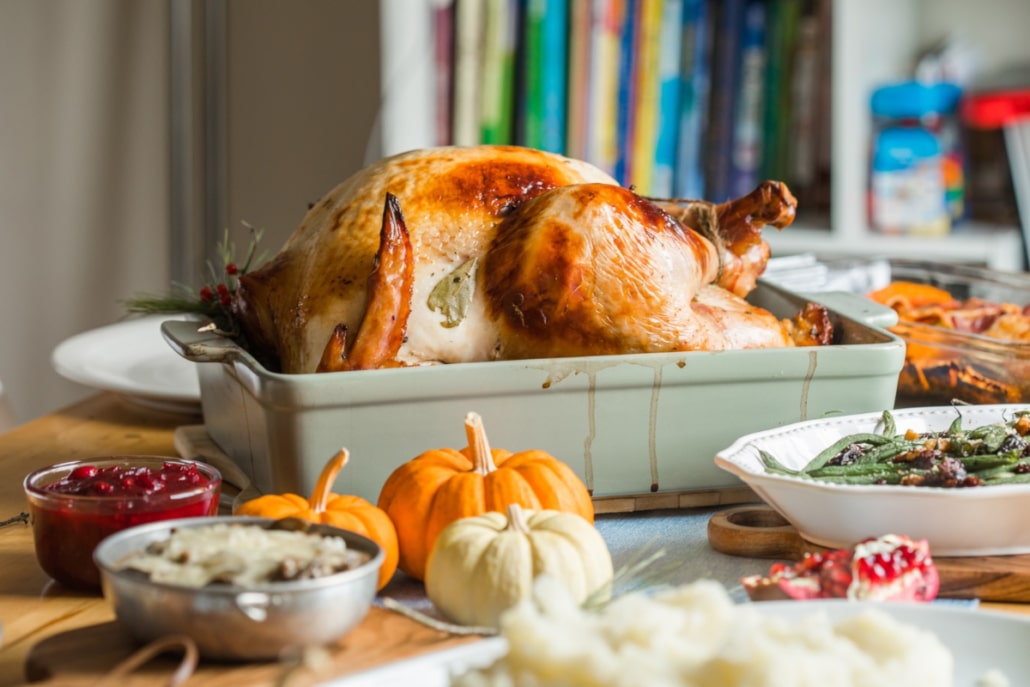
10 Thanksgiving Cooking Disasters and How to Fix Them

Still-frozen turkey? Lumpy gravy? Mashed potatoes that could double as wallpaper paste? Before you throw anything away or declare Thanksgiving officially ruined, try these simple fixes.

There ought to be a Thanksgiving emergency hotline. Press 1 if your turkey is still frozen. Press 2 if your gravy has lumps. Press 3 if your mashed potatoes have the consistency of wallpaper paste.
Funny thing about Thanksgiving. We spend days preparing for a meal that takes about 30 minutes to eat, and somehow the last hour of preparation is when everything decides to go wrong.
The good news is that a surprising number of Thanksgiving cooking disasters are salvageable. Before you toss something in the trash, send somebody to the grocery store or burst into tears over a casserole, try these fixes.
1. Your turkey is still frozen
You reach inside the turkey and discover what amounts to an iceberg. Dinner is in a few hours. Now what?
The fix: You have two options.
Thaw it in cold water. Keep the turkey in its original watertight wrapping or a leakproof bag and submerge it in cold water. Change the water every 30 minutes. Allow about 30 minutes per pound for a completely frozen turkey, less if it’s already partially thawed. Cook it immediately after thawing.
Cook it from frozen. According to the USDA, you can safely roast a frozen turkey in a conventional oven set to at least 325°F. Plan on at least 50% more cooking time than you would for a thawed bird.
Remove all outer packaging before roasting. Using tongs, remove the neck and giblet packet as soon as the turkey has thawed enough during cooking to release them. If the giblets came in a plastic bag that has melted or changed shape during cooking, the turkey is not safe to eat. Cook the stuffing separately.
Do not deep-fry, smoke or grill a frozen turkey, and don’t use an oven roasting bag when cooking a frozen bird.
Whatever you do, resist the temptation to speed things along with hot water or by leaving the turkey on the kitchen counter.
Dinner may be late. That’s considerably better than making everybody sick.
2. The turkey isn’t cooking fast enough
The guests have arrived, the potatoes are ready and the turkey thermometer is telling you something you really don’t want to hear.
The fix: If the skin is getting too dark, loosely cover the browned areas with aluminum foil and continue roasting.
If the breast is cooking faster than the thighs, loosely cover the breast with aluminum foil to help prevent overbrowning while the rest of the turkey finishes cooking.
A whole turkey needs to reach at least 165°F in three places:
- The thickest part of the breast
- The innermost part of the thigh
- The innermost part of the wing
If you’ve stuffed the turkey, the center of the stuffing must also reach 165°F.
Don’t rely on the color of the meat, clear juices or the clock to determine whether your turkey is done. This is where a good instant-read thermometer earns its keep.
In the meantime, put out a few snacks. Nobody needs to know you’re buying time.
3. The turkey is dry
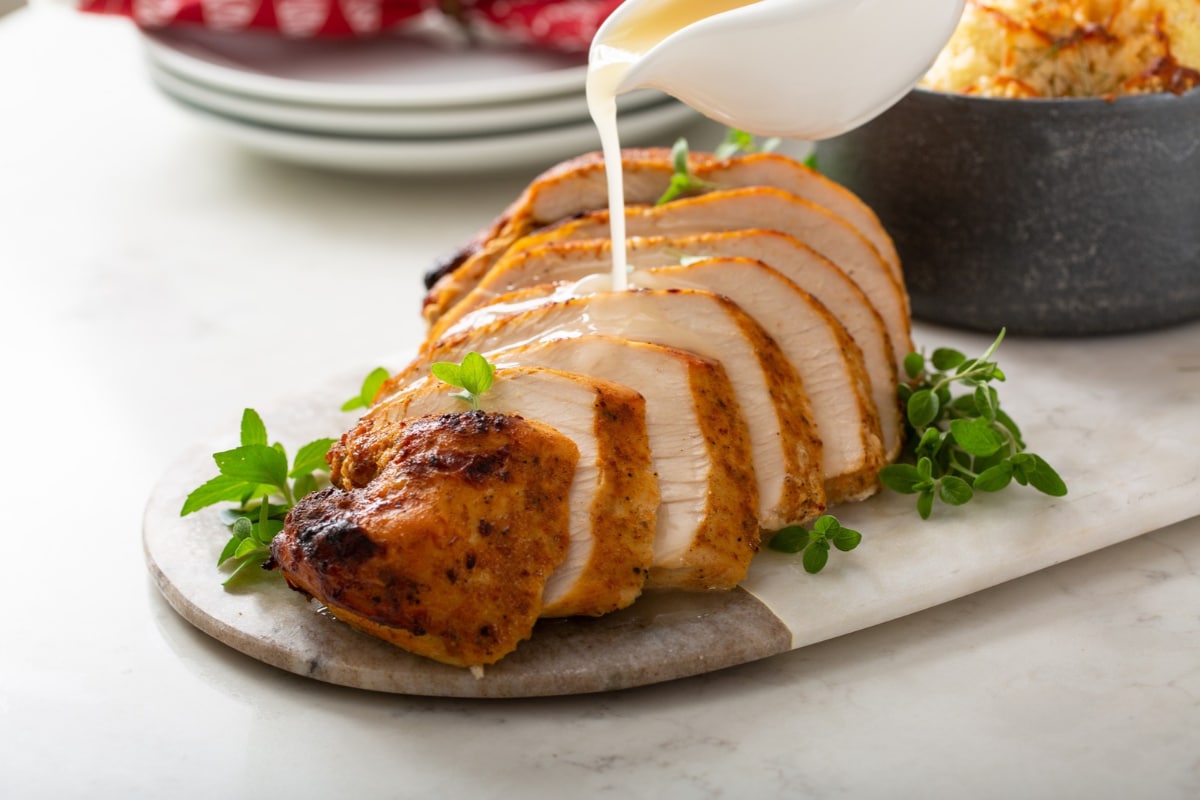
Oh, dear. All those hours of anticipation, and the turkey breast has the texture of an old bath towel.
The fix: Slice the turkey thinly and arrange it on a warm serving platter. Spoon a little hot, low-sodium chicken or turkey broth over the slices. Cover loosely with foil for a few minutes before serving.
The broth won’t magically reverse overcooking, but it will make the meat considerably more pleasant to eat.
Serve with plenty of warm gravy.
Come to think of it, this is an excellent argument for making more gravy than you think you’ll need.
4. The gravy is lumpy
You whisked. You stirred. You whisked some more. And still, there they are.
The fix: Pour the gravy through a fine-mesh strainer into a clean saucepan. Discard the lumps and gently reheat the gravy.
No strainer? An immersion blender can smooth out most lumps right in the saucepan. Just be careful when blending hot liquids.
Taste and adjust the seasoning before serving.
That was easy enough, wasn’t it?
5. The gravy is too thin
There’s a fine line between gravy and soup, and yours appears to have crossed it.
The fix: For every cup of thin gravy, start with:
- 1 teaspoon cornstarch
- 1 tablespoon cold water
Stir the cornstarch and cold water together until completely smooth. Gradually whisk the mixture into the simmering gravy and let it bubble gently for a minute or two.
Still too thin? Repeat with a little more cornstarch mixture until you get the consistency you want.
Remember that gravy thickens somewhat as it cools, so don’t get carried away.
If you’ve gone too far in the other direction, stir in a little warm, unsalted broth until the gravy loosens up.
For next year: My Make-Ahead Mashed Potatoes and Gravy recipe eliminates a good bit of this last-minute excitement.
6. The mashed potatoes are gummy
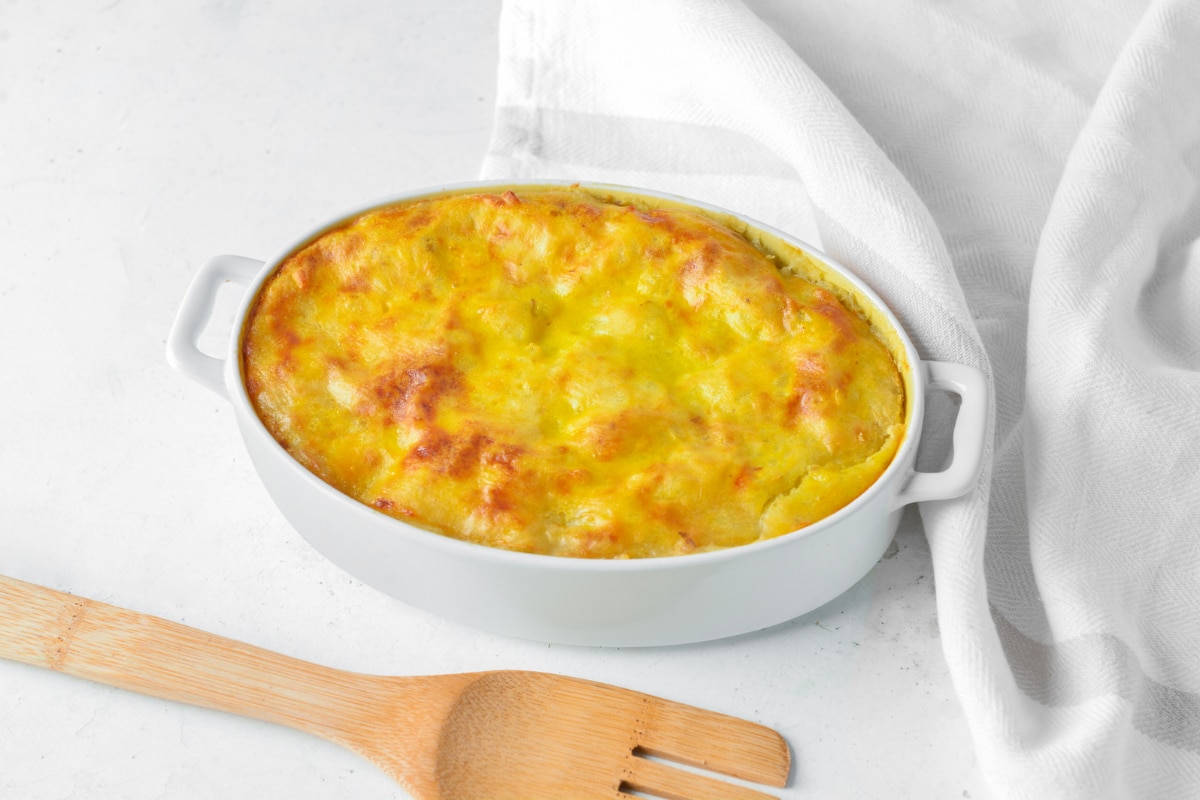
Unfortunately, once mashed potatoes have been overworked and released too much starch, there’s no getting them back to their original fluffy state.
And beating them some more? That’s only going to make matters worse.
The fix: Change the dish.
Gently spread the potatoes in a buttered baking dish. Sprinkle the top with shredded cheese, breadcrumbs or crushed crackers and dot with a little butter.
Pop the dish into a 375°F oven until the topping is golden and the potatoes are hot throughout.
You now have a potato casserole with a golden, crunchy topping. The texture of the potatoes becomes much less noticeable.
As far as your guests are concerned, that was the plan all along.
7. The stuffing is too dry or too soggy
Stuffing can go from one extreme to the other with a surprisingly small amount of liquid.
If it’s too dry: Drizzle warm chicken or turkey broth over the stuffing, a few tablespoons at a time. Cover with foil and return it to the oven briefly to allow the bread to absorb the moisture.
If it’s too soggy: Spread it into a shallower baking dish and return it to a 350°F oven, uncovered. Check it every 10 minutes or so until some of the excess moisture has evaporated and the top begins to crisp.
If it’s extremely wet, gently fold in a handful of toasted, unseasoned bread cubes before returning it to the oven.
Use a food thermometer to make sure the center of the stuffing reaches 165°F before serving.
8. A side dish is too salty
Maybe you forgot that the broth was salted. Or somebody else seasoned the dish when you weren’t looking.
Either way, you can’t take the salt out, but you can reduce its concentration.
The fix: Add more of something that isn’t salted.
- Mashed potatoes: Add cooked, unseasoned potatoes.
- Vegetables: Mix in additional plain cooked vegetables.
- Gravy: Add unsalted broth, then thicken again if necessary.
- Casserole: Add more of the main ingredient if practical, or serve smaller portions alongside an unsalted side dish.
A little lemon juice or cream may help balance the flavor of certain dishes, but neither actually removes salt.
And that old trick about dropping a raw potato into an oversalted pot? The potato absorbs salty liquid, not just the salt. There’s no special salt-removing magic going on there.
Dilution is your best bet.
9. The pie crust is getting too dark
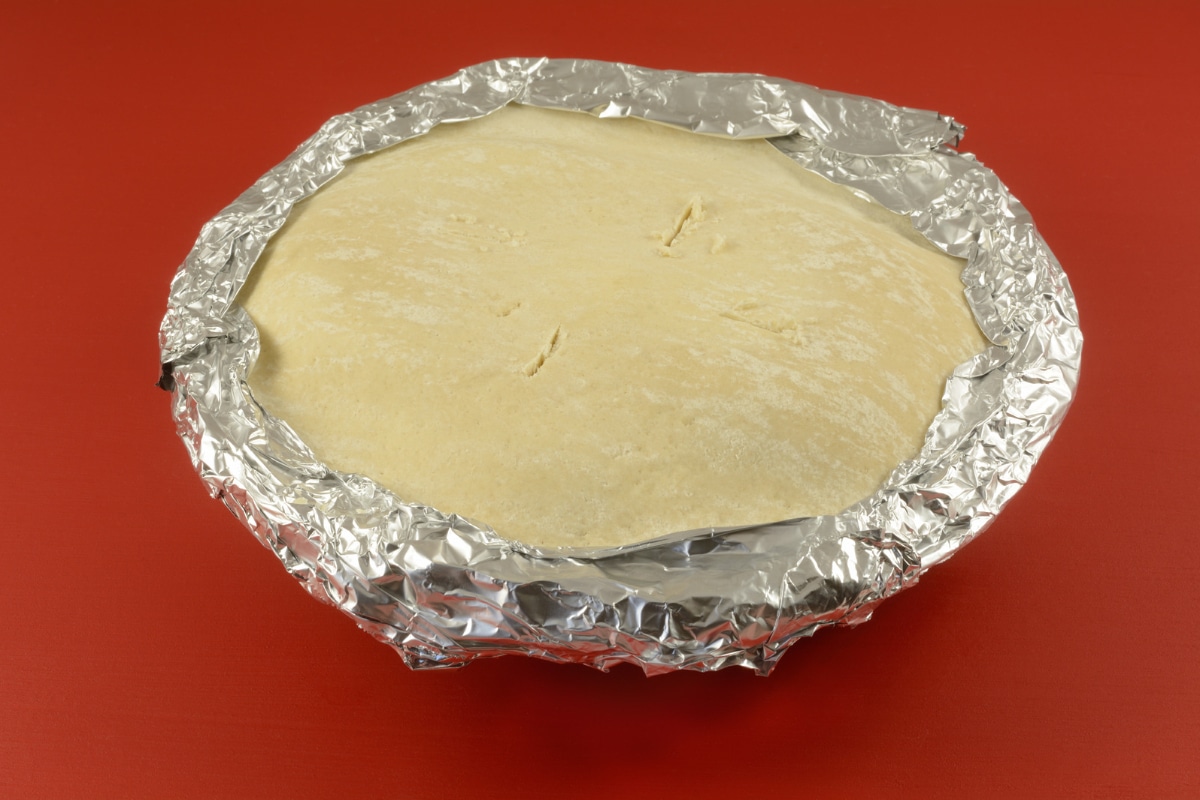
The edges are approaching the color of charcoal, but the filling isn’t anywhere near done.
The fix: Fold strips of aluminum foil loosely around the rim of the pie, covering just the crust edges. Leave the center exposed so the filling can continue cooking.
No need to buy a special pie shield. The foil in your kitchen drawer will do just fine.
And while we’re on the subject of pie emergencies, if your pumpkin pie develops a spectacular crack down the middle, don’t give it another thought.
That’s what whipped cream is for.
10. Everything is ready except one dish
The turkey is done. The vegetables are getting cold. The casserole still needs 25 minutes. And you’re beginning to understand why restaurants employ entire kitchen staffs.
The fix: Stop trying to make every dish come out of the oven at precisely the same moment.
- Let the fully cooked turkey rest for about 20 minutes before carving.
- Transfer hot mashed potatoes to a preheated slow cooker on its warm setting, provided it maintains at least 140°F. If you made the potatoes ahead of time, reheat them to 165°F before transferring them to the slow cooker.
- Keep gravy warm in a small saucepan over low heat, stirring occasionally.
- Use the microwave to heat up vegetables and other suitable side dishes.
- Warm serving bowls and platters with hot water, then empty and dry them before filling.
Keep hot dishes at 140°F or above until serving. Refrigerate perishable food within two hours if it’s not being kept safely hot or cold.
And if one dish simply isn’t ready, serve dinner and bring it out when it is.
I’ve yet to see a Thanksgiving ruined by the late arrival of a sweet potato casserole.
For help coordinating everything, bookmark my Thanksgiving Oven Schedule: How to Get Everything Hot at Once.
There really is a Thanksgiving emergency hotline!
Remember that hotline I mentioned? Turns out there actually is one, at least for food safety questions.
The USDA Meat and Poultry Hotline is staffed by food safety specialists who can answer your questions about thawing, cooking and safely handling your Thanksgiving turkey.
Call 1-888-674-6854.
On Thanksgiving Day, the hotline is open from 8 a.m. to 2 p.m. Eastern Time (5 a.m. to 11 a.m. Pacific Time).
They probably can’t do much about your gummy mashed potatoes, but if you’re wondering whether that turkey is safe to eat, they’re the people to call.
A little perspective
Think back to the Thanksgivings you remember most fondly. Can you recall whether the gravy was perfectly smooth? Whether the pie crust was evenly browned? Whether every side dish arrived at the table piping hot?
Probably not.
Although if somebody dropped the turkey, you probably remember that.
Save what you can, make do with what you have and don’t let a little kitchen mishap keep you from enjoying the people gathered around your table.
Besides, today’s cooking disaster might turn into the family story everybody tells next Thanksgiving.
Question: What’s your most memorable Thanksgiving cooking disaster? Bonus points if it’s something your family still talks about!
EverydayCheapskate™ is reader-supported. We participate in the Amazon Services LLC Associates Program and other affiliate advertising programs, designed to provide a means for us to earn from qualifying purchases, at no cost to you.

More from Everyday Cheapskate
 https://www.everydaycheapskate.com/wp-content/uploads/20261122-Store-bought-coffee-cake-brownies-and-mini-cheesecakes-dressed-up-with-whipped-cream-chocolate-and-fresh-berries.jpg
800
1200
Mary Hunt
https://www.everydaycheapskate.com/wp-content/uploads/EC-Logo-by-Mary-Hunt-Tagline-Trimmed.png
Mary Hunt2026-11-22 11:48:572026-11-22 11:48:579 Easy Ways to Dress Up Store-Bought Desserts for Less
 https://www.everydaycheapskate.com/wp-content/uploads/20261121-Thanksgiving-turkey-in-a-home-kitchen-ready-to-be-timed-using-a-one-oven-Thanksgiving-cooking-schedule.jpg
800
1200
Mary Hunt
https://www.everydaycheapskate.com/wp-content/uploads/EC-Logo-by-Mary-Hunt-Tagline-Trimmed.png
Mary Hunt2026-11-21 11:49:402026-11-21 11:49:40The Thanksgiving Oven Schedule: How to Get Everything Hot at Once
 https://www.everydaycheapskate.com/wp-content/uploads/20261116-Assortment-of-homemade-Christmas-cookies-arranged-on-a-table-for-a-holiday-cookie-exchange-party.jpg
800
1200
Mary Hunt
https://www.everydaycheapskate.com/wp-content/uploads/EC-Logo-by-Mary-Hunt-Tagline-Trimmed.png
Mary Hunt2026-11-17 10:32:042026-11-17 10:32:04How to Host a Cookie Exchange Party Without the Fuss
 https://www.everydaycheapskate.com/wp-content/uploads/20261112-everyday-cheapskate-holiday-gift-guide-2026-for-homechefs-foodies-cooks-food-lovers.jpg
800
1200
Mary Hunt
https://www.everydaycheapskate.com/wp-content/uploads/EC-Logo-by-Mary-Hunt-Tagline-Trimmed.png
Mary Hunt2026-11-12 15:31:372026-11-12 15:37:52Best Christmas Gifts for Foodies & Home Cooks in 2026
 https://www.everydaycheapskate.com/wp-content/uploads/20261031-master-muffin-mix-50-muffin-variations.png
800
1200
Mary Hunt
https://www.everydaycheapskate.com/wp-content/uploads/EC-Logo-by-Mary-Hunt-Tagline-Trimmed.png
Mary Hunt2026-10-31 11:49:252026-10-31 14:16:48The Master Muffin Mix That Makes Holiday Mornings Easy
 https://www.everydaycheapskate.com/wp-content/uploads/20261026-Creamy-homemade-avocado-dressing-with-fresh-avocado-lemon-and-dill.png
800
1200
Mary Hunt
https://www.everydaycheapskate.com/wp-content/uploads/EC-Logo-by-Mary-Hunt-Tagline-Trimmed.png
Mary Hunt2026-10-26 11:49:442026-10-26 13:17:42Creamy Avocado Dressing and Dip Ready in 15 Minutes
 https://www.everydaycheapskate.com/wp-content/uploads/20261017-Woman-opening-refrigerator-stocked-with-fresh-food-and-condiments.png
800
1200
Mary Hunt
https://www.everydaycheapskate.com/wp-content/uploads/EC-Logo-by-Mary-Hunt-Tagline-Trimmed.png
Mary Hunt2026-10-17 12:16:242026-10-17 12:16:24What Temperature Should a Refrigerator and Freezer Be?
 https://www.everydaycheapskate.com/wp-content/uploads/20261016-Crispy-potato-cakes-made-with-leftover-mashed-potatoes.png
800
1200
Mary Hunt
https://www.everydaycheapskate.com/wp-content/uploads/EC-Logo-by-Mary-Hunt-Tagline-Trimmed.png
Mary Hunt2026-10-16 15:54:382026-10-16 15:54:38Got Leftover Mashed Potatoes? Try These 5 Smart Ideas
 https://www.everydaycheapskate.com/wp-content/uploads/20261015-Sweet-pepper-and-onion-relish-in-a-white-bowl-with-crackers-and-fresh-red-bell-peppers.png
800
1200
Mary Hunt
https://www.everydaycheapskate.com/wp-content/uploads/EC-Logo-by-Mary-Hunt-Tagline-Trimmed.png
Mary Hunt2026-10-15 13:14:022026-10-15 13:14:02Sweet Pepper Onion Relish (Perfect Over Cream Cheese)


Leave a Reply
Want to join the discussion?Feel free to contribute!