
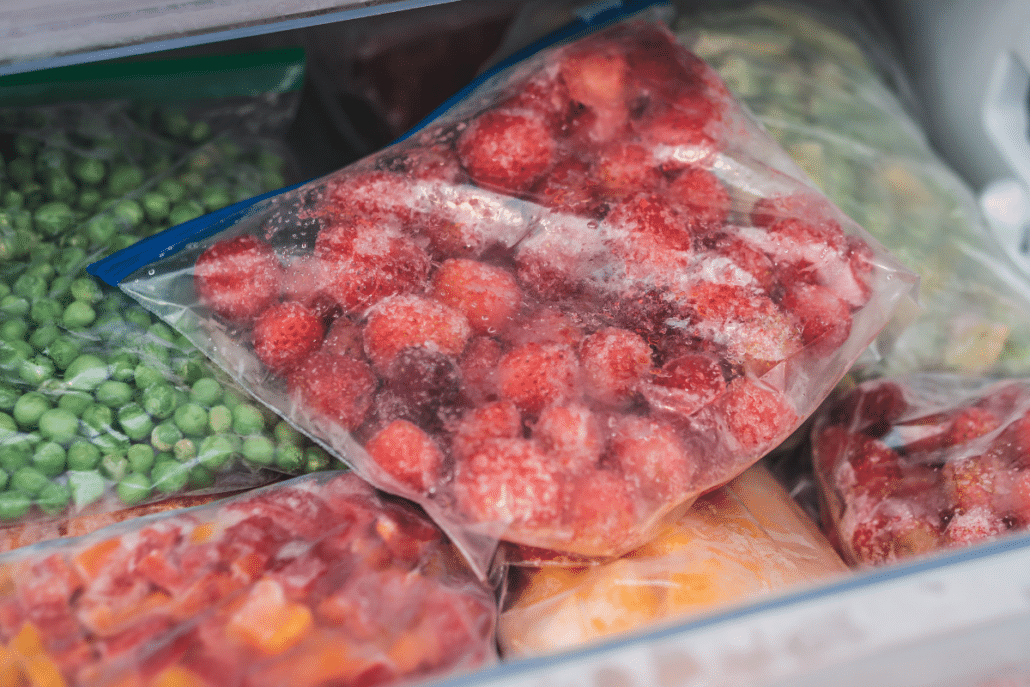
Freeze Summer Produce Now to Taste It All Winter Long


Right now, for about ten glorious weeks, produce is doing its best work. Peaches taste like peaches. Corn is sweet without you having to lie to yourself about it. Then October shows up, and by January you’re paying $6 for a clamshell of strawberries that taste like a snow cone with regrets. I used to just accept that. Then I started freezing summer properly, not just tossing fruit in a bag and hoping. Done right, a bowl of berries in January can taste like it’s still August outside.
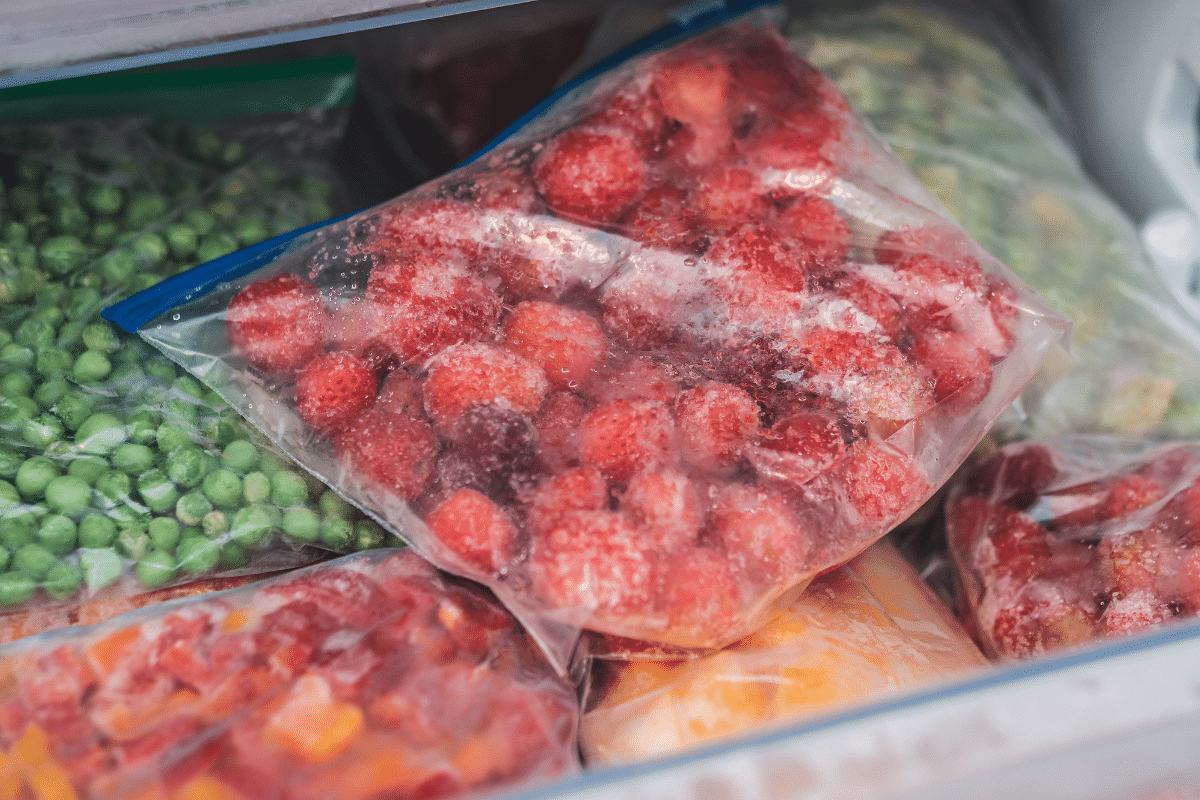
I’ve eaten peach cobbler in a snowstorm and felt genuinely disoriented about the season. That’s the power we’re talking about.
Here’s the catch: there’s a wrong way to do this, and most of us have already done it. You know the bag. Solid frozen brick, corn kernels welded together, strawberries gone mushy and sad the second they thaw. One bad freezer experience and people give up on the whole idea, which is a shame, because the fix is simple. You’re just missing a couple of steps.
I’ve frozen every crop below more times than I can count, including plenty of failures I’d rather not discuss. What’s left is what actually works. Do this right and you’ll have peaches for December pancakes, blueberries for February smoothies, and corn for November chili that tastes like it came straight off the stalk.
The Four Rules That Apply to Almost Everything
1. Flash Freeze Before You Bag
This is the one trick that changes everything. Spread your prepped produce in a single layer on a parchment-lined baking sheet and freeze it for a couple of hours until each piece is solid on its own. Then bag it. Skip this step and you get one giant produce iceberg you have to chip at with a butter knife. Do it right and you can pour out a handful at a time like cereal.
2. Squeeze Out the Air
Air is the enemy. It’s what turns good frozen food into freezer-burned regret. Press as much air as you can out of the bag before sealing. A vacuum sealer does this beautifully, but a straw and a little elbow grease works just fine too.
3. Freeze at Peak Ripeness
Freezing doesn’t fix produce. It just presses pause on whatever state it’s already in. Sour berries go in sour and come out sour. Freeze things when they’re perfect, and “perfect” later will actually mean something.
4. Label with the Date
I learned this one the hard way. Frozen produce stays good for 8 to 12 months. After that it’s still safe, just tired. A piece of tape and a marker saves you from playing freezer archaeology.
Berries (Strawberries, Blueberries, Raspberries, Blackberries)
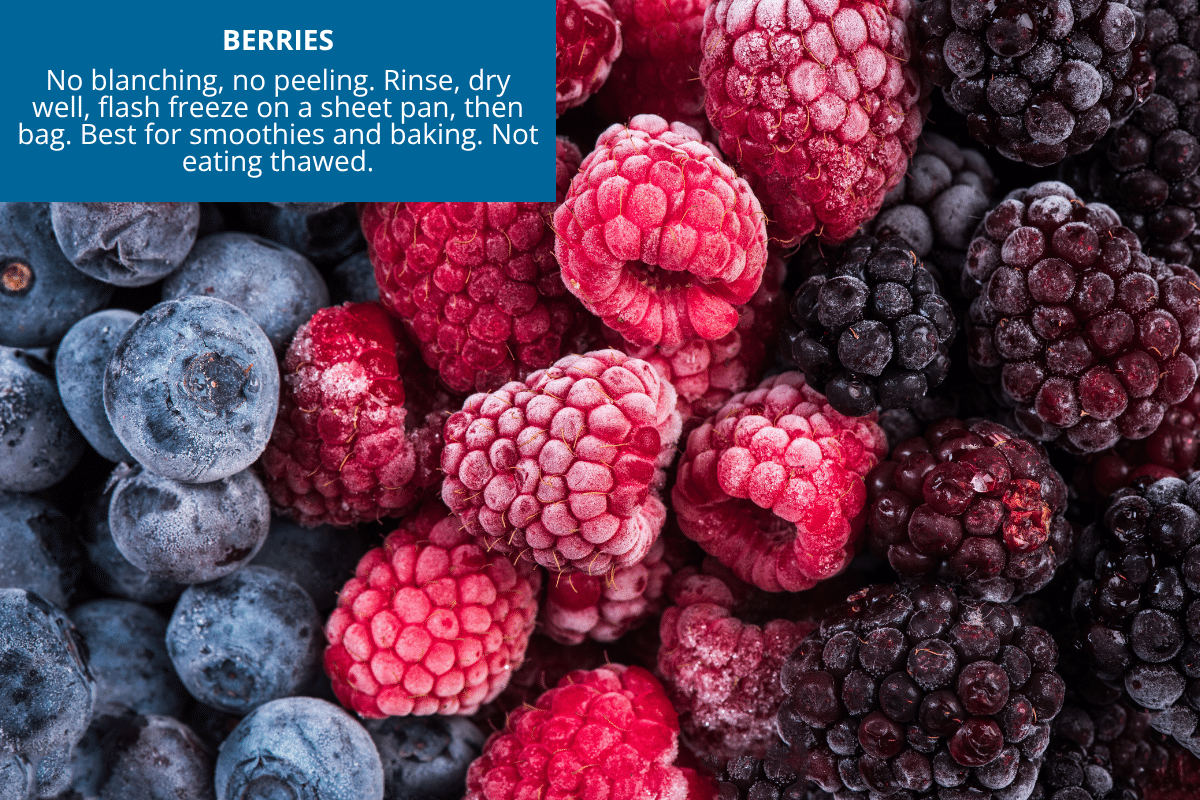
The easiest win in this whole list, and honestly the one that convinced me freezing was worth the trouble in the first place.
Method: Rinse them gently and pat them completely dry. Wet berries turn into one frozen clump no matter how well you flash freeze. Hull and slice strawberries. Leave blueberries and raspberries whole. Spread on a sheet pan, freeze about 2 hours until solid, then bag.
Best uses: Don’t plan on eating these thawed and fresh. The texture just doesn’t survive the trip. But drop them into a smoothie, fold them into muffins, or stir them into oatmeal, and they’re perfect.
Shelf life: 10 to 12 months.
Peaches, Nectarines, and Plums
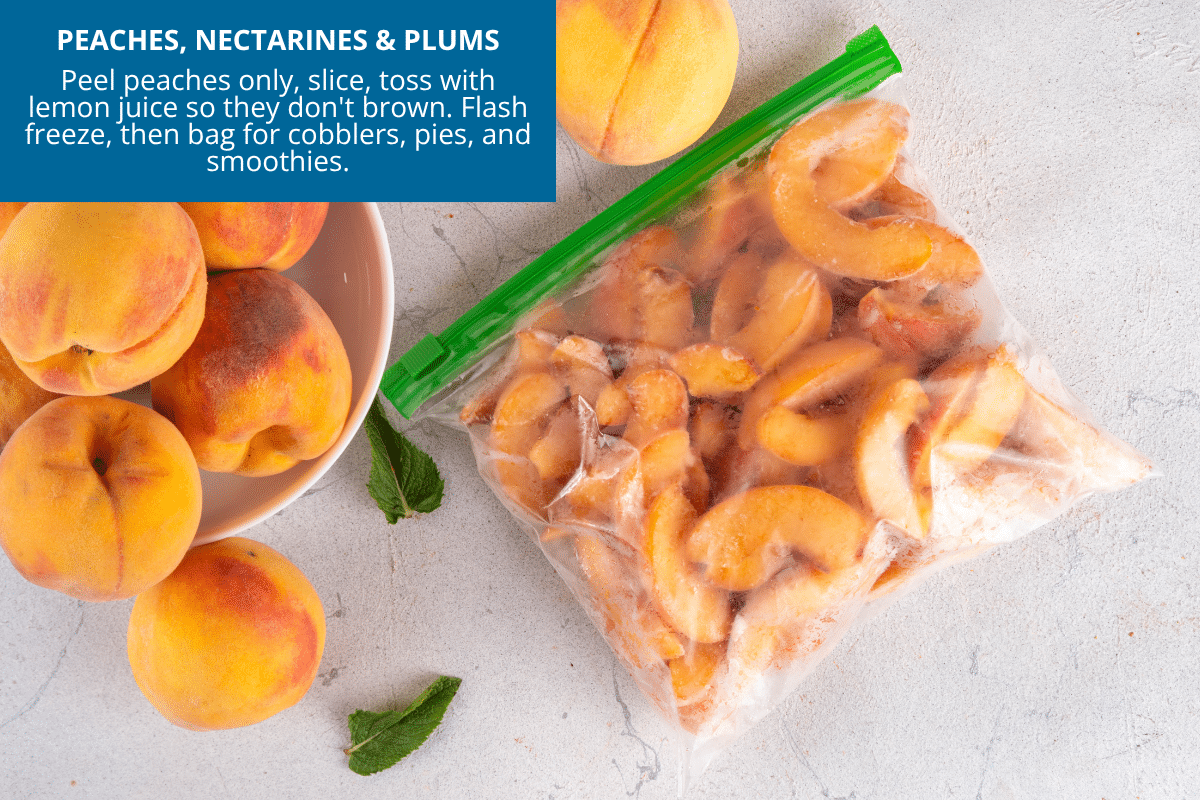
The results are extraordinary if you do it right.
Method: Peel peaches (nectarines and plums keep their skin… one less job for you). Slice into wedges and toss with a tablespoon of lemon juice per pint so they don’t turn that sad brownish-gray. Flash freeze, then bag.
Best uses: I keep a bag of these on hand all winter for cobbler, and there’s something a little smug about pulling out summer fruit in February while everyone else is stuck with grocery-store peaches that bounce like tennis balls. Good in pies, over ice cream, in cocktails, or straight into pancake batter.
Shelf life: 8 to 10 months.
Tomatoes
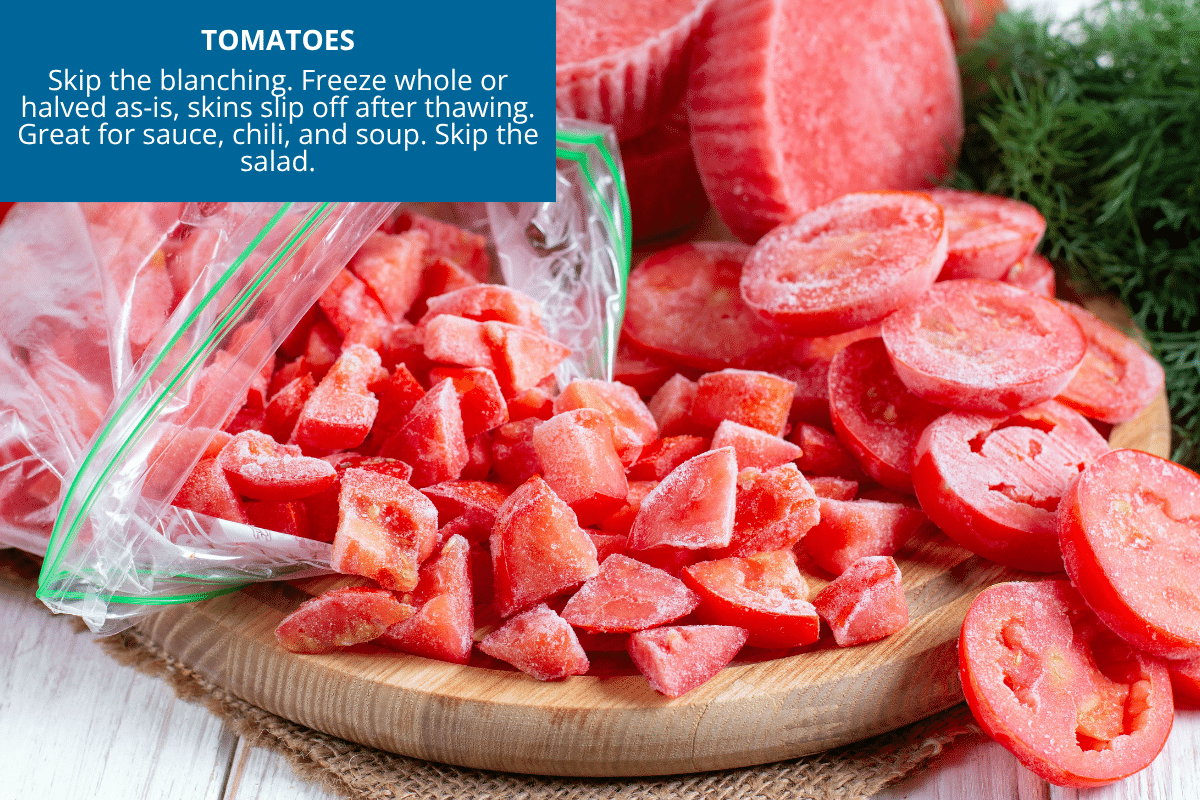
The freezer’s best-kept tomato secret is that you don’t need to blanch or peel. Whole cherry tomatoes, or whole regular tomatoes, freeze beautifully.
Whole method: Wash and dry. Freeze whole (cherry tomatoes) or halved (larger ones). No peeling required. The skins slip right off after thawing.
Sauce method: If you’d rather have sauce ready to go, cook it down first… garlic, olive oil, salt, a slow simmer, then cool and freeze flat in bags so it stacks like files in a drawer.
Best uses: Frozen tomatoes are useless in a salad. Don’t even try. But for pasta sauce, chili, or soup, they’re every bit as good as fresh.
Shelf life: 6 to 8 months.
Corn on the Cob and Kernels
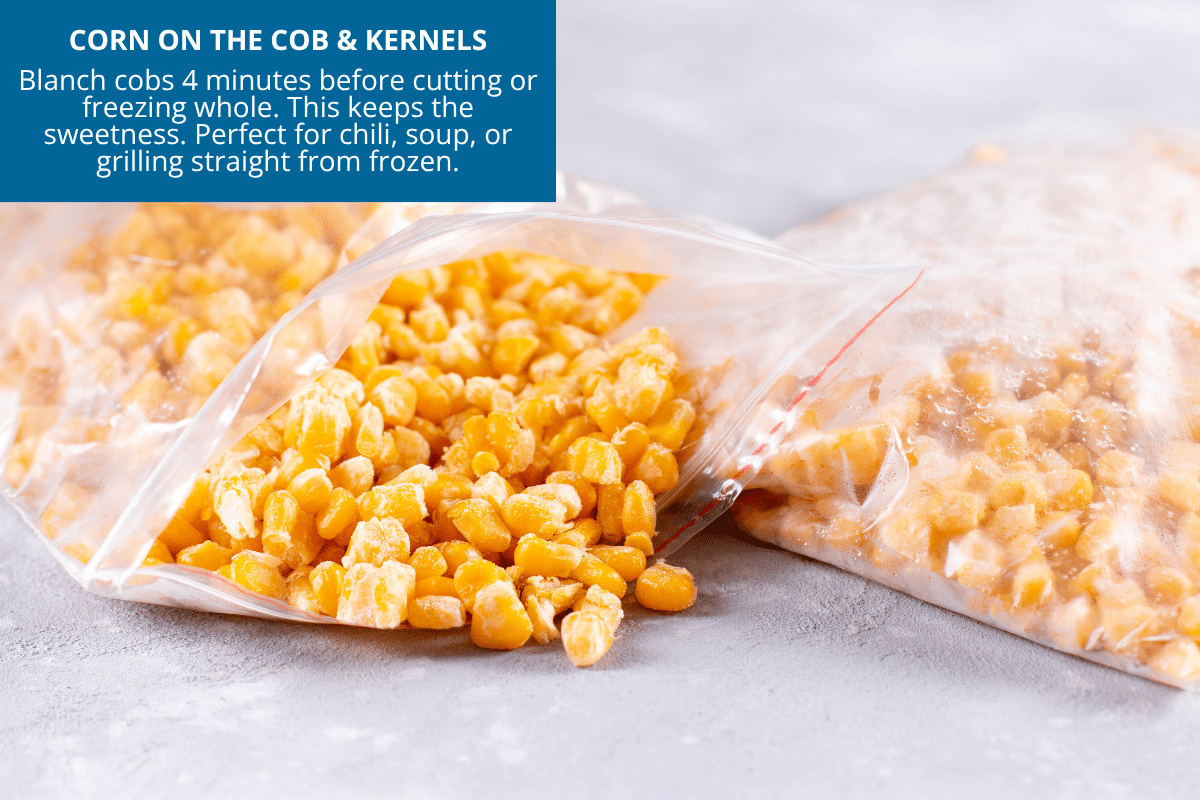
Late-summer corn might be the single best thing on this list to freeze.
Method: Shuck it, then blanch whole cobs in boiling water for 4 minutes. Don’t skip this. It’s what keeps frozen corn from going starchy and sad. Plunge into ice water right after to stop the cooking.
For kernels, cut them off the cob with a sharp knife, flash freeze on a sheet pan, then bag.
Want whole cobs for grilling later? Wrap each one in plastic, then foil, then toss the bunch in a freezer bag.
Best uses: Great in soup, chili, and corn cakes, and the cobs grill beautifully straight from frozen.
Shelf life: 10 to 12 months.
Green Beans
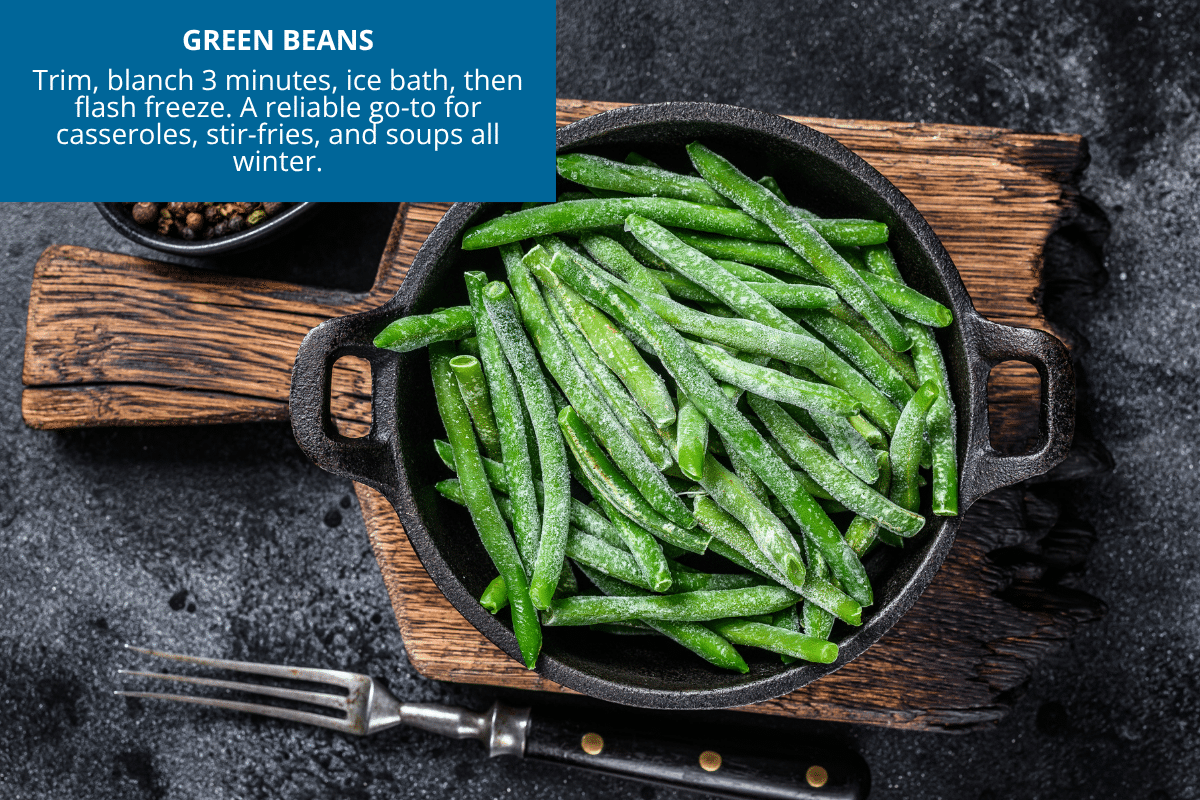
Method: Wash, trim, and cut to whatever length you actually use. Blanch 3 minutes, plunge into ice water, drain well, flash freeze, then bag.
Best uses: Perfect for casseroles, stir-fries, or a quick side dish when you didn’t plan dinner.
Shelf life: 10 to 12 months.
Peppers, Bell and Hot
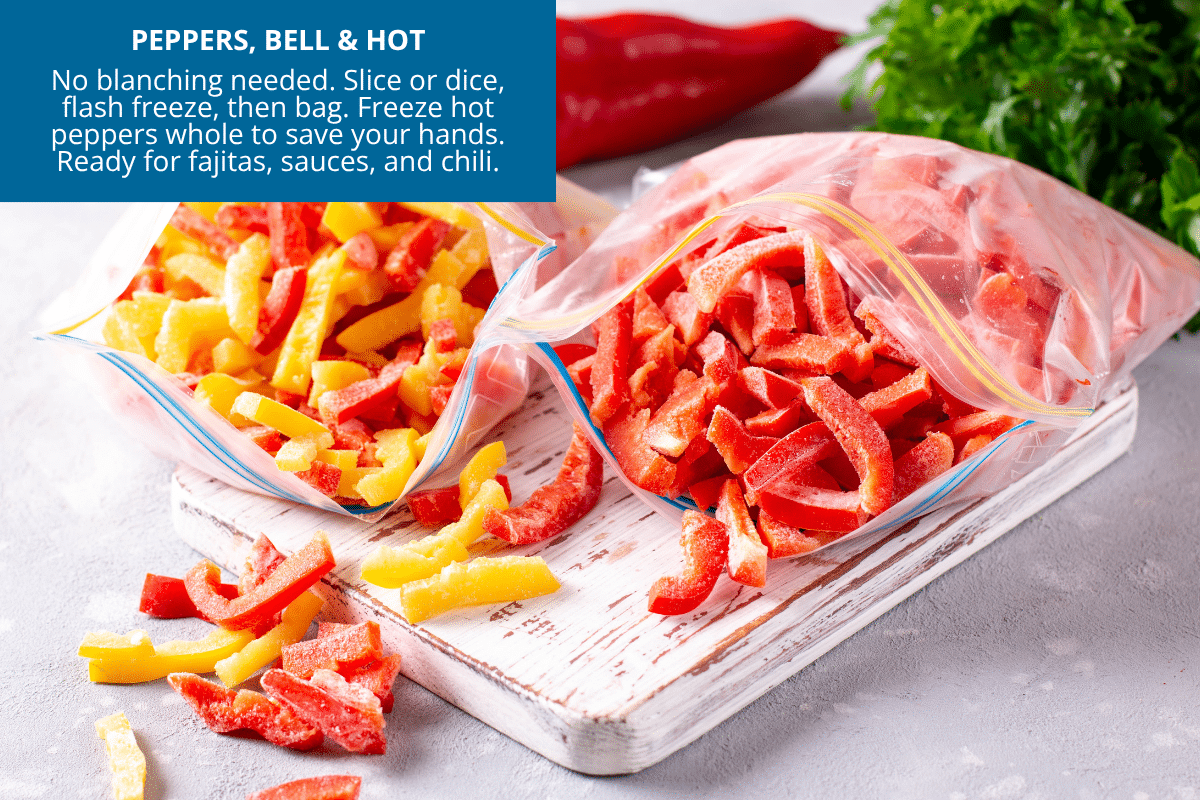
No blanching required, which makes these one of the lowest-effort items here.
Method: Remove seeds and stems, slice or dice however you’ll use them later, flash freeze, then bag.
For hot peppers, I freeze them whole. It saves my hands from a burning sensation I have made the mistake of ignoring more than once.
Best uses: Great in fajitas, stir-fries, sauces, and chili.
Shelf life: 8 to 10 months.
Herbs: Basil, Parsley, Cilantro, Dill
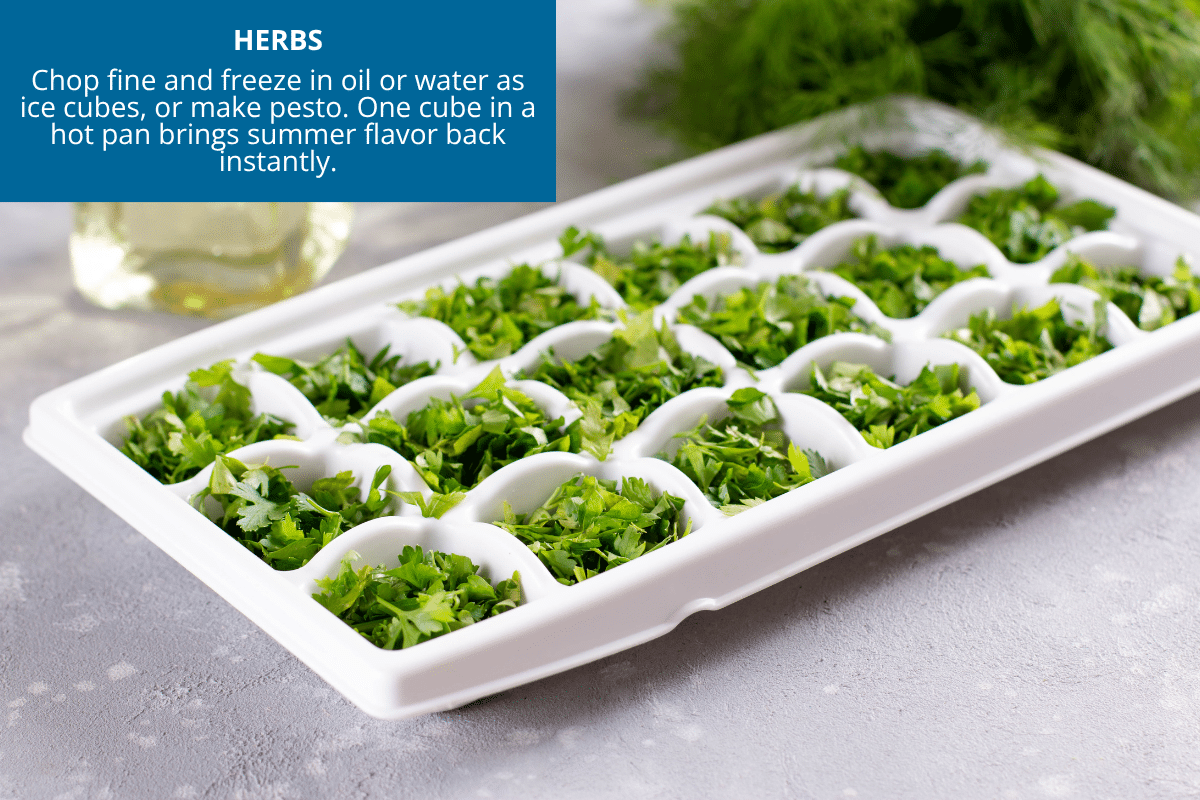
My favorite trick in this entire list: herb ice cubes.
Method: Chop your herbs fine, fill an ice cube tray about two-thirds full, cover with olive oil or water, and freeze solid. Pop them out and store in a bag. Drop one straight into a hot pan and it’s like summer walked back into your kitchen.
If it’s basil, make pesto instead and freeze it in portions. Basil pesto in January tastes exactly like July, which still feels like cheating every single time.
Shelf life: 6 to 8 months for cubes, up to a year for pesto.
Zucchini and Summer Squash
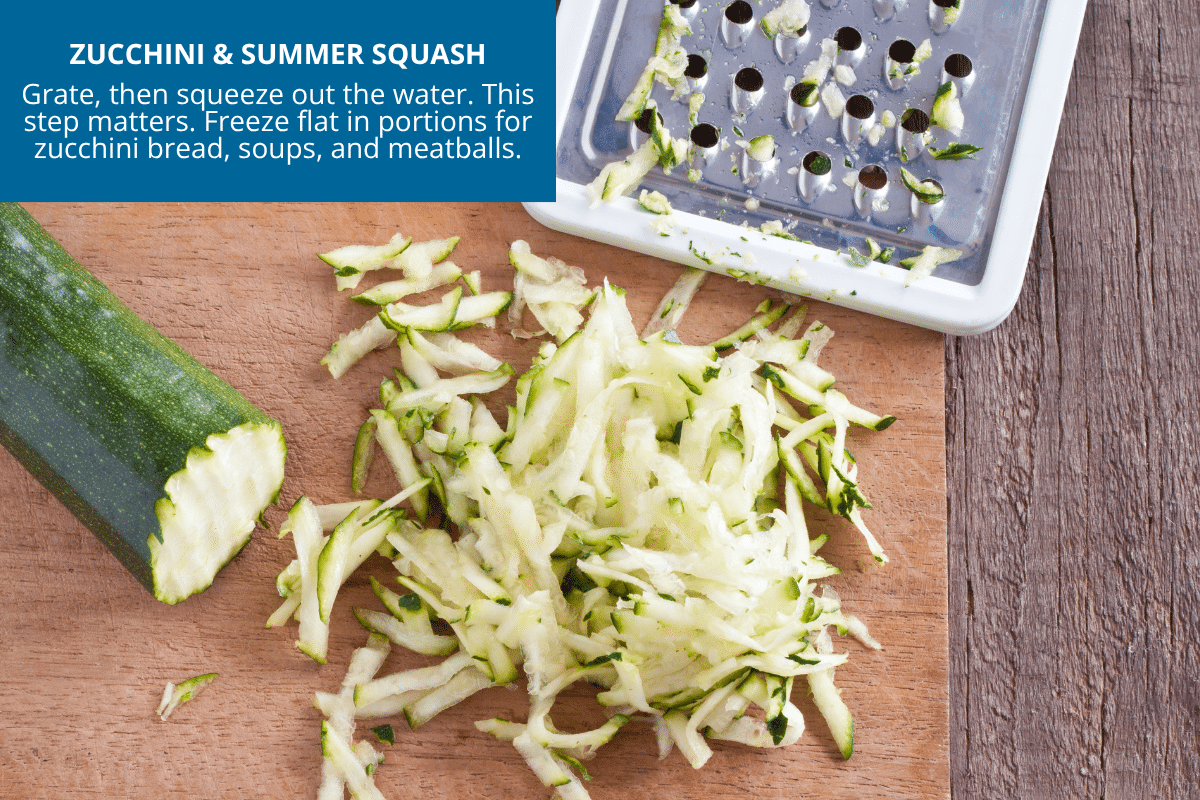
Method: Grate on the large holes of a box grater, then squeeze the water out hard. A clean towel or a nut milk bag works. Squash is almost all water, and skipping this step gets you a watery, sad zucchini bread. Portion into 1- or 2-cup amounts and freeze flat.
Best uses: Good for zucchini bread, muffins, soups, and meatballs.
Shelf life: 10 to 12 months.
What NOT to Freeze
Some produce simply doesn’t freeze well. Save your effort:
- Lettuce and leafy greens. Spinach and kale for cooking are the exception. Those freeze fine.
- Cucumbers. Mush, every time.
- Radishes. The texture goes strange. Trust me.
- Whole potatoes. They turn gray and gritty, though shredded and blanched hash browns are fine.
- Watermelon and cantaloupe. Sad slush. No exceptions.
- Fresh herbs meant for garnish. Fine for cooking, not for looking pretty on a plate.
How to Thaw
Different produce needs different thawing:
- Berries and stone fruit: Use directly from frozen in smoothies. Thaw slightly in the fridge for baking. Never at room temperature.
- Vegetables for cooking: Toss directly into the hot pan or soup pot from frozen. No thawing needed.
- Tomatoes: Run under warm water and the skins slip right off. Then chop and use.
- Corn cobs: Grill from frozen with a light brush of olive oil.
- Herb cubes: Drop directly into hot food.
What This Saves You
A rough estimate. A family that freezes 15 pounds of summer produce across the season (peaches, tomatoes, berries, corn, herbs) saves about $200 to $300 in winter produce costs.
The bigger win, honestly, is eating better in the cold months. Real summer produce instead of whatever pale imitation showed up on a truck from a greenhouse somewhere. An hour or two of prep spread across a couple of weekends in August pays you back all winter. Twelve months later, you’re eating peaches for breakfast in a snowstorm.
Question: Your turn… what do you freeze every single summer without fail? And what have you tried that turned into a freezer disaster? Tell me both. I want the wins and the warnings.
EverydayCheapskate™ is reader-supported. We participate in the Amazon Services LLC Associates Program and other affiliate advertising programs, designed to provide a means for us to earn from qualifying purchases, at no cost to you.

More from Everyday Cheapskate
 https://www.everydaycheapskate.com/wp-content/uploads/20260910-cooking-mistakes-and-how-to-avoid-them-woman-at-stovetop-with-steam-coming-from-pot.png
800
1200
Mary Hunt
https://www.everydaycheapskate.com/wp-content/uploads/EC-Logo-by-Mary-Hunt-Tagline-Trimmed.png
Mary Hunt2026-09-09 12:12:532026-09-09 12:12:535 Cooking Mistakes That Are Quietly Wrecking Your Dinner
https://www.everydaycheapskate.com/wp-content/uploads/20260910-cooking-mistakes-and-how-to-avoid-them-woman-at-stovetop-with-steam-coming-from-pot.png
800
1200
Mary Hunt
https://www.everydaycheapskate.com/wp-content/uploads/EC-Logo-by-Mary-Hunt-Tagline-Trimmed.png
Mary Hunt2026-09-09 12:12:532026-09-09 12:12:535 Cooking Mistakes That Are Quietly Wrecking Your Dinner https://www.everydaycheapskate.com/wp-content/uploads/20260906-homemade-hot-fudge-chocolate-sauce-recipe.png
800
1200
Mary Hunt
https://www.everydaycheapskate.com/wp-content/uploads/EC-Logo-by-Mary-Hunt-Tagline-Trimmed.png
Mary Hunt2026-09-06 15:33:012026-09-06 15:33:01The Best Homemade Hot Fudge Sauce (So Easy, So Rich)
https://www.everydaycheapskate.com/wp-content/uploads/20260906-homemade-hot-fudge-chocolate-sauce-recipe.png
800
1200
Mary Hunt
https://www.everydaycheapskate.com/wp-content/uploads/EC-Logo-by-Mary-Hunt-Tagline-Trimmed.png
Mary Hunt2026-09-06 15:33:012026-09-06 15:33:01The Best Homemade Hot Fudge Sauce (So Easy, So Rich) https://www.everydaycheapskate.com/wp-content/uploads/20260904-easy-baby-back-ribs-recipe-from-oven-to-the-grill.png
800
1200
Mary Hunt
https://www.everydaycheapskate.com/wp-content/uploads/EC-Logo-by-Mary-Hunt-Tagline-Trimmed.png
Mary Hunt2026-09-04 17:27:252026-09-04 17:27:28The Secret to Ribs That Really Do Fall Off the Bone
https://www.everydaycheapskate.com/wp-content/uploads/20260904-easy-baby-back-ribs-recipe-from-oven-to-the-grill.png
800
1200
Mary Hunt
https://www.everydaycheapskate.com/wp-content/uploads/EC-Logo-by-Mary-Hunt-Tagline-Trimmed.png
Mary Hunt2026-09-04 17:27:252026-09-04 17:27:28The Secret to Ribs That Really Do Fall Off the Bone https://www.everydaycheapskate.com/wp-content/uploads/20260902-pumpkin-spice-latte-recipe-homemade-diy.png
800
1200
Mary Hunt
https://www.everydaycheapskate.com/wp-content/uploads/EC-Logo-by-Mary-Hunt-Tagline-Trimmed.png
Mary Hunt2026-09-02 16:16:022026-09-02 16:18:35Homemade Pumpkin Spice Latte Recipe (Cheaper, Better, Faster)
https://www.everydaycheapskate.com/wp-content/uploads/20260902-pumpkin-spice-latte-recipe-homemade-diy.png
800
1200
Mary Hunt
https://www.everydaycheapskate.com/wp-content/uploads/EC-Logo-by-Mary-Hunt-Tagline-Trimmed.png
Mary Hunt2026-09-02 16:16:022026-09-02 16:18:35Homemade Pumpkin Spice Latte Recipe (Cheaper, Better, Faster) https://www.everydaycheapskate.com/wp-content/uploads/20260831-Portrait-of-a-Pitbull-on-a-yellow-background-homemade-dog-treat-recipes.png
800
1200
Mary Hunt
https://www.everydaycheapskate.com/wp-content/uploads/EC-Logo-by-Mary-Hunt-Tagline-Trimmed.png
Mary Hunt2026-08-31 13:06:072026-08-31 13:06:073 Homemade Dog Treats Recipes Your Dog Will Love Most
https://www.everydaycheapskate.com/wp-content/uploads/20260831-Portrait-of-a-Pitbull-on-a-yellow-background-homemade-dog-treat-recipes.png
800
1200
Mary Hunt
https://www.everydaycheapskate.com/wp-content/uploads/EC-Logo-by-Mary-Hunt-Tagline-Trimmed.png
Mary Hunt2026-08-31 13:06:072026-08-31 13:06:073 Homemade Dog Treats Recipes Your Dog Will Love Most https://www.everydaycheapskate.com/wp-content/uploads/20260830-homemade-sloppy-joe-mix-recipe.png
800
1200
Mary Hunt
https://www.everydaycheapskate.com/wp-content/uploads/EC-Logo-by-Mary-Hunt-Tagline-Trimmed.png
Mary Hunt2026-08-30 13:34:482026-08-30 13:34:48Homemade Sloppy Joe Mix: Skip the Store-Bought Packets
https://www.everydaycheapskate.com/wp-content/uploads/20260830-homemade-sloppy-joe-mix-recipe.png
800
1200
Mary Hunt
https://www.everydaycheapskate.com/wp-content/uploads/EC-Logo-by-Mary-Hunt-Tagline-Trimmed.png
Mary Hunt2026-08-30 13:34:482026-08-30 13:34:48Homemade Sloppy Joe Mix: Skip the Store-Bought Packets https://www.everydaycheapskate.com/wp-content/uploads/20260829-fall-yard-projects-to-tackle-before-the-first-frost-foilage-front-yard-home.png
800
1200
Mary Hunt
https://www.everydaycheapskate.com/wp-content/uploads/EC-Logo-by-Mary-Hunt-Tagline-Trimmed.png
Mary Hunt2026-08-29 17:25:422026-08-29 17:25:4210 Fall Yard Tasks to Complete Before First Frost Hits
https://www.everydaycheapskate.com/wp-content/uploads/20260829-fall-yard-projects-to-tackle-before-the-first-frost-foilage-front-yard-home.png
800
1200
Mary Hunt
https://www.everydaycheapskate.com/wp-content/uploads/EC-Logo-by-Mary-Hunt-Tagline-Trimmed.png
Mary Hunt2026-08-29 17:25:422026-08-29 17:25:4210 Fall Yard Tasks to Complete Before First Frost Hits https://www.everydaycheapskate.com/wp-content/uploads/20260820-how-to-keep-ants-away-after-youve-killed-the-ant-hill.png
800
1200
Mary Hunt
https://www.everydaycheapskate.com/wp-content/uploads/EC-Logo-by-Mary-Hunt-Tagline-Trimmed.png
Mary Hunt2026-08-20 14:17:552026-08-20 14:17:57How to Keep Ants Away After You Treat the Ant Hill
https://www.everydaycheapskate.com/wp-content/uploads/20260820-how-to-keep-ants-away-after-youve-killed-the-ant-hill.png
800
1200
Mary Hunt
https://www.everydaycheapskate.com/wp-content/uploads/EC-Logo-by-Mary-Hunt-Tagline-Trimmed.png
Mary Hunt2026-08-20 14:17:552026-08-20 14:17:57How to Keep Ants Away After You Treat the Ant Hill https://www.everydaycheapskate.com/wp-content/uploads/20260815-how-to-water-your-lawn-without-wasting-money.png
800
1200
Mary Hunt
https://www.everydaycheapskate.com/wp-content/uploads/EC-Logo-by-Mary-Hunt-Tagline-Trimmed.png
Mary Hunt2026-08-15 12:45:022026-08-15 12:45:02How to Water Your Lawn Without Wasting Money This Summer
https://www.everydaycheapskate.com/wp-content/uploads/20260815-how-to-water-your-lawn-without-wasting-money.png
800
1200
Mary Hunt
https://www.everydaycheapskate.com/wp-content/uploads/EC-Logo-by-Mary-Hunt-Tagline-Trimmed.png
Mary Hunt2026-08-15 12:45:022026-08-15 12:45:02How to Water Your Lawn Without Wasting Money This Summer

We batter okra and slightly deep fry it (before it starts to brown). We let it cool and flash freeze it and bag it. We get what’s needed and deep fry until golden brown.
As we live in upper MI, growing and harvest seasons are short. However, we grow or can access fresh produce, so everything mentioned above I do — has been a trial and error, but learned what you shared over many years. Some things, like tomatoes, are mostly canned as we do in large quantities. SO thankful for the quality year round, and the savings….though a lot of work.
I freeze the min cucmbers…slice very thin light salt flash freeze then put in bag. add to tomatoes with a little dressing ( do not thaw first) I enjoy them
I always freeze blackberries, blueberries and raspberries.
While not a summer fruit, I freeze cranberries in the fall to use year round.
I’m lucky. I live in S Florida. When everyone elses tomato plants die mine are just getting started. Tropical spinach like malabar and calaloo grows most of the year and so do our fruits. What do I freeze? Mangos. I have 2 trees. Buckets of mangos . And avocados. Both freeze beautifully for my famouse mango coconut blueberry bread and avocados don’t keep much flavor but a huge nutrional boost in smoothies.
are you willing to share your famous mango coconut blueberry bread recipe??? sounds scrumptious!!
We also double-bag our frozen fruit for longer life in the freezer.