

Healthy Fats for Cooking: The Truth About Seed Oils

When it comes to cooking oils, the options are plentiful, but the debate over seed oils has been heating up in recent years. With oils like canola, soybean, corn, and sunflower on the market, many are left wondering: Are these oils really as bad as some say, or is the truth a bit more nuanced? Let’s take a closer look at the science behind seed oils, how they fit into a balanced diet, and whether you should avoid them altogether.

What Are Seed Oils?
Seed oils, sometimes called vegetable oils, come from the seeds of plants like canola (rapeseed), corn, cottonseed, grapeseed, soybean, sunflower, safflower, rice bran, and peanut. You’ll find them in everything from salad dressings to fast food fries. So, what’s the big deal? Well, it’s all about how they’re made.
These oils are typically refined and highly processed to improve shelf life and cooking stability. Unfortunately, the processing methods used in many seed oils strip away much of the oil’s natural nutrients.
The Debate: Are Seed Oils Toxic?
You might have heard of the term “hateful eight” to refer to this group of seed oils. This term stems from the belief that these oils are harmful and should be completely removed from your diet. Some people even claim that they’re toxic, but the science behind these assertions isn’t as clear-cut as it might seem.
The main concern with these oils is their high content of omega-6 polyunsaturated fatty acids (PUFAs). While omega-6 fats are essential for the body, most people consume them in excess, which can contribute to inflammation. Chronic inflammation has been linked to several health issues like heart disease, diabetes, and even certain cancers. The problem arises not from the omega-6s themselves but from an imbalance between omega-6 and omega-3 fats in the diet.
However, it’s important to note that seed oils aren’t inherently dangerous—it’s the context in which they’re often consumed that raises concerns. These oils are found in ultra-processed foods, fast foods, and restaurant meals, all of which tend to be high in unhealthy fats, sugars, and sodium. The real risk lies in the frequency with which these oils are consumed, particularly in the form of packaged foods and fried foods.
Are Seed Oils Safe for Home Cooking?
In moderation, seed oils can be fine for home cooking, but there are a few important caveats to consider. “Occasionally frying your breakfast potatoes in a little bit of sunflower oil isn’t going to throw your body into disarray,” says registered dietitian Julia Zumpano, RD, LD. But the key is moderation. When cooking with seed oils, it’s best to use them infrequently and in small amounts, and be mindful of how they’re processed.
High heat and reuse of these oils can make matters worse. When oils are heated past their smoke points, they can break down and form harmful compounds, which is another reason to be cautious.
The Bigger Picture: Focus on Whole Foods
Rather than completely eliminating seed oils from your diet, the bigger step to take is focusing on a healthy, balanced diet. By reducing your intake of ultra-processed foods, you’ll naturally cut down on seed oils, which are often hidden in packaged snacks, fast foods, and restaurant meals.
If you choose to use seed oils at home, opt for varieties that are pure and unrefined, which are less processed and retain some of their beneficial nutrients. But remember, no oil should be the star of your diet. Healthy fats are important, but they should be part of a larger picture that prioritizes whole, unprocessed foods. This means cooking at home, using healthy fats in moderation, and reducing your reliance on processed foods.
The Bottom Line: Moderation is Key
Seed oils are not as harmful as some might claim, but like most things in nutrition, moderation is key. Infrequent use of oils like sunflower, canola, or soybean in home cooking is not going to make or break your health. The real concern arises when these oils are consumed in excess through ultra-processed foods. So, if you want to avoid seed oils, it may be more about cutting back on processed foods than eliminating the oils themselves.
Healthier Cooking Alternatives
If you’re looking for healthier alternatives to seed oils for high-heat cooking or everyday use, here are a few options:
1. Avocado Oil
A top choice with a high smoke point (around 500°F), making it perfect for frying, sautéing, and roasting. Avocado oil is packed with antioxidants and monounsaturated fats, making it one of the healthiest oils available.
2. Extra Virgin Olive Oil
Ideal for low to medium-heat cooking (up to ~375°F) or drizzling over fresh salads, roasted veggies, and bread.
3. Coconut Oil
Although it has a lower smoke point (~350°F), it’s still fantastic for baking and medium-heat cooking. Rich in stable saturated fats, coconut oil is perfect for adding flavor and texture to your recipes.
4. Ghee
This clarified butter is ideal for high-heat cooking, with a smoke point around 450°F. It adds a rich, buttery flavor without the dairy since the milk solids are removed. Ghee is perfect for those avoiding dairy but craving that buttery taste.
5. Butter
A classic, rich fat that’s great for low to medium-heat cooking and baking. With a lower smoke point (~300°F), butter is best for sautéing or adding to baked goods, but it’s not suitable for frying.
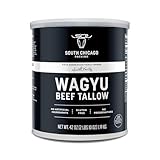
6. Beef Tallow
The original frying fat (yes, McDonald’s used it before switching to seed oils!). Beef tallow is incredibly stable at high temperatures, making it ideal for frying and bringing unmatched flavor to your dishes.
7. Lard
A staple in many kitchens, lard is great for high-temperature cooking like frying, roasting, and making flaky pastries. It’s one of the most stable fats out there and works wonders with meats like pork, chicken, and beef.
8. Macadamia Nut Oil
Though less common, this oil shines with a high smoke point (~400°F) and a smooth, buttery flavor. Rich in monounsaturated fats, macadamia nut oil is perfect for light sautéing or even as a salad dressing.
So, What’s the Best Choice?
When selecting the right oil or fat, consider the smoke point, flavor, and health benefits. Here’s a simple guide to help you choose the best fit for your cooking needs:
For High-Heat Cooking (Frying, Searing, Roasting)
For high-heat tasks, you want oils that can handle the temperature without breaking down. These fats are up for the challenge:
- Avocado Oil
- Ghee
- Macadamia Nut Oil
- Tallow
- Lard
For Medium-Heat Cooking (Sautéing, Baking)
For moderate heat, you need oils that offer a balance of flavor and stability. These options are perfect for sautéing and baking:
- Extra Virgin Olive Oil
- Butter
For No-Heat Uses (Salads, Drizzling, Dips)
Some oils shine best when you don’t need to heat them at all. These are perfect for cold dishes or as finishing touches:
- Extra Virgin Olive Oil
- Macadamia Nut Oil
Beef Tallow: A Top Choice for Deep Frying
Beef tallow is one of the best options for deep frying, thanks to its high heat stability and ability to enhance flavor and crispness. Made from rendered beef fat, tallow consists primarily of saturated and monounsaturated fats, making it highly resistant to oxidation at high temperatures. This means it won’t break down as quickly as vegetable oils, reducing the risk of harmful compounds forming during frying. For the best quality, opt for tallow from grass-fed cattle, as it contains a healthier fat profile compared to grain-fed sources.
Other animal fats, such as lard, ghee, and fat drippings, also hold up well for deep frying. If you prefer plant-based options, avocado and olive oil are stable alternatives, though their flavors may change with extended frying. Whichever you choose, using stable fats ensures your fried foods are crispy, flavorful, and less prone to oxidation.
Final Thoughts
At the end of the day, balance is key. It’s perfectly fine to use seed oils occasionally, but focusing on whole, unprocessed foods and cutting back on packaged or fried items (no matter the oil) is a smart long-term strategy. A well-rounded diet with a variety of nutrient-rich foods ensures you’re getting the healthy fats your body needs—without overdoing it on any one type.
Question: How do you feel about cooking with seed oils? Have you made any changes to your cooking habits lately? Let us know in the comments!
EverydayCheapskate™ is reader-supported. We participate in the Amazon Services LLC Associates Program and other affiliate advertising programs, designed to provide a means for us to earn from qualifying purchases, at no cost to you.

More from Everyday Cheapskate
 https://www.everydaycheapskate.com/wp-content/uploads/20260831-Portrait-of-a-Pitbull-on-a-yellow-background-homemade-dog-treat-recipes.png
800
1200
Mary Hunt
https://www.everydaycheapskate.com/wp-content/uploads/EC-Logo-by-Mary-Hunt-Tagline-Trimmed.png
Mary Hunt2026-08-31 13:06:072026-08-31 13:06:073 Homemade Dog Treats Recipes Your Dog Will Love Most
https://www.everydaycheapskate.com/wp-content/uploads/20260831-Portrait-of-a-Pitbull-on-a-yellow-background-homemade-dog-treat-recipes.png
800
1200
Mary Hunt
https://www.everydaycheapskate.com/wp-content/uploads/EC-Logo-by-Mary-Hunt-Tagline-Trimmed.png
Mary Hunt2026-08-31 13:06:072026-08-31 13:06:073 Homemade Dog Treats Recipes Your Dog Will Love Most https://www.everydaycheapskate.com/wp-content/uploads/20260830-homemade-sloppy-joe-mix-recipe.png
800
1200
Mary Hunt
https://www.everydaycheapskate.com/wp-content/uploads/EC-Logo-by-Mary-Hunt-Tagline-Trimmed.png
Mary Hunt2026-08-30 13:34:482026-08-30 13:34:48Homemade Sloppy Joe Mix: Skip the Store-Bought Packets
https://www.everydaycheapskate.com/wp-content/uploads/20260830-homemade-sloppy-joe-mix-recipe.png
800
1200
Mary Hunt
https://www.everydaycheapskate.com/wp-content/uploads/EC-Logo-by-Mary-Hunt-Tagline-Trimmed.png
Mary Hunt2026-08-30 13:34:482026-08-30 13:34:48Homemade Sloppy Joe Mix: Skip the Store-Bought Packets https://www.everydaycheapskate.com/wp-content/uploads/20260824-house-rules-for-adult-children.png
800
1200
Mary Hunt
https://www.everydaycheapskate.com/wp-content/uploads/EC-Logo-by-Mary-Hunt-Tagline-Trimmed.png
Mary Hunt2026-08-24 12:21:382026-08-24 12:23:50House Rules for Adult Children Living at Home (Without Losing Your Mind or Your Garage)
https://www.everydaycheapskate.com/wp-content/uploads/20260824-house-rules-for-adult-children.png
800
1200
Mary Hunt
https://www.everydaycheapskate.com/wp-content/uploads/EC-Logo-by-Mary-Hunt-Tagline-Trimmed.png
Mary Hunt2026-08-24 12:21:382026-08-24 12:23:50House Rules for Adult Children Living at Home (Without Losing Your Mind or Your Garage) https://www.everydaycheapskate.com/wp-content/uploads/20260822-central-AC-maintenance-air-condenser-outdoors.png
800
1200
Mary Hunt
https://www.everydaycheapskate.com/wp-content/uploads/EC-Logo-by-Mary-Hunt-Tagline-Trimmed.png
Mary Hunt2026-08-22 14:19:562026-08-22 14:19:59How to Extend the Life of Your Central AC (5 Late-Summer Tune-Up Tips)
https://www.everydaycheapskate.com/wp-content/uploads/20260822-central-AC-maintenance-air-condenser-outdoors.png
800
1200
Mary Hunt
https://www.everydaycheapskate.com/wp-content/uploads/EC-Logo-by-Mary-Hunt-Tagline-Trimmed.png
Mary Hunt2026-08-22 14:19:562026-08-22 14:19:59How to Extend the Life of Your Central AC (5 Late-Summer Tune-Up Tips) https://www.everydaycheapskate.com/wp-content/uploads/20260817-thrift-store-sign-with-blue-cloudy-sky-in-background.png
800
1200
Mary Hunt
https://www.everydaycheapskate.com/wp-content/uploads/EC-Logo-by-Mary-Hunt-Tagline-Trimmed.png
Mary Hunt2026-08-17 09:17:472026-08-17 09:17:47The Donation Box Mistakes Thrift Stores Wish We’d Skip
https://www.everydaycheapskate.com/wp-content/uploads/20260817-thrift-store-sign-with-blue-cloudy-sky-in-background.png
800
1200
Mary Hunt
https://www.everydaycheapskate.com/wp-content/uploads/EC-Logo-by-Mary-Hunt-Tagline-Trimmed.png
Mary Hunt2026-08-17 09:17:472026-08-17 09:17:47The Donation Box Mistakes Thrift Stores Wish We’d Skip https://www.everydaycheapskate.com/wp-content/uploads/20260815-how-to-water-your-lawn-without-wasting-money.png
800
1200
Mary Hunt
https://www.everydaycheapskate.com/wp-content/uploads/EC-Logo-by-Mary-Hunt-Tagline-Trimmed.png
Mary Hunt2026-08-15 12:45:022026-08-15 12:45:02How to Water Your Lawn Without Wasting Money This Summer
https://www.everydaycheapskate.com/wp-content/uploads/20260815-how-to-water-your-lawn-without-wasting-money.png
800
1200
Mary Hunt
https://www.everydaycheapskate.com/wp-content/uploads/EC-Logo-by-Mary-Hunt-Tagline-Trimmed.png
Mary Hunt2026-08-15 12:45:022026-08-15 12:45:02How to Water Your Lawn Without Wasting Money This Summer https://www.everydaycheapskate.com/wp-content/uploads/20260814-Slow-Cooker-Peach-Cobbler.png
800
1200
Mary Hunt
https://www.everydaycheapskate.com/wp-content/uploads/EC-Logo-by-Mary-Hunt-Tagline-Trimmed.png
Mary Hunt2026-08-14 22:48:112026-08-14 22:48:11Easy Slow Cooker Peach Cobbler with Boxed Cake Mix
https://www.everydaycheapskate.com/wp-content/uploads/20260814-Slow-Cooker-Peach-Cobbler.png
800
1200
Mary Hunt
https://www.everydaycheapskate.com/wp-content/uploads/EC-Logo-by-Mary-Hunt-Tagline-Trimmed.png
Mary Hunt2026-08-14 22:48:112026-08-14 22:48:11Easy Slow Cooker Peach Cobbler with Boxed Cake Mix https://www.everydaycheapskate.com/wp-content/uploads/20260813-real-hourly-wage-for-a-second-income.png
800
1200
Mary Hunt
https://www.everydaycheapskate.com/wp-content/uploads/EC-Logo-by-Mary-Hunt-Tagline-Trimmed.png
Mary Hunt2026-08-13 21:16:562026-08-13 21:18:10What’s the Real Hourly Wage of Your Second Income Job?
https://www.everydaycheapskate.com/wp-content/uploads/20260813-real-hourly-wage-for-a-second-income.png
800
1200
Mary Hunt
https://www.everydaycheapskate.com/wp-content/uploads/EC-Logo-by-Mary-Hunt-Tagline-Trimmed.png
Mary Hunt2026-08-13 21:16:562026-08-13 21:18:10What’s the Real Hourly Wage of Your Second Income Job? https://www.everydaycheapskate.com/wp-content/uploads/20260812-zucchini-overload-what-to-do-with-a-bunch-of-zucchini.png
800
1200
Mary Hunt
https://www.everydaycheapskate.com/wp-content/uploads/EC-Logo-by-Mary-Hunt-Tagline-Trimmed.png
Mary Hunt2026-08-12 17:48:312026-08-12 17:48:31Zucchini Overload? 10 Ways to Use Up Your Garden Surplus
https://www.everydaycheapskate.com/wp-content/uploads/20260812-zucchini-overload-what-to-do-with-a-bunch-of-zucchini.png
800
1200
Mary Hunt
https://www.everydaycheapskate.com/wp-content/uploads/EC-Logo-by-Mary-Hunt-Tagline-Trimmed.png
Mary Hunt2026-08-12 17:48:312026-08-12 17:48:31Zucchini Overload? 10 Ways to Use Up Your Garden SurplusPlease keep your comments positive, encouraging, helpful, brief,
and on-topic in keeping with EC Commenting Guidelines
Last update on 2026-09-02 / Affiliate links / Images from Amazon Product Advertising API


Makes me wonder if we shouldnt eat seed or is it just cause seed oil is heated? I need to know cause I like seeds and nuts.
The seed oils become problematic when they are heated past a certain temperature. Also, like all heavily processed foods, it’s the additives and the processing that really makes them unhealthy. But remember, everything in moderations. Water is essential for life but if you drink too much, too fast, you will have a less than great day.
Mary, I have been a fan since I first heard you on radio with Focus on the Family with Dr. Dobson. Thank you for all the years of helpful hints and info. I have been hearing about seed oils and have started using avocado oil for most frying. But you answered my “why” question. Thank you so much!
Thanks Nicole! We go way back and I’m happy you’re still along for the ride!
Question: How do you feel about cooking with seed oils? Have you made any changes to your cooking habits lately? Let us know in the comments! Avoid all seed oil, especially in home cooking. they are too high in Omega 6, American diet is already tooooo high in Omega 6, so avoid it when possible.
g.r. nutrition major.
I mainly use organic coconut oil. It’s great for sautéing and if you buy good quality, it adds no taste to the food. I have an air fryer so I don’t need an oil for deep frying. In general, I don’t use high heat for cooking. I use butter when cooking at low heat (eggs, fish). For flavor I sometimes use a little bit of bacon grease from uncured bacon made with organic pork. I do a lot of cooking and baking, and those things are pretty much all I need. I make all of my own salad dressings from scratch using a very high quality extra virgin olive oil that’s never been heated.
Hi Mary! I’m one of your biggest fans for the past 20 years (or more!). Thanks for all your great advice and information.
I use Canola oil to make spreadable butter. 1/2 cup of canola oil and 2 sticks of butter, in a food processor and I have spreadable butter for a fraction of the cost of Land of Lakes (9.00 a pound). I would say I use about one full cup of canola oil per week in this concoction and a little more for cooking.
Now I’m learning that canola oil is bad for you! EVOO is too expensive for us and has a strong taste my husband doesn’t like. Avocado oil is probably expensive too. Now, I’m unsure if I’m feeding my family an unhealthy food, and I’m not sure there is an alternative. This is a pickle!
Best wishes to you,
Canola Oil Girl
NYC
Thank you, Mary. I agree with everything you have said, however one of the main reasons we avoid seed oils is due not only to the processing (in some cases) but to the harmful chemical sprays on the fields. You did not mention that at all. Have you researched that part?
That’s a very good point.
The problem with moderation is two-fold. First, most people won’t keep track accurately of how much they’re getting. Some will record every gram, faithfully. But most of us don’t have that kind of time and devotion. There’s also the question of just how much we’re to limit ourselves to. Even the experts can only give their best guess as to what constitutes a safe quantity to consume. Secondly, we’re not all identical genetically. And that means that seed oils can be more harmful, and in smaller quantities, to us than to others. And that makes it even more difficult to determine a safe level of consumption. There’s just too much at stake to risk the many dangers to our health posed by seed oils. I believe it’s better and easier to simply avoid them. After all, it’s not as though there aren’t safer things to use.