
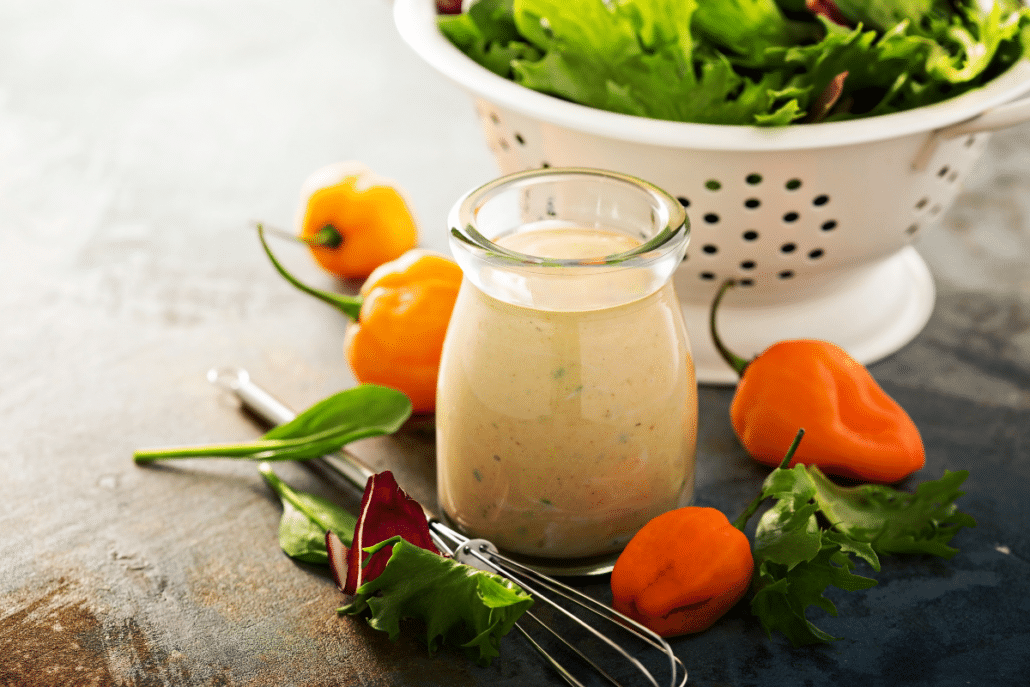
Sweet Onion Salad Dressing (You’ll Never Buy Bottled Again)


Here’s a confession: I used to think salad dressing was one of those things you just… bought. Little glass bottle, big price tag, ingredient list longer than my grocery receipt. Then I made this one, and now I feel a little silly about all those years.
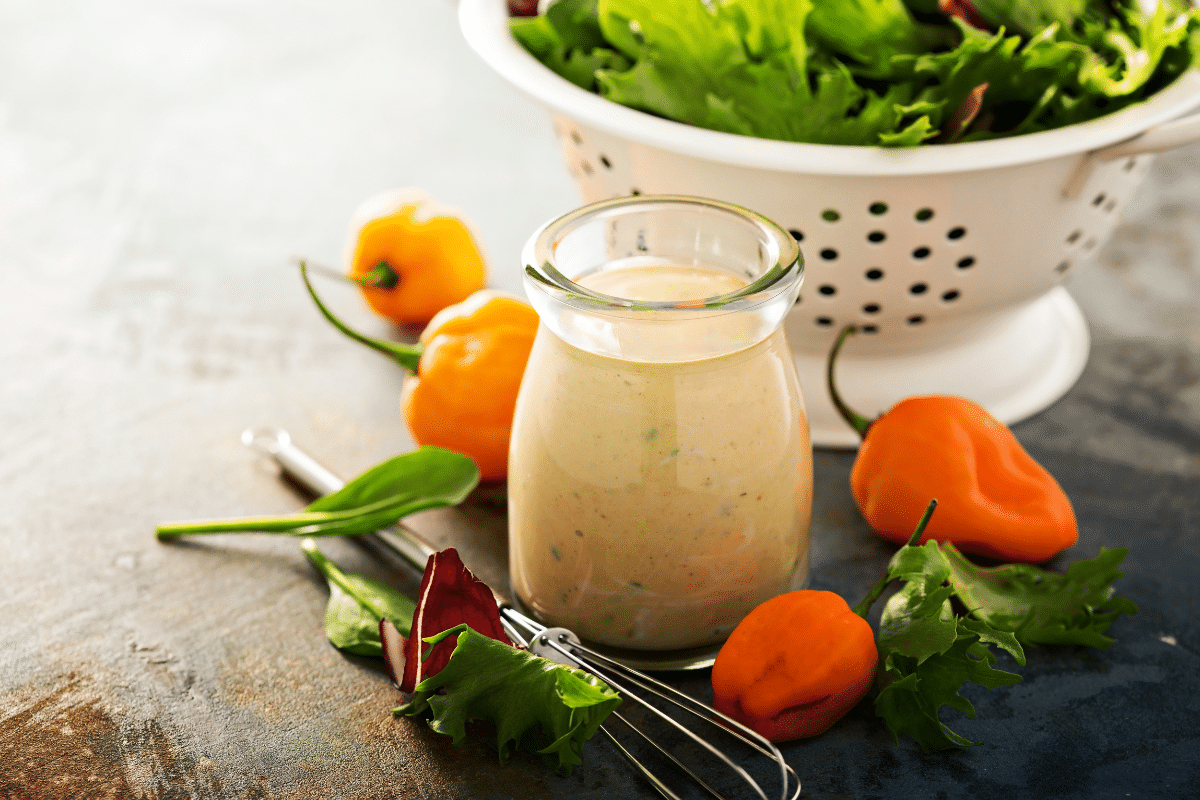
The secret’s not fancy. You grate a sweet onion and cook it down for a few minutes. That’s it. That’s the trick that turns a raw, sharp onion into something sweet and almost caramel-y and it’s the whole reason this dressing tastes like it came from a restaurant kitchen instead of your pantry.
What You’ll Need
Sugar
Sugar does double duty here. It’s not just sweetening the dressing. It’s what balances out the onion’s natural bite once it hits the pan. If you want to dial it back, you can drop to ½ cup with no real loss, or swap in ½ cup honey for a rounder, less sharp sweetness.
Salt
Salt keeps all that sugar from tasting like dessert. Don’t skip it just because the recipe seems sweet enough already.
Dry Mustard
Dry mustard is the ingredient doing the quiet work. Leave it out and the dressing tastes flat, like something’s missing and you can’t quite name it. No dry mustard in the cabinet? A teaspoon or two of grainy or Dijon mustard does the job just as well.
Celery Seed
Celery seed is small but it’s not optional in my book. It’s what keeps this from tasting like a straight sugar-and-vinegar situation and gives it that little savory backbone. If you truly don’t have it, the dressing will still work. It just won’t taste quite like this one.
Sweet Onion, Grated
This is the one place I won’t budge, and it’s actually two rules in one. First, it has to be a sweet variety: Vidalia, Walla Walla, Maui, whatever your grocery store calls it. A regular yellow or white onion stays sharp even after cooking, and it’ll fight the sugar instead of working with it.
Second, grate it. Don’t dice it, don’t shortcut it. Grating is what lets the onion melt into the dressing instead of sitting there in stubborn little chunks. A box grater and two minutes of mild eye-watering. Worth it. This is the ingredient the whole recipe is built around, so don’t substitute your way around either part of it.
Vegetable Oil
Vegetable oil is there to bind everything into a proper dressing instead of a syrup. Any neutral oil works: canola, avocado, whatever’s in your pantry. Extra virgin olive oil is fine too, but it brings its own flavor along, so the dressing will taste a little more “olive oil-forward” than the original.
Vinegar
Vinegar matters more than you’d think. White wine, rice, or apple cider vinegar all keep things bright without overpowering the onion and mustard. Red wine or balsamic vinegar will take over the whole bowl. I’ve made that mistake so you don’t have to.
A quick note on dietary needs: this dressing is naturally vegan and gluten-free as written, so it’s an easy one to serve to a mixed table without making a separate batch.
How to Make It
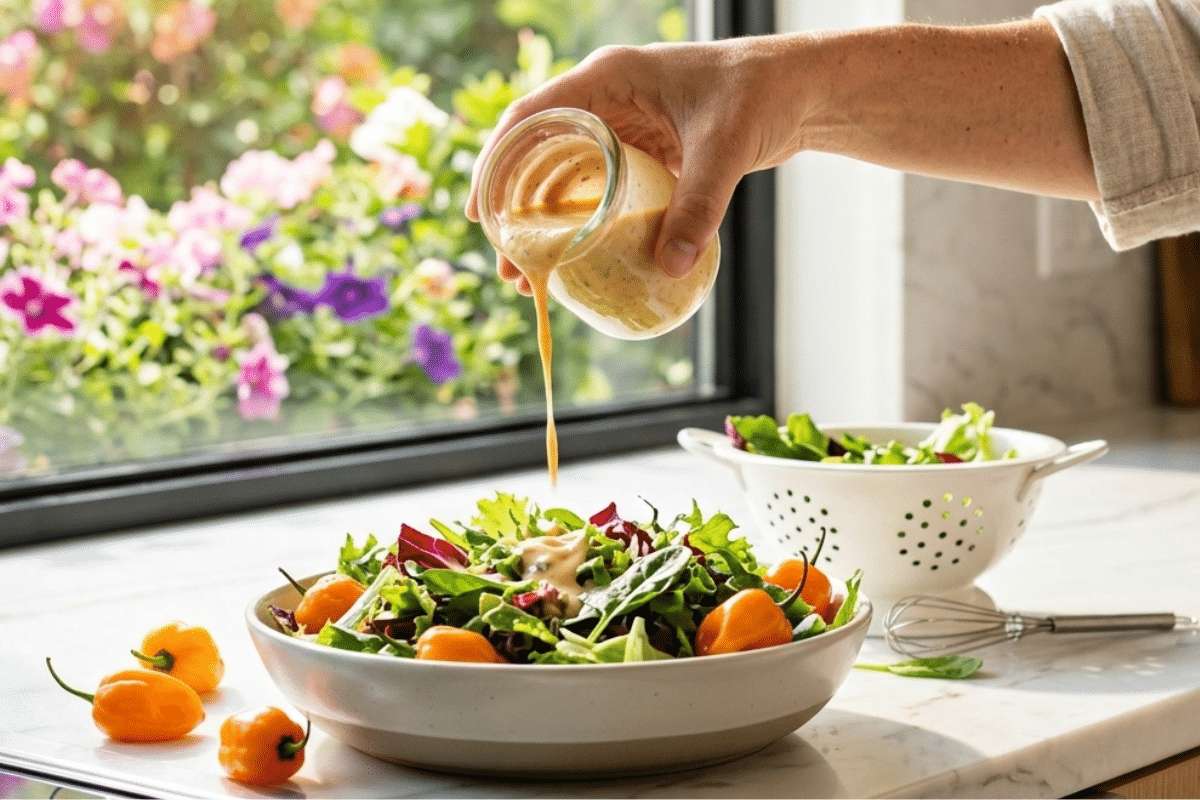
Step 1: Build the Dry Base First
Combine the sugar, salt, mustard, and celery seed in a small saucepan before anything wet goes in. Mixing the dry ingredients first keeps the mustard and celery seed from clumping once the liquid hits the pan… a small step, but it saves you from picking mustard clumps out of your dressing later.
Step 2: Add the Wet Ingredients and Grated Onion
Stir in the vinegar, oil, and grated onion, then set the pan over medium heat. Keep stirring as it heats. You’re watching for the sugar to fully dissolve. The mixture will go from grainy to smooth and slightly glossy. That’s your cue it’s done, usually about 5 minutes in.
Step 3: Decide Warm or Cool
This is genuinely your call, and I go back and forth. Warm, it’s fantastic drizzled straight over a salad or used as a dip. Cooled, it thickens up slightly and works better as a marinade you can really coat chicken or fish in. Neither one is “more correct.” Pick based on what you’re using it for tonight.
Step 4: Store It Right
Once it’s cooled, transfer it to a covered container and get it in the fridge.
How Long It Lasts (and How to Use It Up)
Kept covered in the fridge, this dressing holds for up to two weeks, which, in my house, is usually longer than it actually survives. Don’t be alarmed if the oil separates a bit while it sits. That’s normal, not spoilage. Just give it a good stir or a shake before you use it.
As for what to do with it: I use it as a salad dressing most nights, but don’t stop there. It’s a genuinely good dipping sauce for French fries or chicken fingers, and it moonlights well as a marinade for chicken, pork, or fish. An hour or two is enough for it to work its way in. One batch, a lot of jobs. That’s exactly the kind of recipe I like keeping around.
A Few Ways to Make It Your Own
- No dry mustard? Swap in 1–2 teaspoons of grainy or Dijon mustard instead.
- Toss in a clove of minced garlic with the onions if you’re a garlic person. I usually am.
- Want it silky instead of textured? Run the whole batch through a blender.
- Cutting sugar? You can go as low as ½ cup, or swap in ½ cup honey instead.
Give it a try this week. I think it’ll become one of those recipes you just have on hand, the way you always seem to have milk.
Sweet Onion Salad Dressing
Ingredients
- 1 cup sugar
- 1 tsp salt
- ¼ tsp dry mustard
- ¼ tsp celery seed
- 1 medium sweet onion grated (Vidalia, Walla Walla, or Maui all work)
- 2 tbsp vegetable oil
- ½ cup vinegar
Instructions
- Combine the sugar, salt, mustard, and celery seed in a small saucepan.
- Stir in the vinegar, oil, and grated onion. Set the pan over medium heat and stir until the sugar's fully melted. About 5 minutes.
- Let it cool, or serve it warm. Both are good. I've done both depending on how patient I'm feeling.
- Store in a covered container in the fridge for up to two weeks.
Notes
- In place of the dry mustard you can use 1 to 2 teaspoons of prepared grainy mustard or a Dijon mustard.
- Add a clove of finely minced garlic to the pan with the onions.
- Puree the entire salad dressing in a high-speed blender.
- The recipe calls for vinegar. Use white wine vinegar, rice vinegar, or apple cider vinegar. Red wine or balsamic vinegar would be overpowering.
- If you wish to reduce the sugar, you can go as low as 1/2 cup. Or substitute the sugar with 1/2 cup honey instead.
- You can use any neutral vegetable oil such as canola or even straight olive oil if you like, but if you use extra virgin olive oil the taste of the oil will be more pronounced.
- Cool and refrigerate, or serve as a warm dressing.
Nutrition
Question: What’s your go-to way to use this dressing? Straight on a salad, or does it end up as a marinade at your house more often than not?
EverydayCheapskate™ is reader-supported. We participate in the Amazon Services LLC Associates Program and other affiliate advertising programs, designed to provide a means for us to earn from qualifying purchases, at no cost to you.

More from Everyday Cheapskate
 https://www.everydaycheapskate.com/wp-content/uploads/20260930-cheap-Halloween-party-snacks-for-kids-punch-bowl-mummy-dogs-ghost-bananas.png
800
1200
Mary Hunt
https://www.everydaycheapskate.com/wp-content/uploads/EC-Logo-by-Mary-Hunt-Tagline-Trimmed.png
Mary Hunt2026-10-01 11:08:582026-10-01 11:08:59These Cheap Halloween Snacks Are Almost Too Easy to Make
https://www.everydaycheapskate.com/wp-content/uploads/20260930-cheap-Halloween-party-snacks-for-kids-punch-bowl-mummy-dogs-ghost-bananas.png
800
1200
Mary Hunt
https://www.everydaycheapskate.com/wp-content/uploads/EC-Logo-by-Mary-Hunt-Tagline-Trimmed.png
Mary Hunt2026-10-01 11:08:582026-10-01 11:08:59These Cheap Halloween Snacks Are Almost Too Easy to Make https://www.everydaycheapskate.com/wp-content/uploads/20260927-impossible-lasagna-pie-recipe-with-wooden-serving-spoon-in-white-casserole-dish.png
800
1200
Mary Hunt
https://www.everydaycheapskate.com/wp-content/uploads/EC-Logo-by-Mary-Hunt-Tagline-Trimmed.png
Mary Hunt2026-09-28 09:38:592026-09-28 22:48:34Impossible Lasagna Pie: All the Flavor, None of the Noodles
https://www.everydaycheapskate.com/wp-content/uploads/20260927-impossible-lasagna-pie-recipe-with-wooden-serving-spoon-in-white-casserole-dish.png
800
1200
Mary Hunt
https://www.everydaycheapskate.com/wp-content/uploads/EC-Logo-by-Mary-Hunt-Tagline-Trimmed.png
Mary Hunt2026-09-28 09:38:592026-09-28 22:48:34Impossible Lasagna Pie: All the Flavor, None of the Noodles https://www.everydaycheapskate.com/wp-content/uploads/20260922-chinese-chicken-in-slow-cooker-with-white-rice-recipe-with-sesame-seeds-and-scallions.png
800
1200
Mary Hunt
https://www.everydaycheapskate.com/wp-content/uploads/EC-Logo-by-Mary-Hunt-Tagline-Trimmed.png
Mary Hunt2026-09-22 10:13:562026-09-28 22:48:39Slow Cooker Chinese Chicken That Beats Takeout
https://www.everydaycheapskate.com/wp-content/uploads/20260922-chinese-chicken-in-slow-cooker-with-white-rice-recipe-with-sesame-seeds-and-scallions.png
800
1200
Mary Hunt
https://www.everydaycheapskate.com/wp-content/uploads/EC-Logo-by-Mary-Hunt-Tagline-Trimmed.png
Mary Hunt2026-09-22 10:13:562026-09-28 22:48:39Slow Cooker Chinese Chicken That Beats Takeout https://www.everydaycheapskate.com/wp-content/uploads/20260916-oktoberfest-bratwurst-sausage-and-sauerkraut-cabbage-pie.png
800
1200
Mary Hunt
https://www.everydaycheapskate.com/wp-content/uploads/EC-Logo-by-Mary-Hunt-Tagline-Trimmed.png
Mary Hunt2026-09-16 21:28:232026-09-28 22:48:47Impossible Oktoberfest Pie: All the Beer Hall Flavor, None of the Fuss
https://www.everydaycheapskate.com/wp-content/uploads/20260916-oktoberfest-bratwurst-sausage-and-sauerkraut-cabbage-pie.png
800
1200
Mary Hunt
https://www.everydaycheapskate.com/wp-content/uploads/EC-Logo-by-Mary-Hunt-Tagline-Trimmed.png
Mary Hunt2026-09-16 21:28:232026-09-28 22:48:47Impossible Oktoberfest Pie: All the Beer Hall Flavor, None of the Fuss https://www.everydaycheapskate.com/wp-content/uploads/20260910-cooking-mistakes-and-how-to-avoid-them-woman-at-stovetop-with-steam-coming-from-pot.png
800
1200
Mary Hunt
https://www.everydaycheapskate.com/wp-content/uploads/EC-Logo-by-Mary-Hunt-Tagline-Trimmed.png
Mary Hunt2026-09-09 12:12:532026-09-28 22:49:005 Cooking Mistakes That Are Quietly Wrecking Your Dinner
https://www.everydaycheapskate.com/wp-content/uploads/20260910-cooking-mistakes-and-how-to-avoid-them-woman-at-stovetop-with-steam-coming-from-pot.png
800
1200
Mary Hunt
https://www.everydaycheapskate.com/wp-content/uploads/EC-Logo-by-Mary-Hunt-Tagline-Trimmed.png
Mary Hunt2026-09-09 12:12:532026-09-28 22:49:005 Cooking Mistakes That Are Quietly Wrecking Your Dinner https://www.everydaycheapskate.com/wp-content/uploads/20260906-homemade-hot-fudge-chocolate-sauce-recipe.png
800
1200
Mary Hunt
https://www.everydaycheapskate.com/wp-content/uploads/EC-Logo-by-Mary-Hunt-Tagline-Trimmed.png
Mary Hunt2026-09-06 15:33:012026-09-28 22:49:07The Best Homemade Hot Fudge Sauce (So Easy, So Rich)
https://www.everydaycheapskate.com/wp-content/uploads/20260906-homemade-hot-fudge-chocolate-sauce-recipe.png
800
1200
Mary Hunt
https://www.everydaycheapskate.com/wp-content/uploads/EC-Logo-by-Mary-Hunt-Tagline-Trimmed.png
Mary Hunt2026-09-06 15:33:012026-09-28 22:49:07The Best Homemade Hot Fudge Sauce (So Easy, So Rich) https://www.everydaycheapskate.com/wp-content/uploads/20260904-easy-baby-back-ribs-recipe-from-oven-to-the-grill.png
800
1200
Mary Hunt
https://www.everydaycheapskate.com/wp-content/uploads/EC-Logo-by-Mary-Hunt-Tagline-Trimmed.png
Mary Hunt2026-09-04 17:27:252026-09-28 22:49:11The Secret to Ribs That Really Do Fall Off the Bone
https://www.everydaycheapskate.com/wp-content/uploads/20260904-easy-baby-back-ribs-recipe-from-oven-to-the-grill.png
800
1200
Mary Hunt
https://www.everydaycheapskate.com/wp-content/uploads/EC-Logo-by-Mary-Hunt-Tagline-Trimmed.png
Mary Hunt2026-09-04 17:27:252026-09-28 22:49:11The Secret to Ribs That Really Do Fall Off the Bone https://www.everydaycheapskate.com/wp-content/uploads/20260902-pumpkin-spice-latte-recipe-homemade-diy.png
800
1200
Mary Hunt
https://www.everydaycheapskate.com/wp-content/uploads/EC-Logo-by-Mary-Hunt-Tagline-Trimmed.png
Mary Hunt2026-09-02 16:16:022026-09-02 16:18:35Homemade Pumpkin Spice Latte Recipe (Cheaper, Better, Faster)
https://www.everydaycheapskate.com/wp-content/uploads/20260902-pumpkin-spice-latte-recipe-homemade-diy.png
800
1200
Mary Hunt
https://www.everydaycheapskate.com/wp-content/uploads/EC-Logo-by-Mary-Hunt-Tagline-Trimmed.png
Mary Hunt2026-09-02 16:16:022026-09-02 16:18:35Homemade Pumpkin Spice Latte Recipe (Cheaper, Better, Faster) https://www.everydaycheapskate.com/wp-content/uploads/20260831-Portrait-of-a-Pitbull-on-a-yellow-background-homemade-dog-treat-recipes.png
800
1200
Mary Hunt
https://www.everydaycheapskate.com/wp-content/uploads/EC-Logo-by-Mary-Hunt-Tagline-Trimmed.png
Mary Hunt2026-08-31 13:06:072026-09-28 22:49:173 Homemade Dog Treats Recipes Your Dog Will Love Most
https://www.everydaycheapskate.com/wp-content/uploads/20260831-Portrait-of-a-Pitbull-on-a-yellow-background-homemade-dog-treat-recipes.png
800
1200
Mary Hunt
https://www.everydaycheapskate.com/wp-content/uploads/EC-Logo-by-Mary-Hunt-Tagline-Trimmed.png
Mary Hunt2026-08-31 13:06:072026-09-28 22:49:173 Homemade Dog Treats Recipes Your Dog Will Love Most

Incredible dressing! I opted 1/2 cup sugar. Perfect! I also appreciated the extra suggestions for use.
I made this simple dressing and it was delicious! I cut the sugar to 3/4 cup, but followed the rest of the recipe as written. Rave reviews were received with my salad, making this recipe a keeper. Thanks, Mary. You’ve brought daily sunshine to my inbox since the mid nineties. You are an absolute blessing!
Love this combination of ingredients! I will be making it tomorrow.
I can’t wait to try this recipe. Thanks, Mary.
PS: Stay warm!