
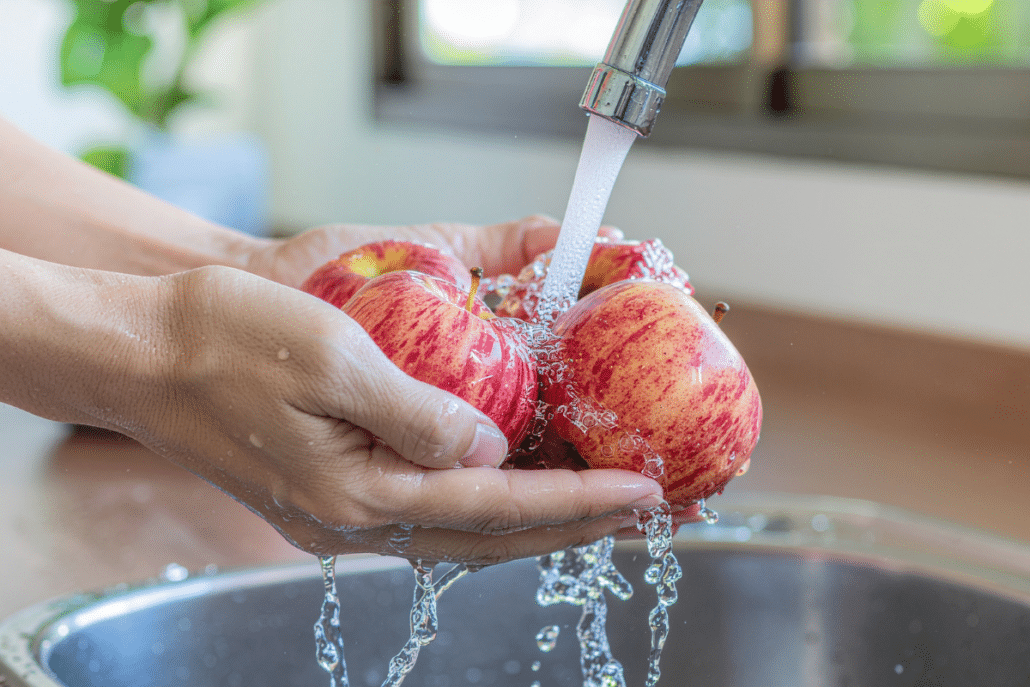
My Homemade Fruit and Veggie Wash (And What It Won’t Do)


That bag of grapes in your cart? A dozen strangers handled it before you did. None of them washed their hands first. I think about that every single time I’m in the produce aisle, and it’s exactly why I’ve been making my own fruit and veggie wash for years.
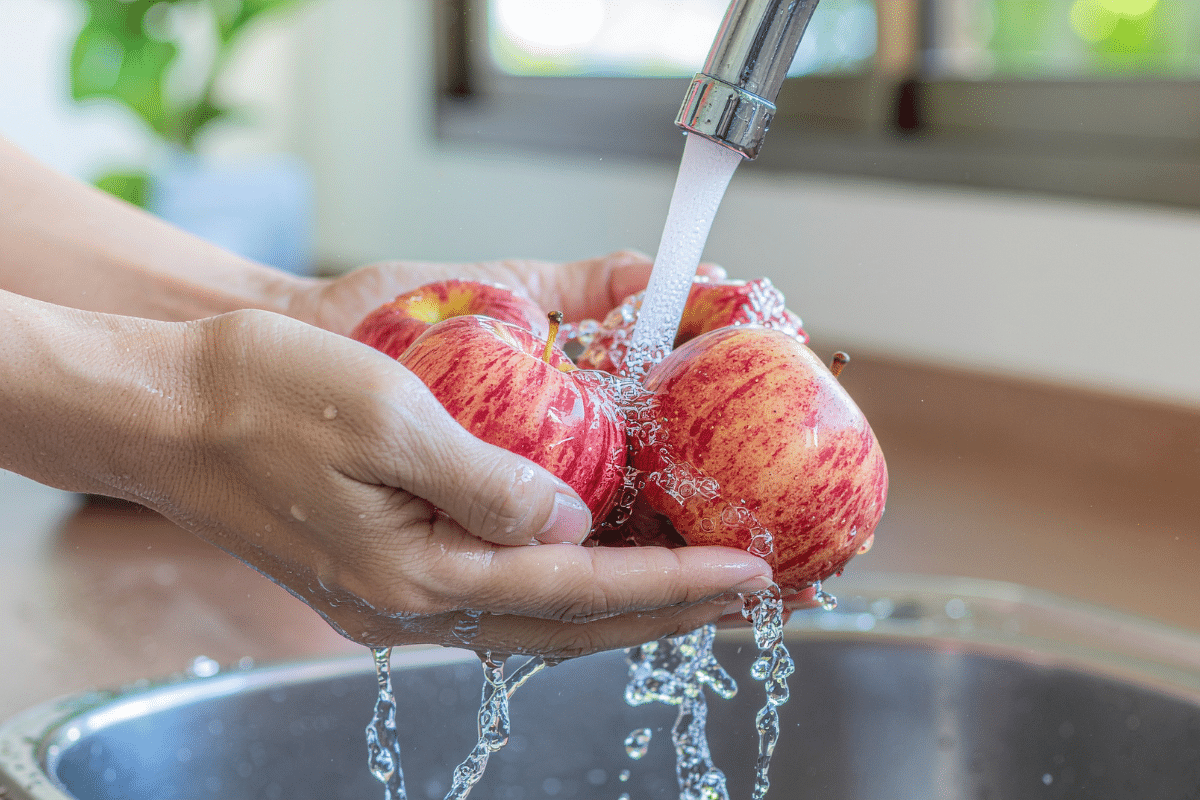
But here’s the thing I need to tell you upfront, especially with cyclosporiasis making headlines everywhere this summer: my wash won’t stop that particular bug. Neither will yours. Neither will anybody’s.
Cyclospora hides inside a shell so tough that vinegar bounces right off it. So does chlorine. So does bleach, for that matter. The CDC has said flat out that washing may not remove it. The only thing that reliably kills it is heat: cooking your produce to about 165°F. That’s it. That’s the list.
So if cyclospora specifically has you rattled, here’s what actually helps: buy whole heads of lettuce instead of the bagged kind, toss the outer leaves, and cook greens when you can instead of eating them raw. My spray bottle isn’t going to save you there, and I’d rather tell you that now than have you find out the hard way.
What my wash IS good for is everything else. The everyday grime. The waxy residue. The general bacteria (E. coli included) that produce picks up between the farm and your fridge. That’s still very much worth rinsing off, cyclospora or no cyclospora.
Ready? Here’s what I use.
What you’ll need
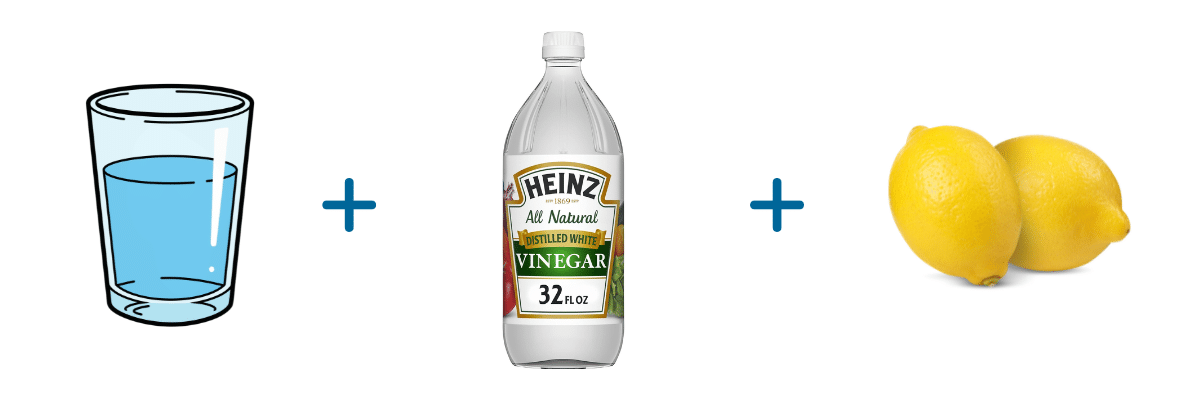
Exact amounts are in the recipe card below. I’ve never measured this one precisely in my life, and a splash more vinegar never hurt anybody.
Cold tap water
The base. Nothing fancy or filtered required.
White vinegar
The actual workhorse. Acetic acid is what goes after bacteria.
Lemon juice
Teams up with the vinegar to push the acidity even higher, which is where the real cleaning power comes from.
How to make and use your wash
Mix it and bottle it
Combine everything in a spray bottle and give it a shake before every use. I keep a batch already mixed under the sink so I’m not measuring anything out mid-grocery-unload. This recipe doubles and triples just fine if you’d rather make a bigger batch and not think about it again for a month.
Spray, don’t drown
Two or three spritzes is plenty. You’re coating the produce, not submerging it. Oversaturating doesn’t clean any better. It just means more rinsing later.
Let it sit for two minutes
This is the step everybody skips, and it’s the one that actually matters. The acid needs a minute to do its work before you start rubbing it off. Set a timer, or just let it sit while you put away the rest of your groceries.
Rinse well
Cold water, running, until you can’t smell the vinegar anymore. Skip this and you’ll be biting into a salad that tastes like a pickle jar.
Bonus: it buys your berries time
Give strawberries and blueberries the same treatment and they’ll last noticeably longer before they turn to mush and mold in the fridge. I started doing this after tossing one too many sad, fuzzy pints, and it’s saved me more money than almost anything else in this routine.
Smooth-skinned produce
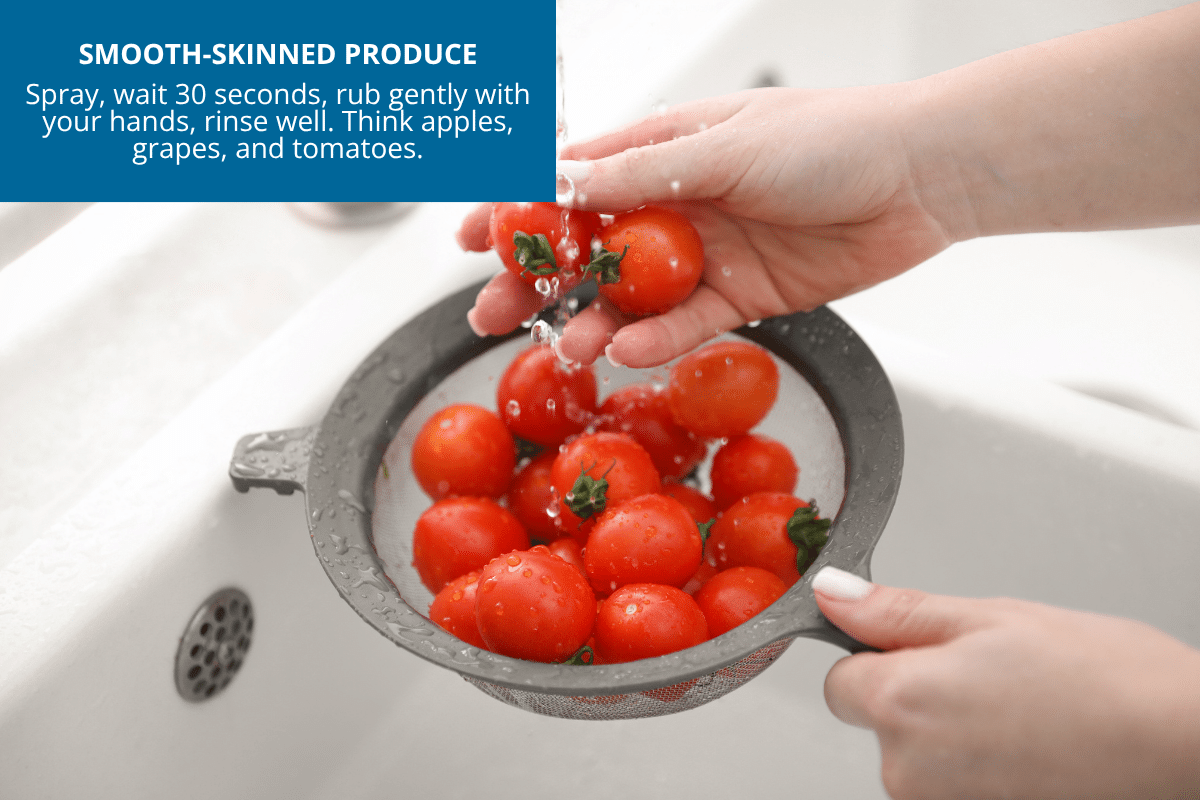
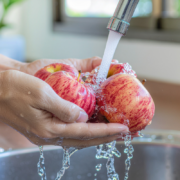
Apples, grapes, tomatoes, that sort of thing. Spray until it’s coated, let it sit 30 seconds, then rub gently with your hands. Not a scrubber. You’re trying to clean the skin, not open it up. Rinse well under cold water so you’re not biting into a vinegar-flavored apple.
Rough or firm-skinned produce
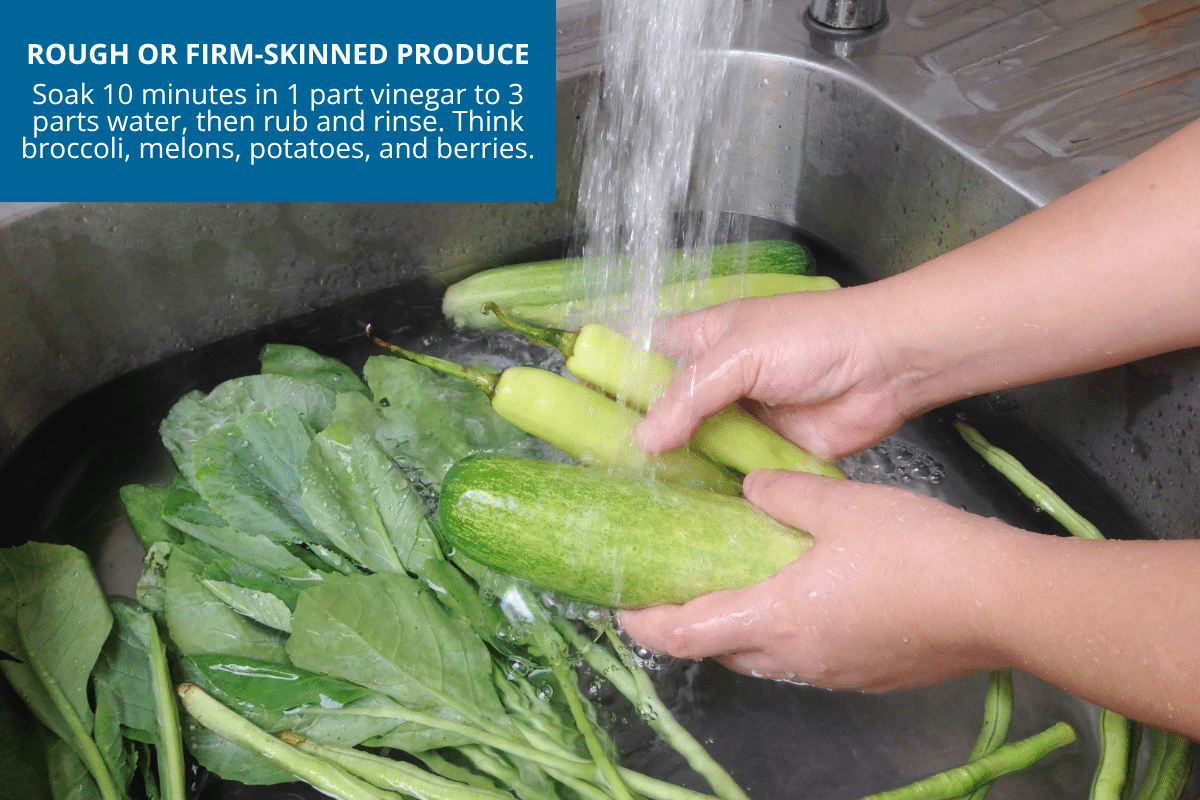
Broccoli, cauliflower, leafy greens, melons, potatoes, berries. These need a soak, not a spray. Mix 1 cup vinegar to every 3 cups water, and let your produce sit in it for about 10 minutes. Your sink makes a perfectly good soaking container, and for heads of lettuce or cabbage, pull the leaves apart first so the solution actually reaches all of them. Rub gently, rinse well, done.
Don’t skip the rind
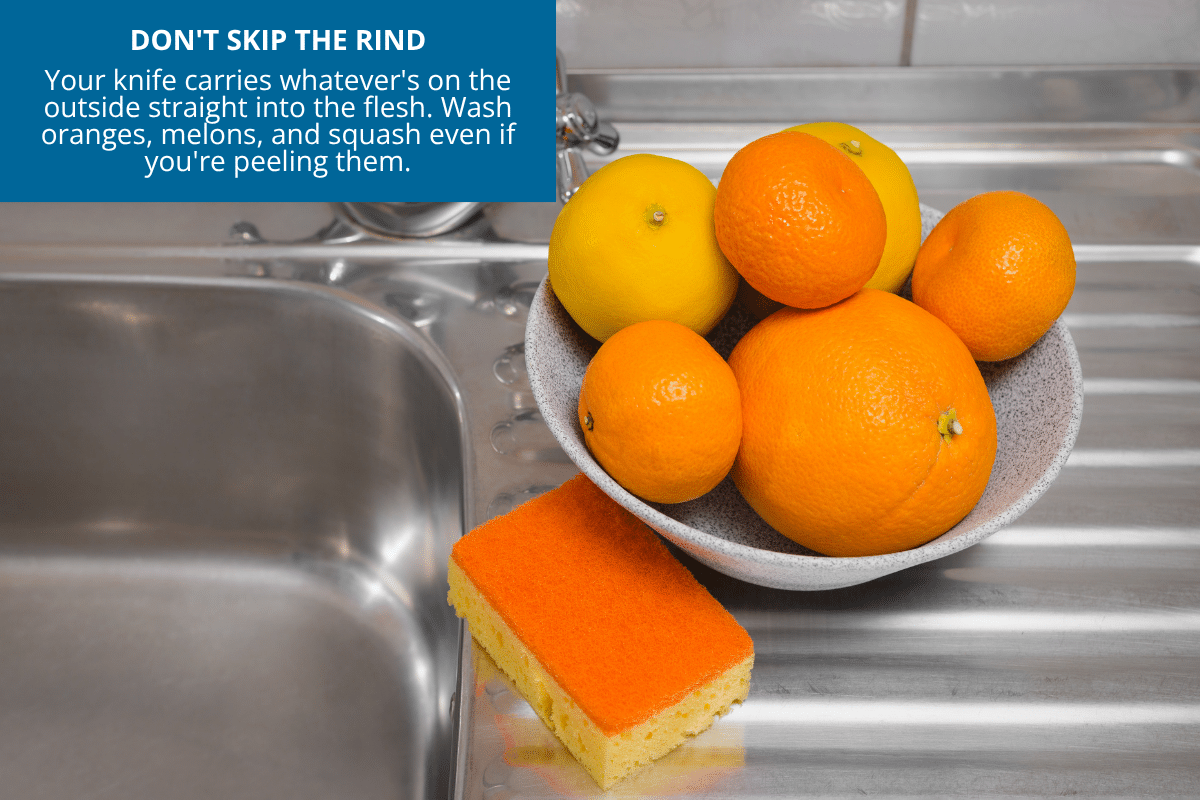
Oranges, melons, squash, pineapple. I used to think I could skip washing these since I wasn’t eating the skin. Wrong. Your knife carries whatever’s on that rind straight into the flesh when you cut it. Wash it anyway.
This wash has been part of my kitchen routine for years, and it’s still worth five minutes of your time. Just go into this summer with the right expectations: it’s for peace of mind on the everyday stuff, not a shield against everything in the headlines.
My Fruit and Vegetable Wash
Materials
- 1 cup cold tap water
- ⅓ cup white vinegar
- 2 tablespoons lemon juice
Instructions
- Combine water, vinegar, and lemon juice in a spray bottle. Shake to mix.
- Spray produce 2 to 3 times, coating the surface.
- Let sit for 2 minutes.
- Rinse thoroughly under cold running water before eating, cutting, or cooking.
Notes
- For rough or firm-skinned produce (broccoli, melons, berries), soak instead of spraying: 1 cup vinegar to every 3 cups water, 10 minutes.
- Doubles and triples easily. Keep extra in a sealed bottle under the sink.
- This wash handles dirt, wax, and everyday bacteria. It isn't proven effective against Cyclospora. Buy whole heads instead of bagged greens and cook produce if that's your specific concern this season.
Question: Confess: do you actually wash your produce every time, or does the occasional grape make it straight from bag to mouth? Share in the comments below.
EverydayCheapskate™ is reader-supported. We participate in the Amazon Services LLC Associates Program and other affiliate advertising programs, designed to provide a means for us to earn from qualifying purchases, at no cost to you.

More from Everyday Cheapskate
 https://www.everydaycheapskate.com/wp-content/uploads/20261016-Crispy-potato-cakes-made-with-leftover-mashed-potatoes.png
800
1200
Mary Hunt
https://www.everydaycheapskate.com/wp-content/uploads/EC-Logo-by-Mary-Hunt-Tagline-Trimmed.png
Mary Hunt2026-10-16 15:54:382026-10-16 15:54:38Got Leftover Mashed Potatoes? Try These 5 Smart Ideas
https://www.everydaycheapskate.com/wp-content/uploads/20261016-Crispy-potato-cakes-made-with-leftover-mashed-potatoes.png
800
1200
Mary Hunt
https://www.everydaycheapskate.com/wp-content/uploads/EC-Logo-by-Mary-Hunt-Tagline-Trimmed.png
Mary Hunt2026-10-16 15:54:382026-10-16 15:54:38Got Leftover Mashed Potatoes? Try These 5 Smart Ideas https://www.everydaycheapskate.com/wp-content/uploads/20261015-Sweet-pepper-and-onion-relish-in-a-white-bowl-with-crackers-and-fresh-red-bell-peppers.png
800
1200
Mary Hunt
https://www.everydaycheapskate.com/wp-content/uploads/EC-Logo-by-Mary-Hunt-Tagline-Trimmed.png
Mary Hunt2026-10-15 13:14:022026-10-15 13:14:02Sweet Pepper Onion Relish (Perfect Over Cream Cheese)
https://www.everydaycheapskate.com/wp-content/uploads/20261015-Sweet-pepper-and-onion-relish-in-a-white-bowl-with-crackers-and-fresh-red-bell-peppers.png
800
1200
Mary Hunt
https://www.everydaycheapskate.com/wp-content/uploads/EC-Logo-by-Mary-Hunt-Tagline-Trimmed.png
Mary Hunt2026-10-15 13:14:022026-10-15 13:14:02Sweet Pepper Onion Relish (Perfect Over Cream Cheese) https://www.everydaycheapskate.com/wp-content/uploads/20261012-Woman-using-smartphone-while-checking-monthly-cellular-data-usage-on-laptop.png
800
1200
Mary Hunt
https://www.everydaycheapskate.com/wp-content/uploads/EC-Logo-by-Mary-Hunt-Tagline-Trimmed.png
Mary Hunt2026-10-12 10:51:112026-10-12 10:51:11Do You Really Need Unlimited Data? Check Before You Pay
https://www.everydaycheapskate.com/wp-content/uploads/20261012-Woman-using-smartphone-while-checking-monthly-cellular-data-usage-on-laptop.png
800
1200
Mary Hunt
https://www.everydaycheapskate.com/wp-content/uploads/EC-Logo-by-Mary-Hunt-Tagline-Trimmed.png
Mary Hunt2026-10-12 10:51:112026-10-12 10:51:11Do You Really Need Unlimited Data? Check Before You Pay https://www.everydaycheapskate.com/wp-content/uploads/20261011-Woman-Adjusting-Smart-Home-Device-on-the-Wall-how-to-lower-your-electric-bill.png
800
1200
Mary Hunt
https://www.everydaycheapskate.com/wp-content/uploads/EC-Logo-by-Mary-Hunt-Tagline-Trimmed.png
Mary Hunt2026-10-11 23:01:562026-10-11 23:01:56Stop Chasing Pennies on Your Electric Bill. Do This
https://www.everydaycheapskate.com/wp-content/uploads/20261011-Woman-Adjusting-Smart-Home-Device-on-the-Wall-how-to-lower-your-electric-bill.png
800
1200
Mary Hunt
https://www.everydaycheapskate.com/wp-content/uploads/EC-Logo-by-Mary-Hunt-Tagline-Trimmed.png
Mary Hunt2026-10-11 23:01:562026-10-11 23:01:56Stop Chasing Pennies on Your Electric Bill. Do This https://www.everydaycheapskate.com/wp-content/uploads/20261007-red-present-sitting-in-autumn-leaves-Amazon-Prime-Big-Deal-Days-gifts.png
800
1200
Mary Hunt
https://www.everydaycheapskate.com/wp-content/uploads/EC-Logo-by-Mary-Hunt-Tagline-Trimmed.png
Mary Hunt2026-10-06 23:09:432026-10-06 23:09:43Christmas Shopping in October? These Prime Day Gifts Make Sense
https://www.everydaycheapskate.com/wp-content/uploads/20261007-red-present-sitting-in-autumn-leaves-Amazon-Prime-Big-Deal-Days-gifts.png
800
1200
Mary Hunt
https://www.everydaycheapskate.com/wp-content/uploads/EC-Logo-by-Mary-Hunt-Tagline-Trimmed.png
Mary Hunt2026-10-06 23:09:432026-10-06 23:09:43Christmas Shopping in October? These Prime Day Gifts Make Sense https://www.everydaycheapskate.com/wp-content/uploads/20261006-prime-big-deal-days-have-landed.png
800
1200
Mary Hunt
https://www.everydaycheapskate.com/wp-content/uploads/EC-Logo-by-Mary-Hunt-Tagline-Trimmed.png
Mary Hunt2026-10-05 11:01:432026-10-07 09:02:53EC’s Top Picks from Amazon Prime Big Deal Days 2026
https://www.everydaycheapskate.com/wp-content/uploads/20261006-prime-big-deal-days-have-landed.png
800
1200
Mary Hunt
https://www.everydaycheapskate.com/wp-content/uploads/EC-Logo-by-Mary-Hunt-Tagline-Trimmed.png
Mary Hunt2026-10-05 11:01:432026-10-07 09:02:53EC’s Top Picks from Amazon Prime Big Deal Days 2026 https://www.everydaycheapskate.com/wp-content/uploads/20261004-reduce-healthcare-costs-with-three-habits-healthy-couple-walking-in-autumn-leaves.png
800
1200
Mary Hunt
https://www.everydaycheapskate.com/wp-content/uploads/EC-Logo-by-Mary-Hunt-Tagline-Trimmed.png
Mary Hunt2026-10-04 23:08:572026-10-04 23:09:47How to Reduce Healthcare Costs With 3 Free Daily Habits
https://www.everydaycheapskate.com/wp-content/uploads/20261004-reduce-healthcare-costs-with-three-habits-healthy-couple-walking-in-autumn-leaves.png
800
1200
Mary Hunt
https://www.everydaycheapskate.com/wp-content/uploads/EC-Logo-by-Mary-Hunt-Tagline-Trimmed.png
Mary Hunt2026-10-04 23:08:572026-10-04 23:09:47How to Reduce Healthcare Costs With 3 Free Daily Habits https://www.everydaycheapskate.com/wp-content/uploads/20241004-news-you-can-use-october-everyday-cheapskate-top-news-articles.png
800
1200
Mary Hunt
https://www.everydaycheapskate.com/wp-content/uploads/EC-Logo-by-Mary-Hunt-Tagline-Trimmed.png
Mary Hunt2026-10-04 01:04:052026-10-16 16:24:53News You Can Use • October 2026
https://www.everydaycheapskate.com/wp-content/uploads/20241004-news-you-can-use-october-everyday-cheapskate-top-news-articles.png
800
1200
Mary Hunt
https://www.everydaycheapskate.com/wp-content/uploads/EC-Logo-by-Mary-Hunt-Tagline-Trimmed.png
Mary Hunt2026-10-04 01:04:052026-10-16 16:24:53News You Can Use • October 2026 https://www.everydaycheapskate.com/wp-content/uploads/20261003-woman-hugging-elderly-mother-sandwich-generation-caring-for-aging-parents.png
800
1200
Mary Hunt
https://www.everydaycheapskate.com/wp-content/uploads/EC-Logo-by-Mary-Hunt-Tagline-Trimmed.png
Mary Hunt2026-10-03 10:47:222026-10-03 10:47:25Sandwiched Between Aging Parents and Adult Children
https://www.everydaycheapskate.com/wp-content/uploads/20261003-woman-hugging-elderly-mother-sandwich-generation-caring-for-aging-parents.png
800
1200
Mary Hunt
https://www.everydaycheapskate.com/wp-content/uploads/EC-Logo-by-Mary-Hunt-Tagline-Trimmed.png
Mary Hunt2026-10-03 10:47:222026-10-03 10:47:25Sandwiched Between Aging Parents and Adult Children

After using your recipe and rinsing, do I need to dry items like strawberries and blueberries, before putting them back into the clam shell? Thanks
Yes, a gentle pat from a paper towel will go a long way to remove the excess water before refrigeration.
Easy, inexpensive, important. Thank you!!
I’ll be totally honest: I don’t just eat a grape in the car; I taste a grape in the store before I decide to buy a bunch or not.
Pretty sure you’re not alone!
I wondered if using powder lemon would work instead of regular lemon for the mix.
Great idea, Diane. I’m confident that is a good substitutes. It’s the citric aid that’s key to this wash. Both contain citric acid.
Mary, you didn’t mention avocados. I always wash them with dish detergent when I take them out of the bag, before letting them ripen then put into the frig. Is that enough or should I use this vinegar/lemon juice method also?
My cherries seem to have an oily coating. If I wash them with the vinegar solution, unless I dry 2 lbs individually, won’t they mold?
I have been using Mary’s recipe above for years on all my fruits and vegetables and do not have any problem with them molding right away. (I always look for the freshest fruits & veggies which helps.) I also store the produce in berry boxes which, I believe, aids in preserving its life. Hope this helps!
Mary, if I plan to cook the item (like baking a potato), would the oven (or stove) heat kill germs and bacteria or should I still wash it before cooking?
I wash if for no other reason than to remove the dirt. Your example of potatoes—root vegetable that is harvested from underground.