
7 Things to Always Buy Used (And 5 You Never Should)


I’ve been thrifting, Marketplace-scrolling, and estate-sale-hunting for more years than I care to admit. Here’s what I’ve learned, the hard way and the smart way: some things get better with age. Some things depreciate the second you drive them off the lot. And a small handful of things you should never, ever buy from a stranger, no matter how good the price looks.
This isn’t about being frugal for frugal’s sake. It’s about matching the purchase to reality. Below is my honest list, the categories where used is basically a magic trick, and the categories where “new” is the only answer that makes sense.
Always Buy Used: 7 Categories
1. Cars
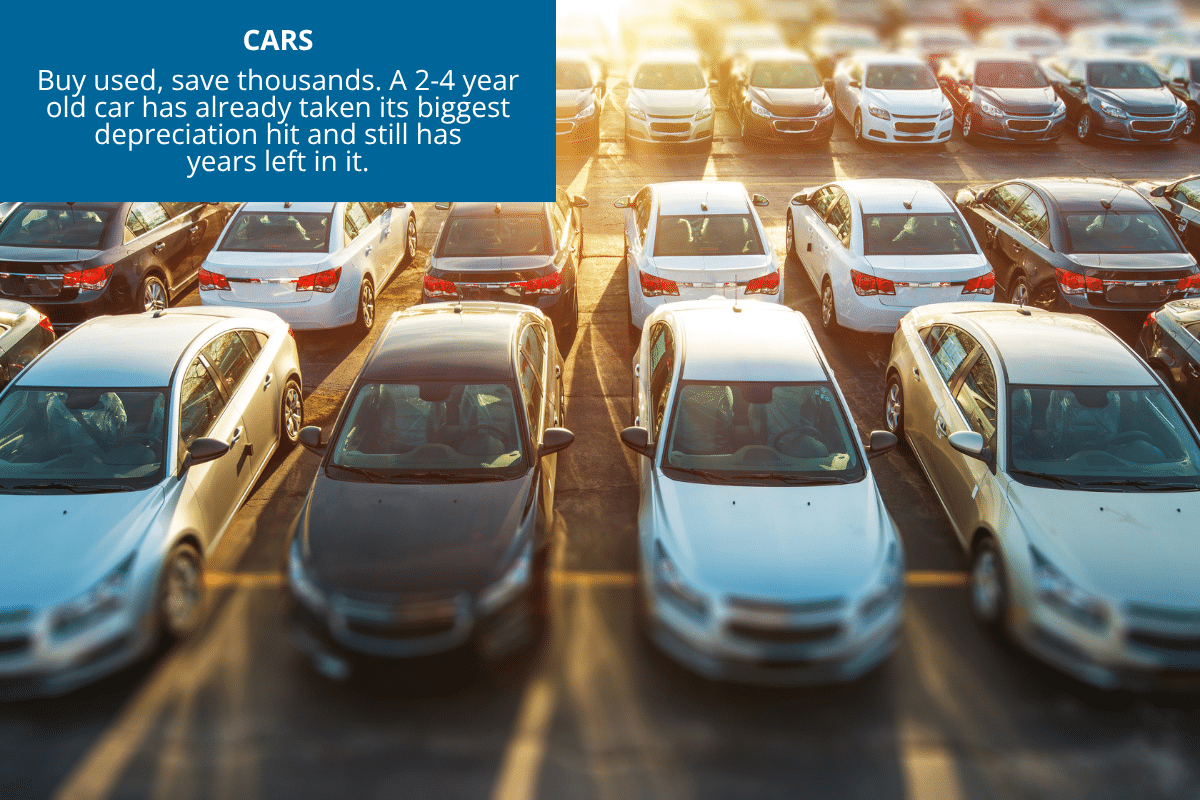
You know this one. A new car loses 20 to 30 percent of its value the first year and half its value by year three. Somebody has to eat that depreciation. Let it be someone else.
The sweet spot is a car 2 to 4 years old with 30,000 to 60,000 miles on it. Most of the steep drop is already behind it, there’s usually still some warranty left, and you’ve got years of good driving ahead.
My strategy: go private-seller for the deepest discount, or certified pre-owned if you want the warranty peace of mind. Skip the dealership’s “gently used” lot. Those prices are barely below new, and you’re paying for the privilege of a nicer waiting room.
Typical savings: $5,000 to $15,000 over buying new. That’s real Freedom Account money, sitting right there for the taking.
2. Furniture, Especially High Quality Wood
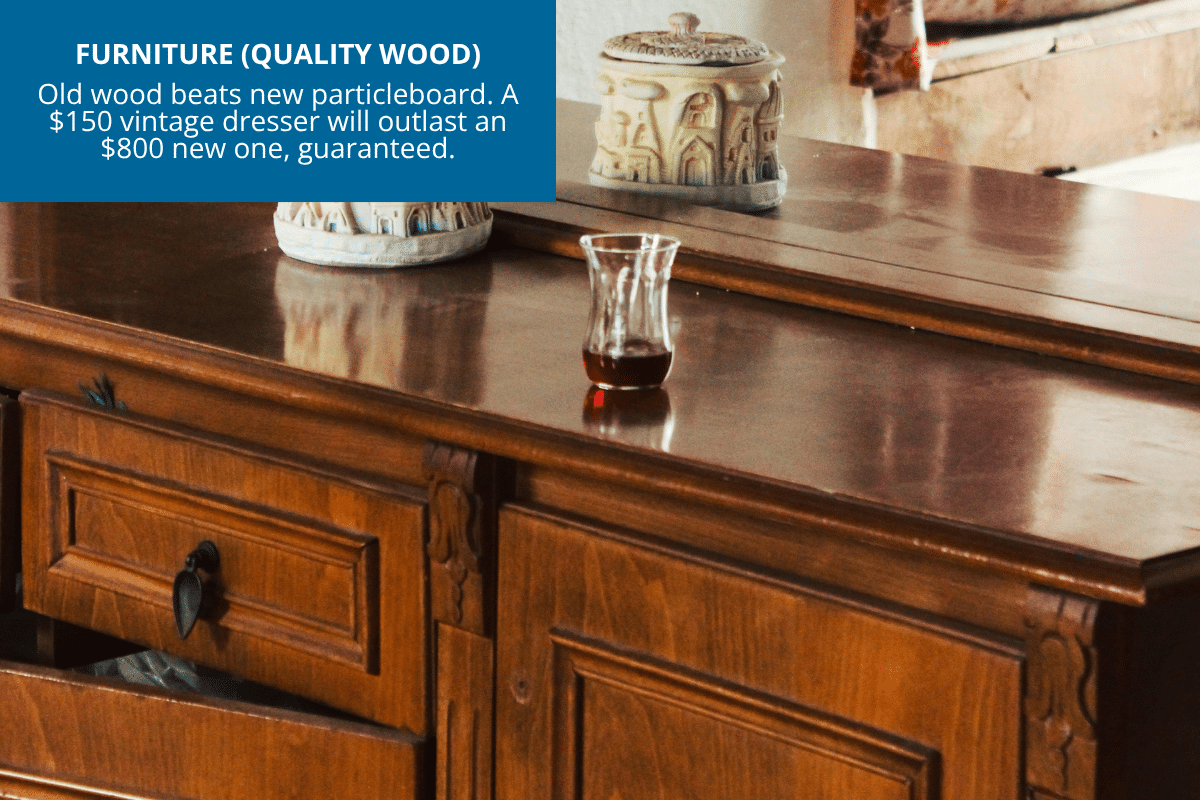
Here’s a secret the furniture stores hope you never figure out: most new furniture is particle board wearing a coat of stain. Furniture built before the 1970s is often solid wood, and it’s a different animal entirely.
Look for real wood (it’s heavy, and you can see the grain through the finish), dovetail joints on the drawers, and hardware that isn’t plastic pretending to be brass. I’ve bought a mid-century dresser for $150 that would run you $800 new, easy, and mine will outlive both of us.
Best hunting grounds: Facebook Marketplace, estate sales, thrift stores.
Typical savings: 60 to 80 percent off new.
3. Books

A book you finished last week is exactly as good as a book fresh off the shelf. There is no wear pattern on a good story. Library sales and thrift stores sell $30 hardcovers for $3 all day long, and nobody’s the wiser.
Best hunting grounds: Library book sales, thrift stores, ThriftBooks online.
Typical savings: 80 to 95 percent off new.
4. Kids’ Toys and Baby Gear
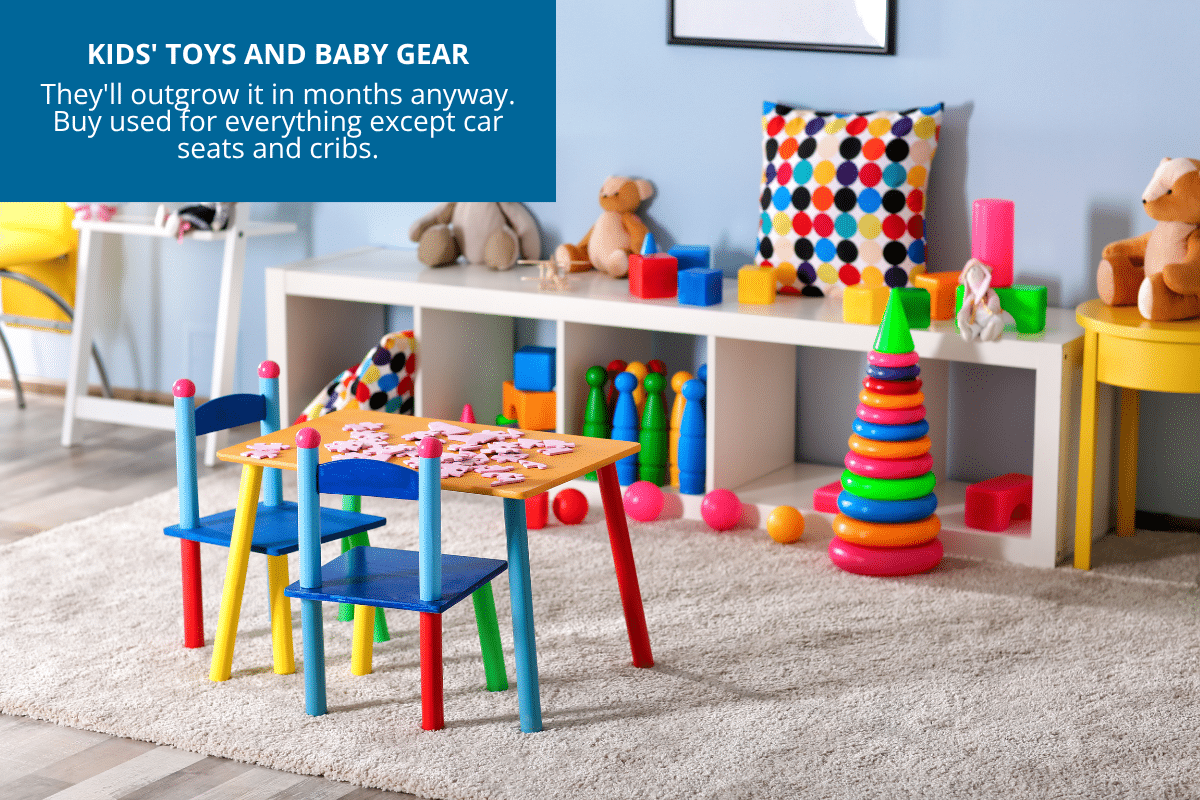
Kids grow out of everything in months. Buying new for a toddler is like buying a new umbrella for a hurricane that’s already passing. Which is exactly why the used market for baby gear is so huge, and so full of bargains.
Two exceptions worth knowing: skip used car seats (more on that below) and used cribs, since safety standards have changed enough that older ones may not meet them. Nearly everything else, buy it used and don’t think twice.
Best hunting grounds: Facebook Marketplace, consignment shops, hand-me-downs from friends who are done with that stage.
Typical savings: 60 to 80 percent off new.
5. Sporting Goods and Exercise Equipment
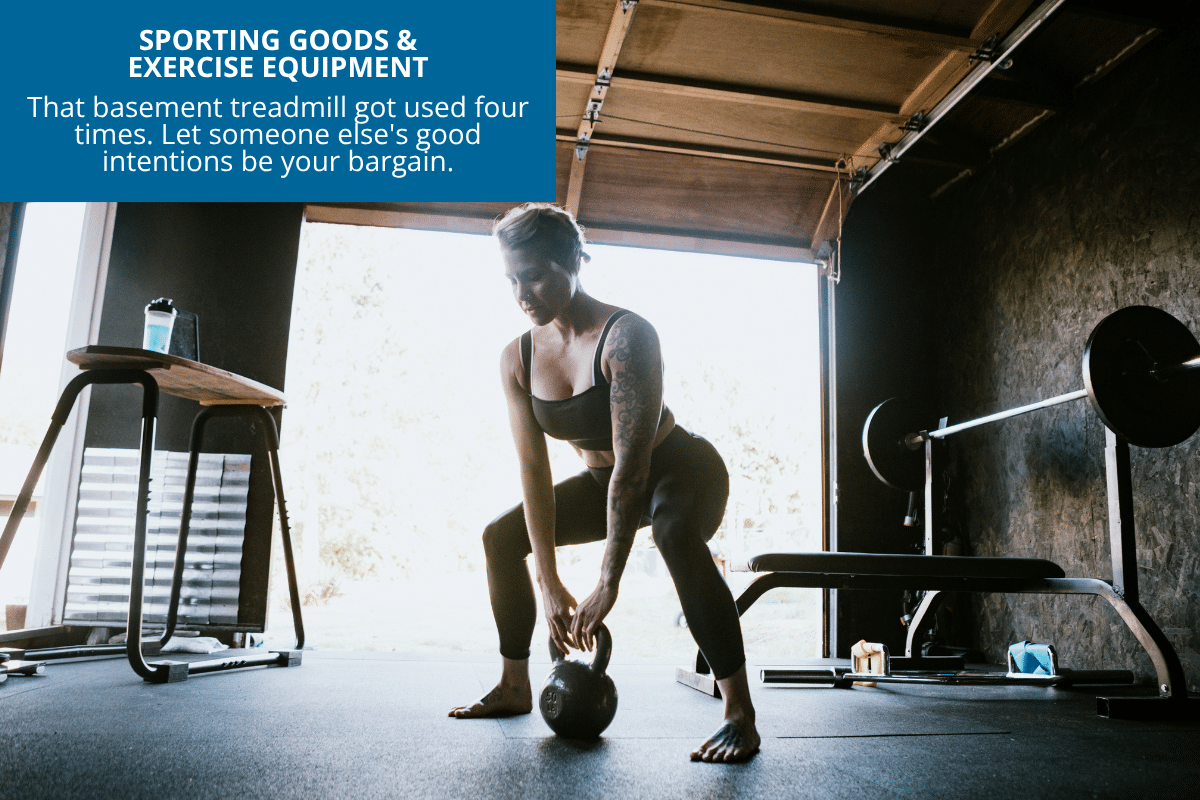
Every basement in America has a treadmill on it that got used four times. Same with the soccer cleats your kid wore for one season and then decided soccer wasn’t for them after all.
Bikes, kayaks, camping gear, skis, tennis rackets, golf clubs, someone bought all of it with good intentions and barely touched it. Their loss, your gain.
Best hunting grounds: Play It Again Sports, Facebook Marketplace, end-of-season consignment sales.
Typical savings: 50 to 70 percent off new.
6. Tools
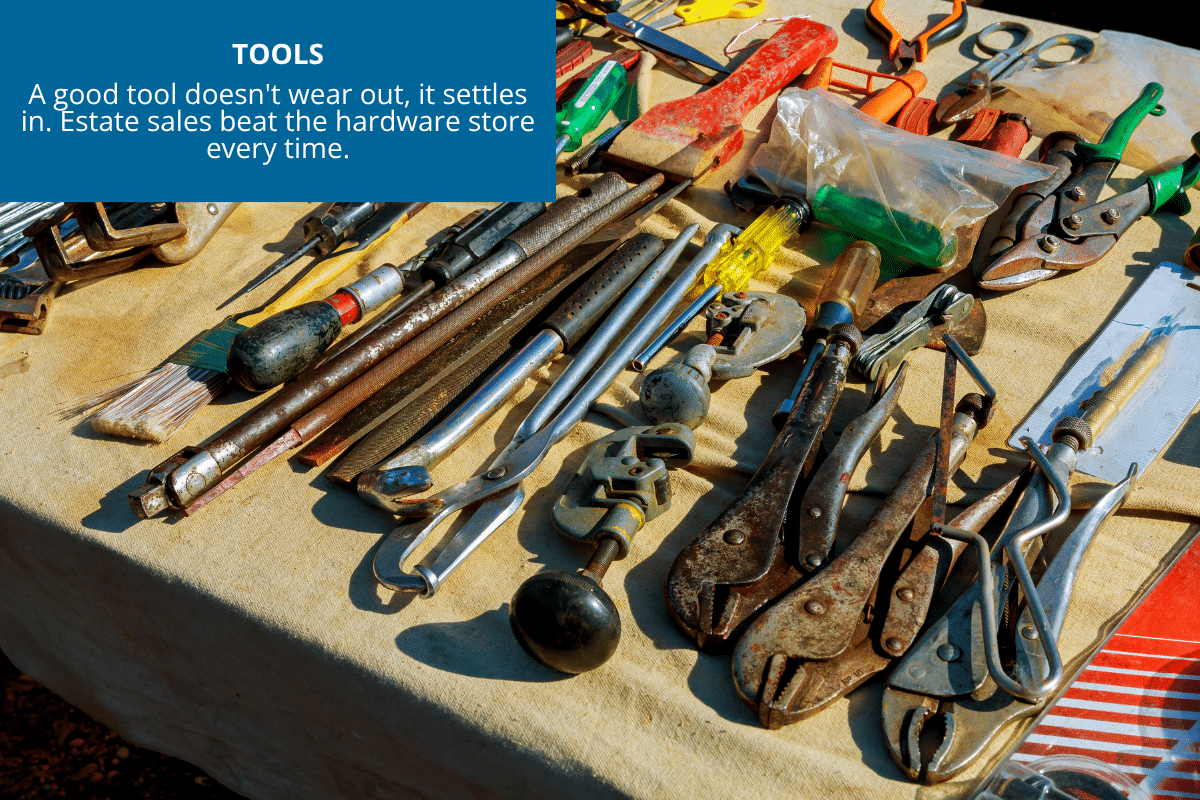
A good tool doesn’t wear out, it settles in. I’ll take a Craftsman wrench from the 1980s over most of what’s on the shelf today. Estate sales and hardware store closures are where the real deals hide.
One caution: pass on used power tools with damaged cords or batteries that have clearly seen better days. Corded tools that look well cared for are usually a safe bet.
Best hunting grounds: Estate sales, garage sales, Habitat for Humanity ReStore.
Typical savings: 40 to 70 percent off new.
7. Musical Instruments (Beginner and Intermediate)
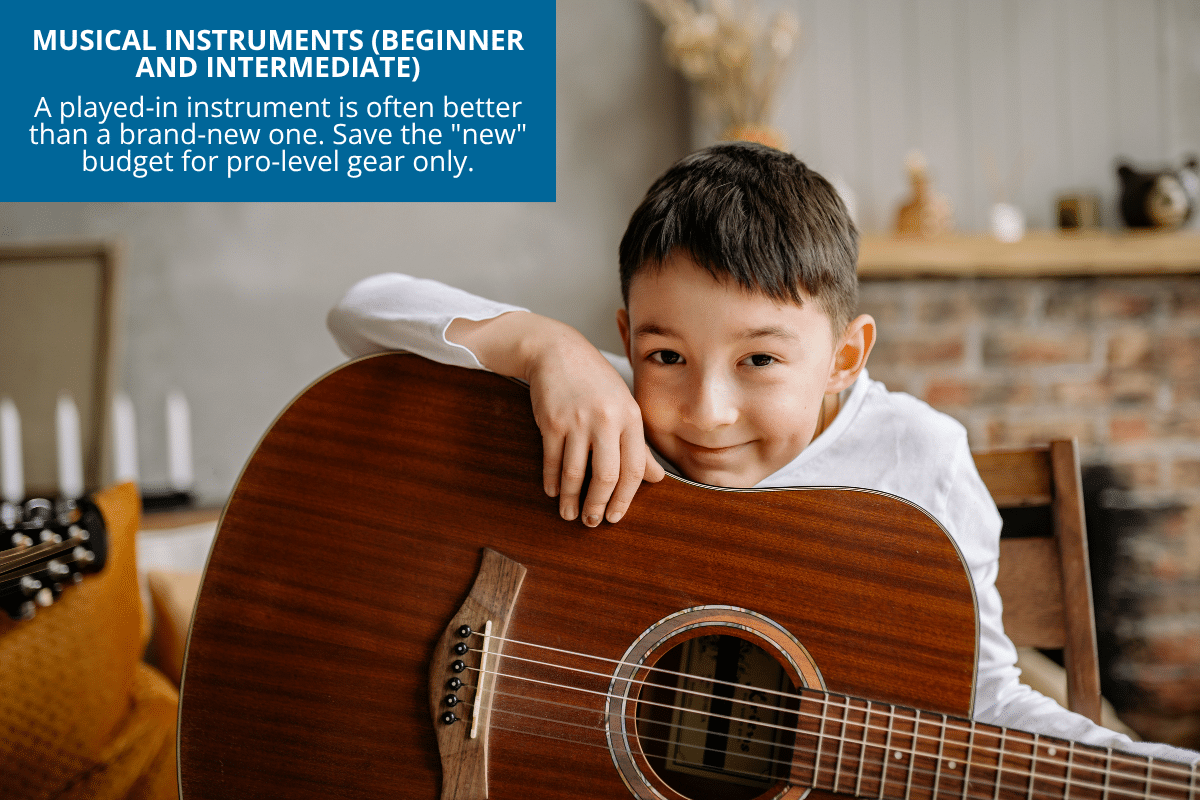
A well-maintained instrument doesn’t lose value, it develops character. A used student violin or guitar has often been played in already, meaning the wood has settled and the finish has cured. That’s a feature, not a flaw.
If you’re a serious player who needs a specific pro-level instrument, buy new from a reputable dealer. For everyone else, used is smart.
Best hunting grounds: Music store consignments, Reverb.com, local classifieds.
Typical savings: 40 to 60 percent off new.
Never Buy Used: 5 Categories
1. Mattresses
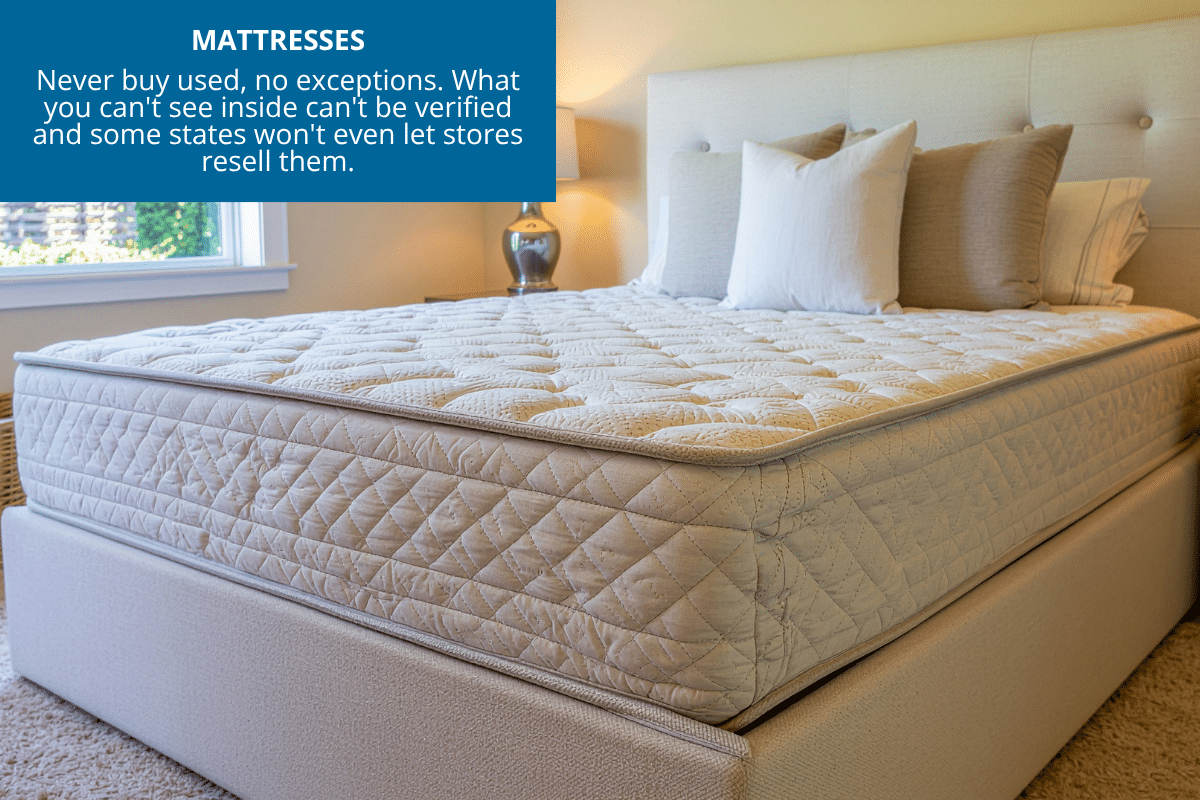
You already know this one, and yet the used mattress ads keep showing up because someone out there keeps buying them. Don’t be that someone.
A mattress you can’t see inside of is a mattress you can’t verify. Bed bugs, dust mites, mold, and things I won’t even describe in a family newsletter can all be living in there, invisible and immovable. Some states won’t even let stores resell them. That should tell you something.
Buy new instead: Direct-to-consumer brands like Nectar, Tuft & Needle, or Casper start around $699 for a decent queen, and sales run constantly. Your back will thank you either way.
2. Helmets, Any Kind
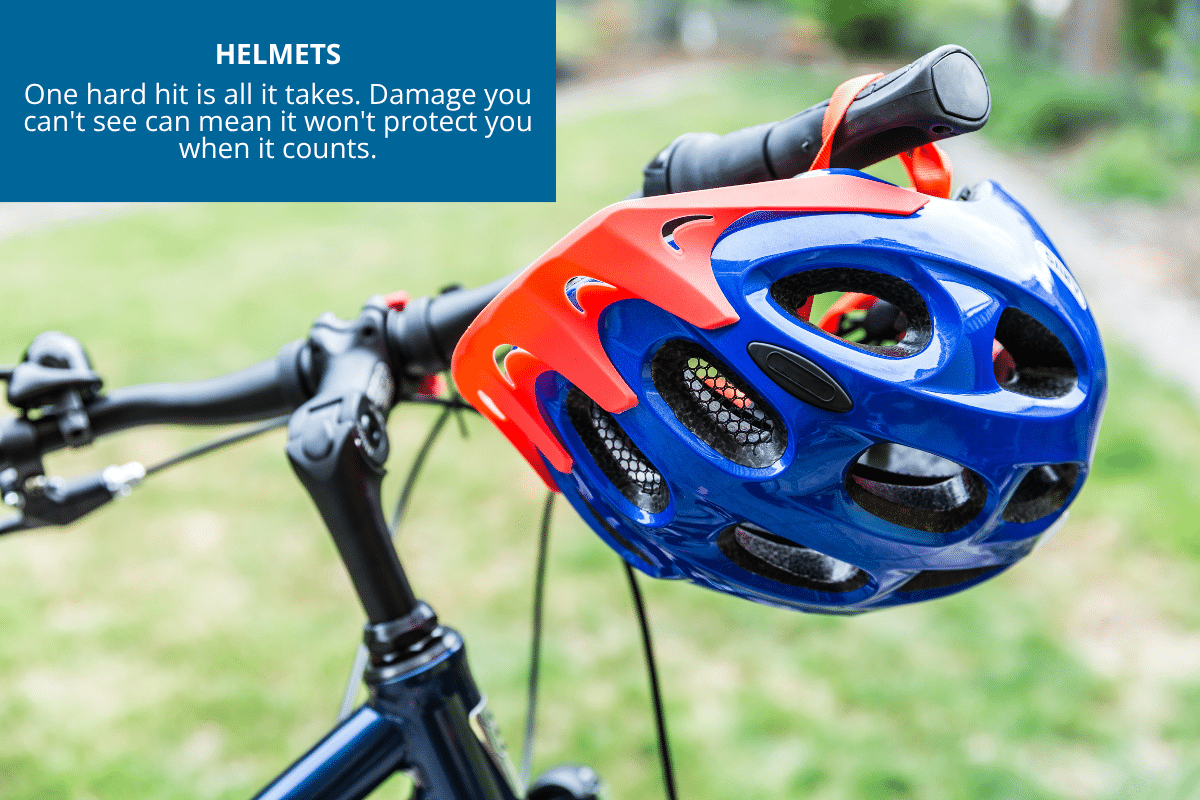
Bike, motorcycle, ski, football, doesn’t matter. A helmet is built to absorb one hard hit and then it’s done, even if you can’t see the damage. A drop off a shelf you never witnessed can quietly compromise the foam inside, and you’d never know until it mattered.
Buy new instead: Bike helmets start around $30. Motorcycle helmets start around $150. This is not the place to save ten bucks.
3. Car Seats
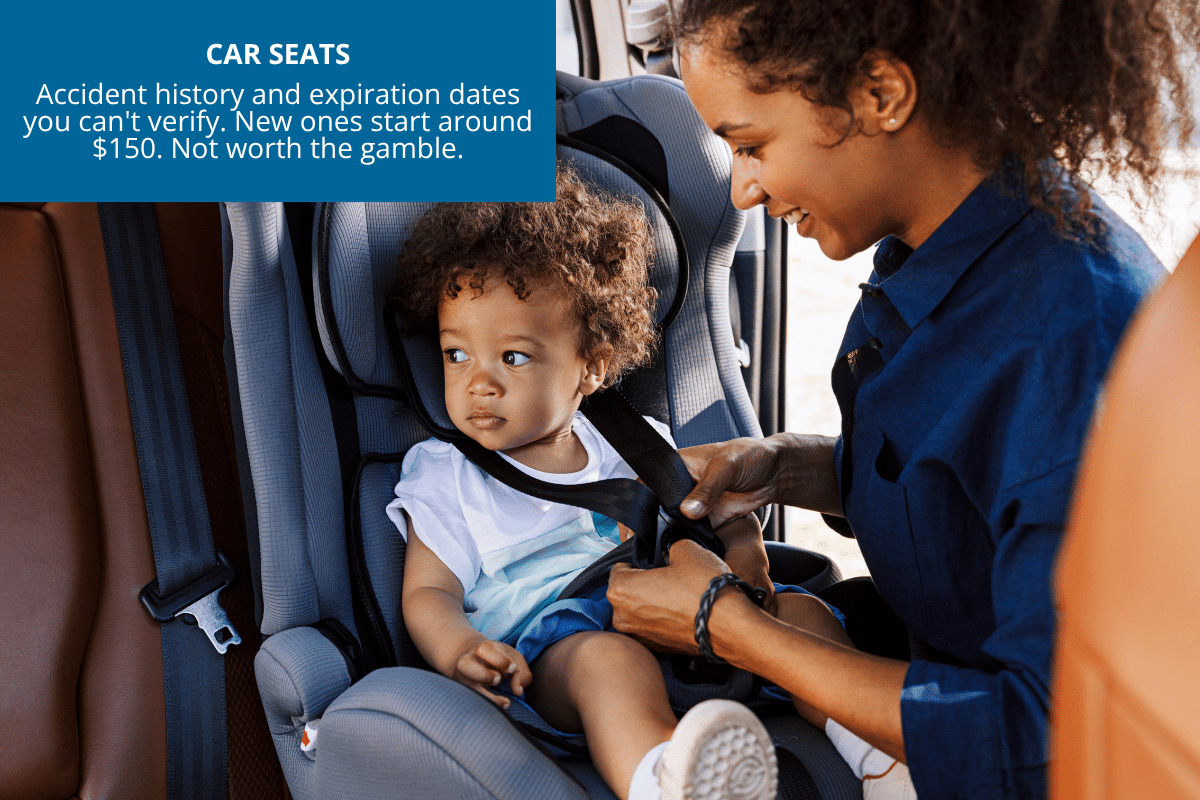
Same logic as the helmet, plus an expiration date. A car seat that survived a fender bender may look perfectly fine and still fail when it counts. And every seat has a shelf life, typically 6 to 10 years from manufacture, after which the plastic starts to degrade whether it’s been in an accident or not.
Buy new instead: Graco has solid seats starting around $150. Plenty of communities also run car seat swap or check-in programs if cost is the real barrier, worth a look before you write a check.
4. Underwear, Bathing Suits, Pajamas, and Worn Shoes
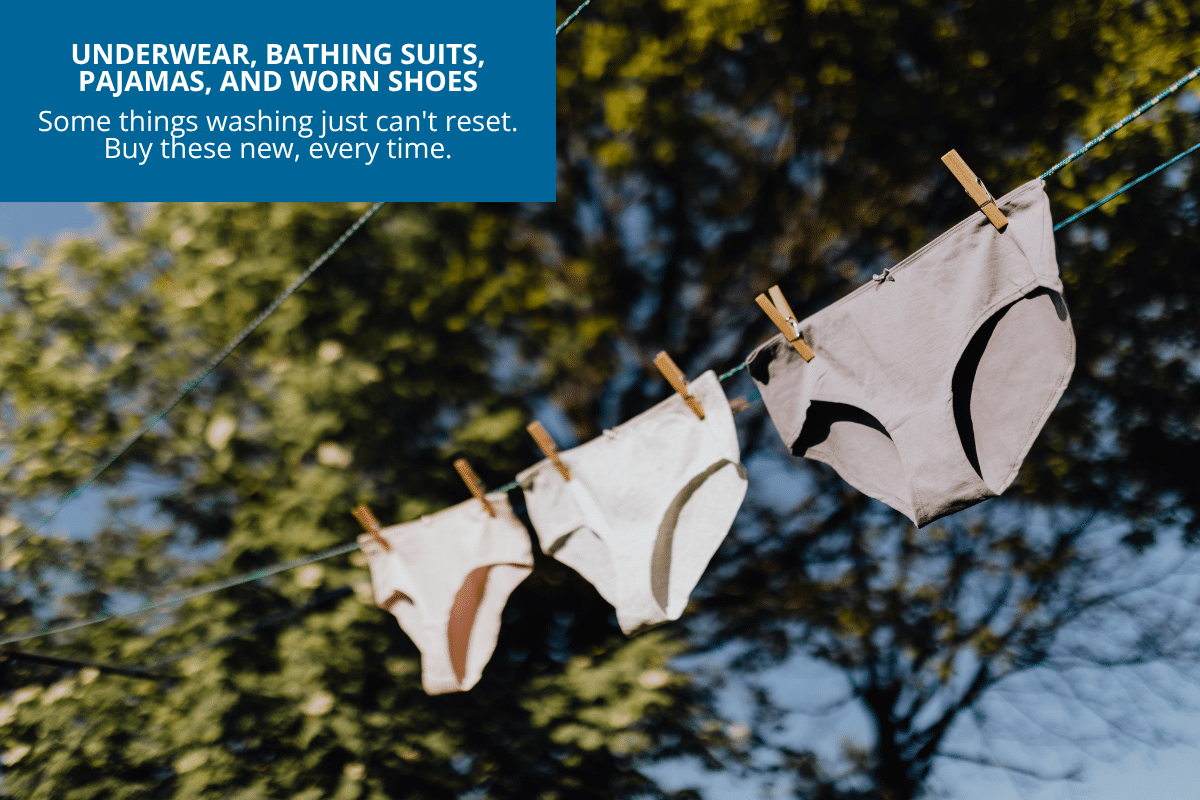
I shouldn’t have to explain this one, but here we are. No amount of washing resets intimate fabric. And worn shoes carry the last owner’s foot shape, plus whatever fungus decided to move in along the way.
Exception: vintage clothing that’s outerwear, thoroughly cleaned, and never intimately worn is a different story.
5. Nonstick Cookware
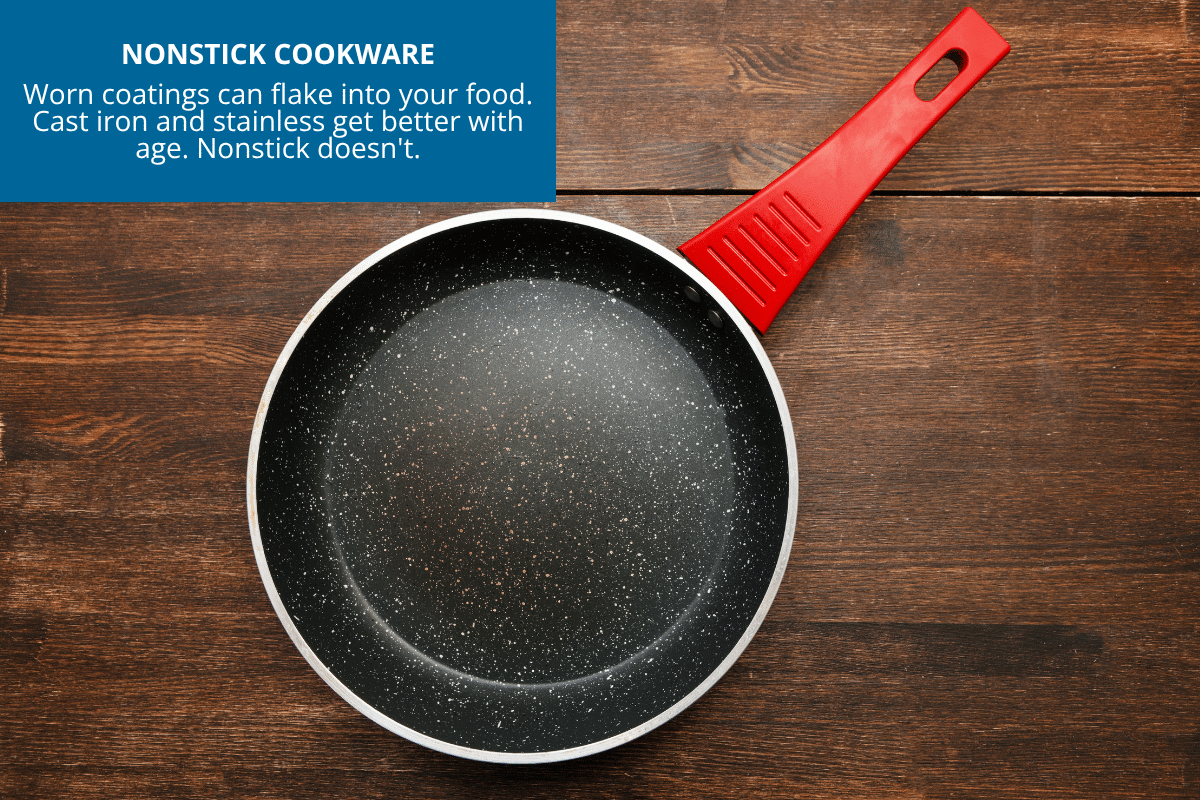
Nonstick coatings break down over time, and a used pan almost always has scratches or a worn surface you can’t fully see. Whether those flaking particles end up in your dinner is exactly the kind of question I’d rather not gamble on to save ten dollars.
Exception: cast iron and stainless steel are the opposite story. They get better with age and I buy them used without a second thought. It’s only the nonstick coating that’s the problem.
The Gray Area: It Depends
A few categories don’t sort neatly onto either list.
- Electronics. Used TVs, computers, and phones can be great deals, but only from a reputable reseller with a real return policy. Certified refurbished through Amazon Renewed or Apple Refurbished beats “used” from a stranger nearly every time.
- Small appliances. Blenders, mixers, food processors, usually fine used if you can plug it in and test it first. Skip anything with a frayed cord or a sketchy plug.
- Video games and DVDs. Discs are fine used, just check for scratches. Digital game keys are their own can of worms.
- Wedding dresses. Some brides love the vintage angle. Some don’t. Both are right.
- Cameras. Often a good buy, but check the shutter count and test the autofocus before you hand over any cash.
The Simple Rule
Buy used when the item is durable and easy to inspect. Buy new when the item is intimate, safety-critical, or hides its condition on the inside where you can’t check.
That one rule covers about 90 percent of your buying decisions. When you’re not sure, lean new for anything safety-related and used for anything built to last. Follow that pattern for a lifetime and you’ll quietly save tens of thousands of dollars on things nobody would ever have known you bought new anyway.
Your turn: What’s the best used purchase you ever made? And the worst? Tell me both in the comments. I promise I won’t judge, I’ve got a “worst” story of my own involving a free couch and a decision I regret to this day.
EverydayCheapskate™ is reader-supported. We participate in the Amazon Services LLC Associates Program and other affiliate advertising programs, designed to provide a means for us to earn from qualifying purchases, at no cost to you.

More from Everyday Cheapskate
 https://www.everydaycheapskate.com/wp-content/uploads/20261024-A-cup-of-coffee-notebook-and-pen-on-a-table.png
800
1200
Mary Hunt
https://www.everydaycheapskate.com/wp-content/uploads/EC-Logo-by-Mary-Hunt-Tagline-Trimmed.png
Mary Hunt2026-10-24 13:13:592026-10-24 13:13:59What Is Frugal Living? It’s Probably Not What You Think
https://www.everydaycheapskate.com/wp-content/uploads/20261024-A-cup-of-coffee-notebook-and-pen-on-a-table.png
800
1200
Mary Hunt
https://www.everydaycheapskate.com/wp-content/uploads/EC-Logo-by-Mary-Hunt-Tagline-Trimmed.png
Mary Hunt2026-10-24 13:13:592026-10-24 13:13:59What Is Frugal Living? It’s Probably Not What You Think https://www.everydaycheapskate.com/wp-content/uploads/20261023-Paper-calendar-and-digital-calendar-on-a-smartphone-side-by-side.png
800
1200
Mary Hunt
https://www.everydaycheapskate.com/wp-content/uploads/EC-Logo-by-Mary-Hunt-Tagline-Trimmed.png
Mary Hunt2026-10-23 11:55:302026-10-23 11:55:30Paper or Digital Calendar? Turns Out, You May Need Both
https://www.everydaycheapskate.com/wp-content/uploads/20261023-Paper-calendar-and-digital-calendar-on-a-smartphone-side-by-side.png
800
1200
Mary Hunt
https://www.everydaycheapskate.com/wp-content/uploads/EC-Logo-by-Mary-Hunt-Tagline-Trimmed.png
Mary Hunt2026-10-23 11:55:302026-10-23 11:55:30Paper or Digital Calendar? Turns Out, You May Need Both https://www.everydaycheapskate.com/wp-content/uploads/20261012-Woman-using-smartphone-while-checking-monthly-cellular-data-usage-on-laptop.png
800
1200
Mary Hunt
https://www.everydaycheapskate.com/wp-content/uploads/EC-Logo-by-Mary-Hunt-Tagline-Trimmed.png
Mary Hunt2026-10-12 10:51:112026-10-12 10:51:11Do You Really Need Unlimited Data? Check Before You Pay
https://www.everydaycheapskate.com/wp-content/uploads/20261012-Woman-using-smartphone-while-checking-monthly-cellular-data-usage-on-laptop.png
800
1200
Mary Hunt
https://www.everydaycheapskate.com/wp-content/uploads/EC-Logo-by-Mary-Hunt-Tagline-Trimmed.png
Mary Hunt2026-10-12 10:51:112026-10-12 10:51:11Do You Really Need Unlimited Data? Check Before You Pay https://www.everydaycheapskate.com/wp-content/uploads/20261011-Woman-Adjusting-Smart-Home-Device-on-the-Wall-how-to-lower-your-electric-bill.png
800
1200
Mary Hunt
https://www.everydaycheapskate.com/wp-content/uploads/EC-Logo-by-Mary-Hunt-Tagline-Trimmed.png
Mary Hunt2026-10-11 23:01:562026-10-11 23:01:56Stop Chasing Pennies on Your Electric Bill. Do This
https://www.everydaycheapskate.com/wp-content/uploads/20261011-Woman-Adjusting-Smart-Home-Device-on-the-Wall-how-to-lower-your-electric-bill.png
800
1200
Mary Hunt
https://www.everydaycheapskate.com/wp-content/uploads/EC-Logo-by-Mary-Hunt-Tagline-Trimmed.png
Mary Hunt2026-10-11 23:01:562026-10-11 23:01:56Stop Chasing Pennies on Your Electric Bill. Do This https://www.everydaycheapskate.com/wp-content/uploads/20261007-red-present-sitting-in-autumn-leaves-Amazon-Prime-Big-Deal-Days-gifts.png
800
1200
Mary Hunt
https://www.everydaycheapskate.com/wp-content/uploads/EC-Logo-by-Mary-Hunt-Tagline-Trimmed.png
Mary Hunt2026-10-06 23:09:432026-10-06 23:09:43Christmas Shopping in October? These Prime Day Gifts Make Sense
https://www.everydaycheapskate.com/wp-content/uploads/20261007-red-present-sitting-in-autumn-leaves-Amazon-Prime-Big-Deal-Days-gifts.png
800
1200
Mary Hunt
https://www.everydaycheapskate.com/wp-content/uploads/EC-Logo-by-Mary-Hunt-Tagline-Trimmed.png
Mary Hunt2026-10-06 23:09:432026-10-06 23:09:43Christmas Shopping in October? These Prime Day Gifts Make Sense https://www.everydaycheapskate.com/wp-content/uploads/20261006-prime-big-deal-days-have-landed.png
800
1200
Mary Hunt
https://www.everydaycheapskate.com/wp-content/uploads/EC-Logo-by-Mary-Hunt-Tagline-Trimmed.png
Mary Hunt2026-10-05 11:01:432026-10-07 09:02:53EC’s Top Picks from Amazon Prime Big Deal Days 2026
https://www.everydaycheapskate.com/wp-content/uploads/20261006-prime-big-deal-days-have-landed.png
800
1200
Mary Hunt
https://www.everydaycheapskate.com/wp-content/uploads/EC-Logo-by-Mary-Hunt-Tagline-Trimmed.png
Mary Hunt2026-10-05 11:01:432026-10-07 09:02:53EC’s Top Picks from Amazon Prime Big Deal Days 2026 https://www.everydaycheapskate.com/wp-content/uploads/20261004-reduce-healthcare-costs-with-three-habits-healthy-couple-walking-in-autumn-leaves.png
800
1200
Mary Hunt
https://www.everydaycheapskate.com/wp-content/uploads/EC-Logo-by-Mary-Hunt-Tagline-Trimmed.png
Mary Hunt2026-10-04 23:08:572026-10-04 23:09:47How to Reduce Healthcare Costs With 3 Free Daily Habits
https://www.everydaycheapskate.com/wp-content/uploads/20261004-reduce-healthcare-costs-with-three-habits-healthy-couple-walking-in-autumn-leaves.png
800
1200
Mary Hunt
https://www.everydaycheapskate.com/wp-content/uploads/EC-Logo-by-Mary-Hunt-Tagline-Trimmed.png
Mary Hunt2026-10-04 23:08:572026-10-04 23:09:47How to Reduce Healthcare Costs With 3 Free Daily Habits https://www.everydaycheapskate.com/wp-content/uploads/20261004-woman-dreaming-about-her-financial-and-life-goals.png
800
1200
Mary Hunt
https://www.everydaycheapskate.com/wp-content/uploads/EC-Logo-by-Mary-Hunt-Tagline-Trimmed.png
Mary Hunt2026-10-04 12:50:422026-10-04 12:50:42She Lived in a Basement for $100 a Month. Here’s Why.
https://www.everydaycheapskate.com/wp-content/uploads/20261004-woman-dreaming-about-her-financial-and-life-goals.png
800
1200
Mary Hunt
https://www.everydaycheapskate.com/wp-content/uploads/EC-Logo-by-Mary-Hunt-Tagline-Trimmed.png
Mary Hunt2026-10-04 12:50:422026-10-04 12:50:42She Lived in a Basement for $100 a Month. Here’s Why. https://www.everydaycheapskate.com/wp-content/uploads/20261001-prime-big-deal-days-are-coming.png
800
1200
Mary Hunt
https://www.everydaycheapskate.com/wp-content/uploads/EC-Logo-by-Mary-Hunt-Tagline-Trimmed.png
Mary Hunt2026-10-01 09:25:072026-10-01 11:45:25Prime Big Deal Days 2026: Your Cheapskate Game Plan
https://www.everydaycheapskate.com/wp-content/uploads/20261001-prime-big-deal-days-are-coming.png
800
1200
Mary Hunt
https://www.everydaycheapskate.com/wp-content/uploads/EC-Logo-by-Mary-Hunt-Tagline-Trimmed.png
Mary Hunt2026-10-01 09:25:072026-10-01 11:45:25Prime Big Deal Days 2026: Your Cheapskate Game Plan

Always buy used Walkers, Canes , wheel chairs etc – I go to Hospice thrift store – Anytime someone in the family is going to need these ( knee surgery , hip replacement etc ) and insurance is going to be a pain to deal with as many wont cover or wont approve till way after you need them , you can get these ( and store and left friends and family borrow ) for a fraction of the cost . I bought a great cane ( hurricane that folds up and has stable bottom ) for $3.50 and got a walker that folds up ( brand new still in the plastic with extra parts ) for $7.50 ( was $15 but 1/2 off day when I went to look ) . these are also great for lending closets at your church or community center or senior center.
Wonderful input!!
i must admit that with the high price of used cars now, i’d opt for a new car with the good warranty 10 years/100 thousand miles. i know that several car makers i’ve purchased from in the past have honored those warranties. that said, i’ve got a 2018 subaru i have no plans to ‘retire’ because i’m pretty unsure of the electronics in all the new cars, having used a rental last summer. hate all the computerized updates. friends and i agree that a savvy carmaker would make a ton on us old folks if they sold a car that didn’t ‘talk’ to us!
Furniture, made well of real wood, is a must for me. The nicest pieces we have are all vintage pieces that my husband restored. They have a beauty and durability you don’t usually find in new furniture unless you spend a great deal of money. And why buy new when you can get quality without spending thousands? My husband is a professional restorer with many years of experience. But there are many YouTube videos that teach how anyone can do this. With a little time and patience anyone can turn an old, neglected piece into something that will bring beauty and utility for years to come.
A used Bernina serger, top of the line originally, which I would not have been able to afford.
Also, a used Toyota pickup truck.
agree w/cate staid; great article. best thing i have been using is your pizza-reheat on the stove which i use a lot cuz i love pizza reheated for the crunchy crust!! thank you thank you thank you!!
My best used purchase was my 2013 Buick LaCrosse purchased in 2015 it had 26000 miles on it and not one problem and it’s been 13 years
I’m 73 and know this will be the car I have until I can’t drive anymore
It’s because of you, Mary that I bought it up until that time I had to have “new”
I love my car!
The best used item I bought was my Ethan Allen rich mahogany desk. I love it and I got it from Salvation Army during the pandemic for $75.00. Another great find was a complete china set at Goodwill for maybe $30.00.
My best deal was an oak bookcase at the Salvation Army store. It was $25 but I got a 25% military discount while shopping with my Vietnam Veteran husband. The bookcase is perfect in my craft room. ❤️
I have more shoes that I bought used than shoes I bought new. Never had a problem yet!
I think my best purchase was the six bentwood and woven cane dining chairs I bought many years ago for about 30.00 each.
i, too, have purchased many used shoes – but not worn down ones. i have a pair of Birkenstocks that were gently worn. also, play dress up shoes/boots for grandkids and ALL the cleats and ice skates for my kids and grandkids because they wear them only for the practice and games. don’t buy any footwear that has obvious worn soles or insoles which will mess with your stride.
I get my books used most of the time. My mom, aunts and I are avid readers, so we always exchange books. It beats paying for them. I pay it forward, and donate the books I read to a used book store, and also my local Salvation Army. Two paperback at the Salvation Army are a dollar, and I found tons of books that I would otherwise overlook.
I’m also an avid knitter and crocheter, and my crafting group always has yarn to give away. I’ve saved money by picking up brands that I don’t normally buy due to cost. I’ve found discontinued brands that are of excellent quality. I once got enough to make a summer top, and the brand was discontinued, but the quality was excellent.
My best purchase was a beautiful wicker porch swing which I bought from our local consignment store for $125! It is huge, which is why it sat for so long in the store. (It just fits my porch – you can’t walk around it). The worst purchase, oddly enough, were the cushions that came with the swing . I was going to re-cover the cushions so I began looking them over. Yep! Bugs! Big black bugs! They were all over the inside of the cushions! Thankfully I had kept them outside instead of bringing them inside. I threw them away as fast as I could! (I did contact the store privately – not to complain but to warn them to check the store). The swing is still on my porch and I love it!
I purchased a complete set of Noritake China. I bought the set for my daughter-in-law. People don’t use china anymore, but I still do and so does my daughter-in-law. It was a bargain and practically brand new.
I am an antique hill-dweller and I’ve been “thrifting” all my life and didn’t know it. To me, it’s always been “Treasure Hunting” and I have many many treasures in my home. Thank you, Mary Hunt! I’ve been computer literate since 1993 and you are an old friend! Best wishes, E
Best used find was a 100% wool Chinese sculpted room sized area rug from the free pile at the thrift store. We paid to have it professionally cleaned for 45$.
Worst buy was a taxidermy owl for a cabin which promptly dropped all its feathers as soon as the weather got cold!
I have many lovely pieces of wood furniture that I bought used & love but I think my favorite used piece is my 100 yr old treadle sewing machice that I bought at an estate sale recently. I love the gentle pace of a treadle machine & it’s great if I want to keep sewing if the power goes out. Plus it has the ability to sew leather or other materials that modern machines would strugle with. My worse purchase is easy – it occured when I was youg, poor, & obviouly dumb. I got a beautiful pair of previously worn shoes & ended up with plantar fasciitis. Hard lesson learned.
Good article, today!
Thank you! I’ve been “good” and haven’t visited AmVets (thrift store that really benefits veterans, not a rich CEO) but I have a lot of books to donate (courtesy of Dollar Tree’s low prices) and will want to buy some. They get and sell so many books they have a library room! I also buy glassware for flowers or outdoor lanterns, and there are different ways prices are lower on certain days, which makes for great prices.
My best used purchase was a car. It wasn’t in the 2-4 year old sweet spot range but it had low miles and fit my limited budget at the time. It was an 8 year old Mazda 626. I drove it for 8 more years and when it’s poor aging motor could no longer pass the state smog test my state paid me $1000 to retire it. Win win win!